
I have a lifelong interest in history, which my parents stoked from an early age with frequent trips to museums and historic sites. After graduating from college with a history degree, I was at a crossroads and unsure of my professional path forward. Through volunteering at a local historical society, I was introduced to the concept of historic preservation and loved that I could work at historic sites like those I visited growing up. I worked towards a degree in historic preservation at the University of Pennsylvania, where I learned about buildings, why they fail, and how to stop that damage. After I graduated, I stayed in Philadelphia and documented all the cultural resources, including buildings, sculpture, walls, path systems in the city’s entire park system. Then, I moved to New York City, where I was deputy director of a nonprofit responsible for the overall care and management of historic house museums in the New York City park system. All of these experiences helped prepare me for joining Historic New England twenty-two years ago.
Our team is responsible for the preservation, maintenance, and capital improvements for all real estate owned by Historic New England. This includes thirty-eight historic properties, the Historic New England Center in Haverhill, Massachusetts, and several burial grounds. This collection includes 167 buildings with seventy-three different heating systems and more than 5,000 windows located on 1,375 acres spread from Rhode Island to Midcoast Maine. I also think it is important to acknowledge that the above statistics relate to the more recent activities at our sites—since the 1600s—but the history of use and occupation on those 1,375 acres goes back thousands of years. Part of our team’s mandate is to protect both above- and below-ground cultural resources, and so any project at our sites that involves excavation includes archaeology to ensure protection and documentation of all aspects of the past.
Many of the core tenets that we started with in 1910—preserving historic fabric, respecting change over time, replacing materials in kind, reversibility, and documentation—are still at the core of what we do. But it is important also not to be stuck in the past and recognize that we need to adapt the philosophy for our current environment. Accessibility is a great example. For too long, organizations like ours hid behind a purist approach to preservation as rationale for not making improvements to how visitors use and access historic sites. We believe that the preservation of historic homes and accessibility can co-exist and are setting out to prove that in practice.
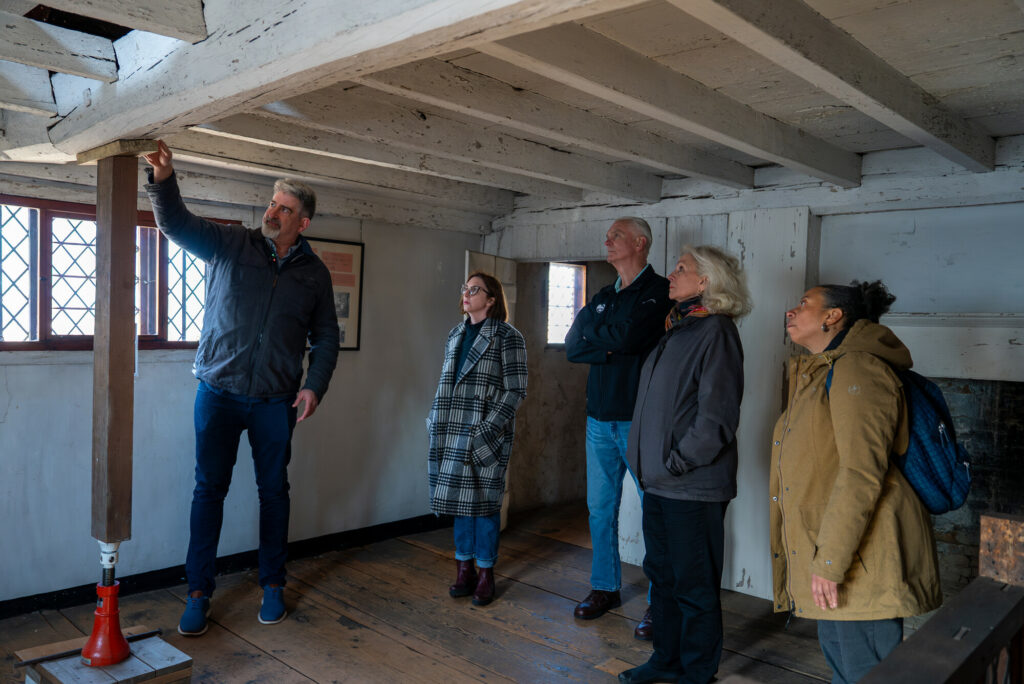
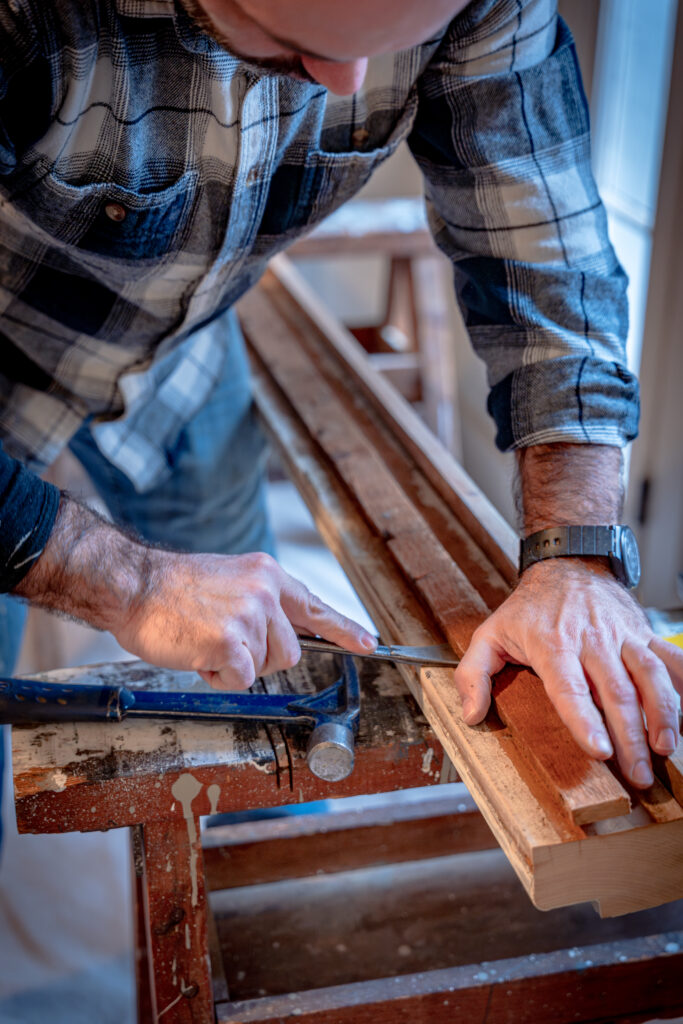
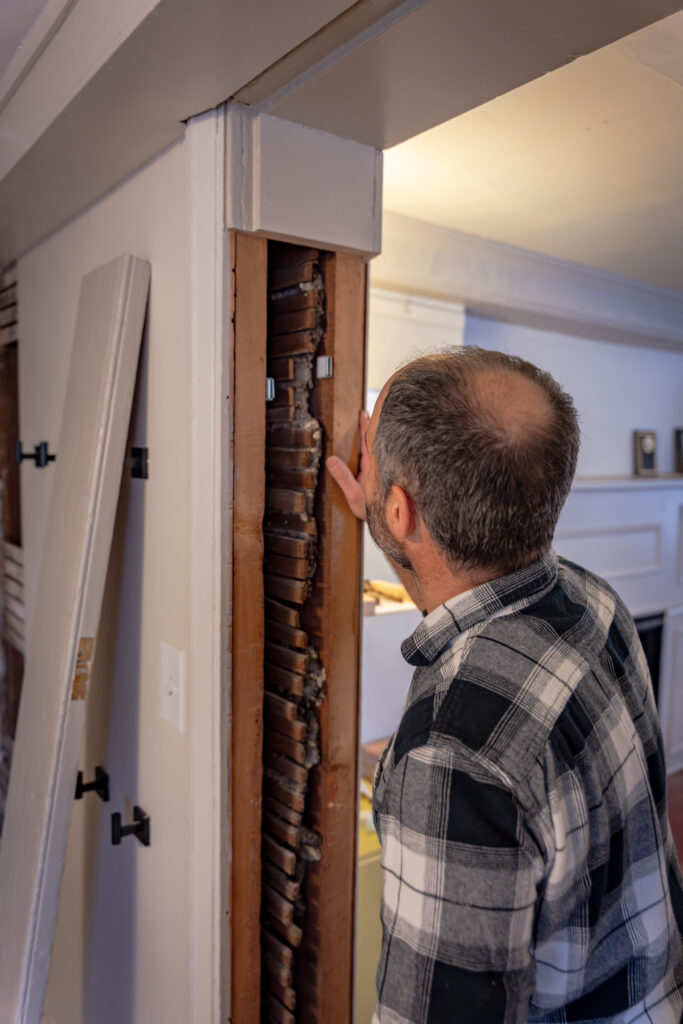
We recently made the first floor of the Pierce House in Dorchester, Massachusetts, accessible. It is our showpiece for blending preservation and accessibility. In some places, we could take a heavier-handed approach because of past repairs, while in others we took great care. We were able to rebuild the rear entrance shed to be fully accessible because we knew it had been rebuilt previously and the material wasn’t historic. On the interior, however, we worked with our own carpenters to surgically excise material at the door frames and squeeze every inch of access out of our doorways without sacrificing the character of the building. As a bonus, this work has opened windows into the framing of the structure which has enhanced the tour program!
At our museum properties, we are focused on many different facets of the climate change equation. With the seventy-three different heating systems I mentioned earlier, we have to figure out how to reduce—and eventually eliminate—our emissions, so we are not contributing to climate change. To be more resilient in the face of the extreme weather conditions we need to adapt our preservation approach, as we have with accessibility, to understand these new realities. As an example, back in 2018 we did an assessment of the carrying capacity of our gutters, thinking we were being thoughtful about the future. Our analysis revealed that the gutters were not up to the task of managing 2018 severe storms, let alone 2026 weather events. We adapted our thinking about replacing gutters in kind. And we are not just thinking about our properties as standalone entities anymore, we are also considering how they interact with the surrounding community and how we are supporting the needs of our communities that might be more affected by climate change.
Looking beyond our museums, there is a very strong intersection between preservation and climate action. The saying “the greenest building is one that is already built,” coined by Carl Elefante in the 1980s, is still true today. Historic buildings are still healthy and viable and there is so much embodied carbon in our built environment. To tear down a building just to build something new is not only wasteful, between the construction process itself and the emissions released in the creation of new building materials—especially with an over-reliance on petrochemical-based materials—it harms the earth. A wood window lasts hundreds of years while a modern replacement window has a limited life span of twenty or maybe thirty years before the whole unit has to be thrown in a landfill, because it can’t be repaired. Think about the environmental cost of replacing one historic wood window with plastic, multiply it by twenty on your home, and then ask yourself the question “what if everyone did it?” This just doesn’t seem sustainable.
Prioritization is at the heart of how we balance available resources with the needs of the properties. Imagine everything you do to care for your own home and then add 166 more buildings to that list! It can be overwhelming, and you can’t do it all at once, and so the key is good data. Our data comes in many forms: Our staff assess the overall conditions of the properties on a rolling basis, we collect weather data by documenting and track weather incidents at the sites, staff report issues as they develop, and each year, we ask a wide swath of staff what they perceive as the greatest issues. We synthesize those data points to come up with targeted priorities that could be short or long term. Some of these are pretty standard maintenance tasks. I mentioned gutters earlier—last fall, during our gutter cleaning process, we identified ten failing gutters in our system that are now queued up for repair. Others are more existential. For example, it has become clear that sea level rise is an issue we need to address at the Sayward-Wheeler House in York Harbor, Maine, and so we raised grant funds to support the initial planning effort.
There are shortages of skilled craftspeople in many of the trades, but for us, the greatest challenge right now is finding painters who are trained in techniques required to use traditional linseed oil paint. Traditional paints are friendlier to buildings because they truly allow moisture transmission, and friendlier to the environment because they are generally all natural and sustainable. The evolution of modern paint products has made them less resilient, more harmful to historic wood, and bad for the environment because of their high petrochemical content. While our carpentry crew has shifted to using linseed oil paints, we struggle to find painters knowledgeable enough in the craft to fully transition back from modern paints.
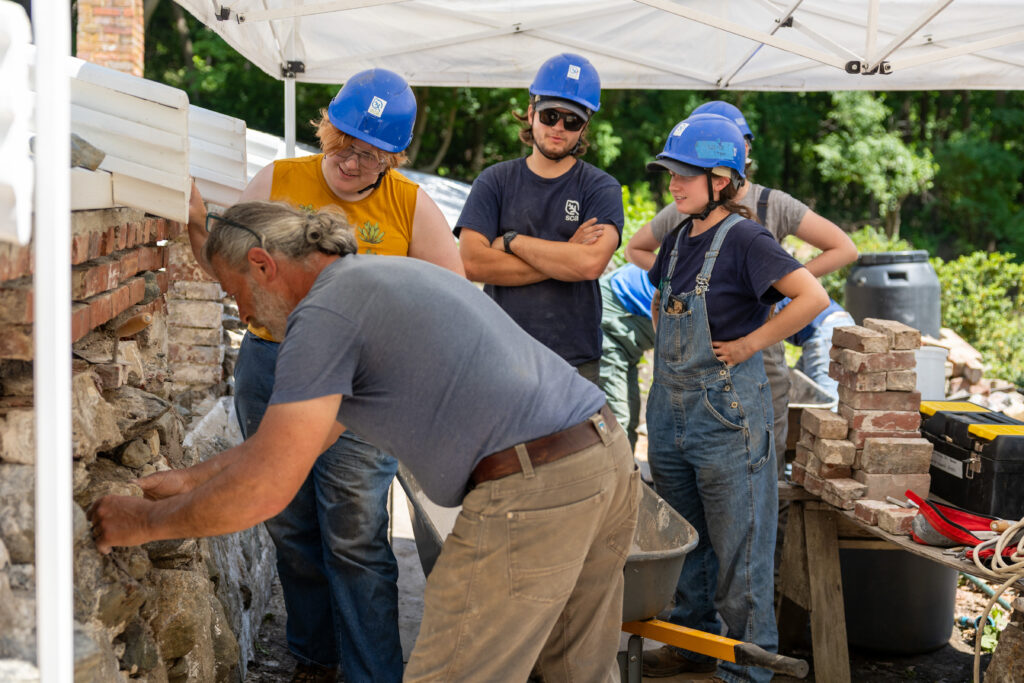
We have a long history of working with young professionals. In the past we have had internships and fellowships, and while these are valuable learning opportunities, we make our greatest impact by training groups. For the past six years, we have been working with the Student Conservation Association’s Massachusetts Historic Preservation Corps to provide wood window training to cohorts of fifteen to twenty participants—that’s close to one hundred students exposed to preservation trades training with us to date. For the last three years, we have also trained the students in lime mortars through our work on the Bark Pit Greenhouse at the Lyman Estate in Waltham, Massachusetts. We also partner with the preservation carpentry program at the North Bennett Street School when possible, including some projects coming up this summer.
It’s hard to care for an old building, but it’s worth the effort. Older buildings are sustainable and repairable, unlike many of the buildings being built today. But two common areas where there are a lot of misconceptions are windows and energy efficiency. There is a myth that you can’t make a historic building energy efficient. We did studies, the results of which can be found in our White Papers, on how to weatherize your historic house using just good preservation knowledge. During a focused case study, we reduced energy usage at the Lyman Estate mansion by more than 50 percent with some very basic moves. We are now building on that initial case study to think about reducing our emissions completely by 2050. Stay tuned!
Sign up to our newsletter for our latest news and events