
Scattered across New England, cemeteries stand as quiet witnesses to the lives and stories of those who came before us. Historic New England serves as the steward of six of them. In the first installment of a two-part series on cemeteries we care for, learn about three burying grounds connected to our historic house museums and preserved through our efforts.
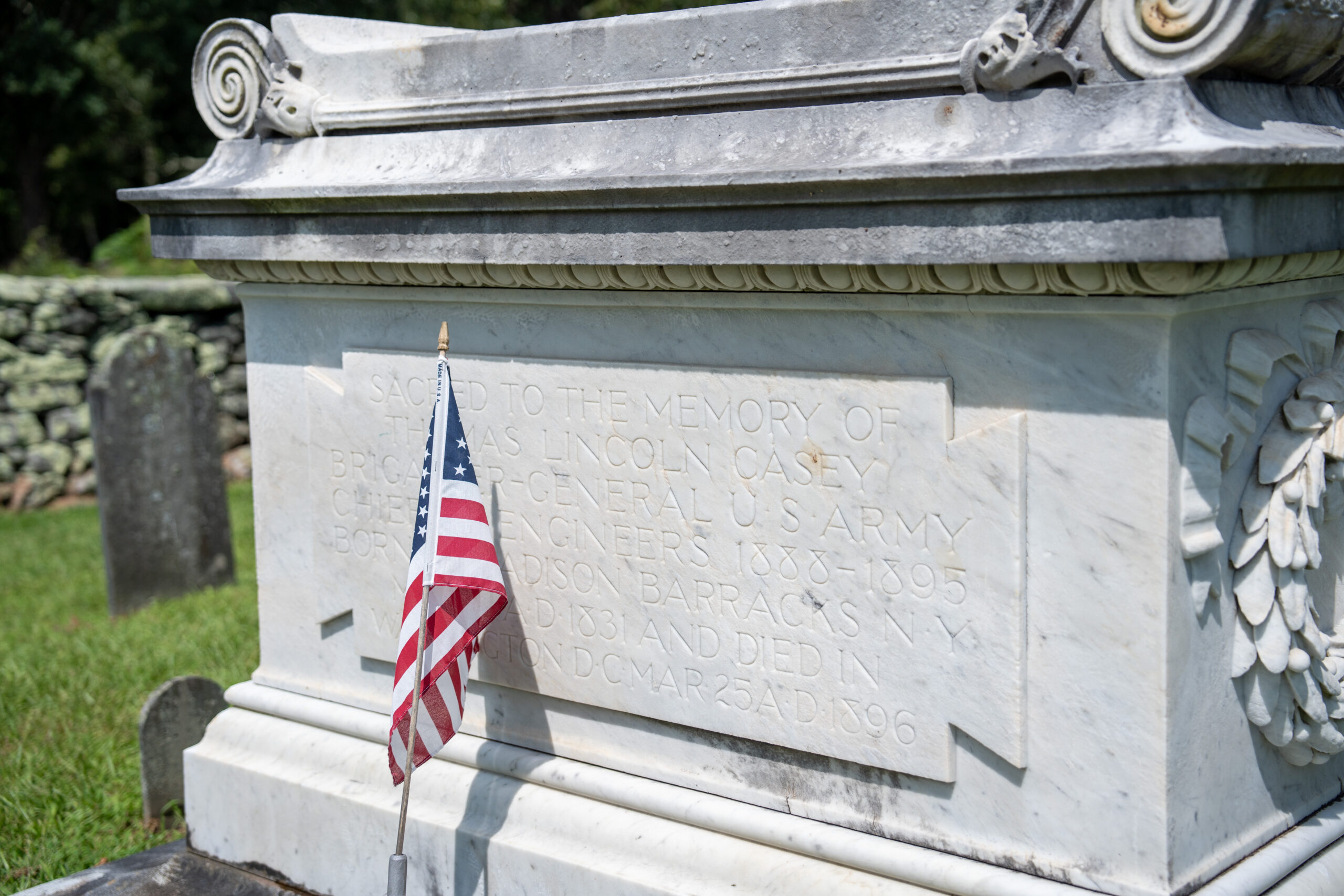
When the ownership of Casey Farm passed to Historic New England in 1955, the organization not only became stewards of a three-hundred-acre working farm, but also of the Casey Family Cemetery. The cemetery is situated along the northern edge of the property and enclosed within stone walls. There are twenty-four known burials in the family plot, and there are almost certainly others whose graves were once marked by wooden markers or unmarked fieldstones, but have been lost to time due to a lack of records. One person of note buried here is Brigadier General Thomas Lincoln Casey. A graduate of West Point and later Chief of Engineers of the Army Corps of Engineers, Casey worked on many prominent structures including the Washington Monument, which he brought to completion after it sat unfinished for over two decades. Casey died unexpectedly in 1896, and as a testament to his accomplishments, his marker features laurel and oak wreaths, which often mean triumph, victory, strength, and power. The marker also holds a special meaning within the family because Casey’s son, Edward Pearce Casey, designed it.
Visit: Explore Casey Family Cemetery virtually through our web app or in person by appointment or on a guided tour of the site. The cemetery will also be accessible on hayrides and open for self-guided tours during the Halloween Harvest Market on October 26, 2024, from 8:30am- 12:30pm.
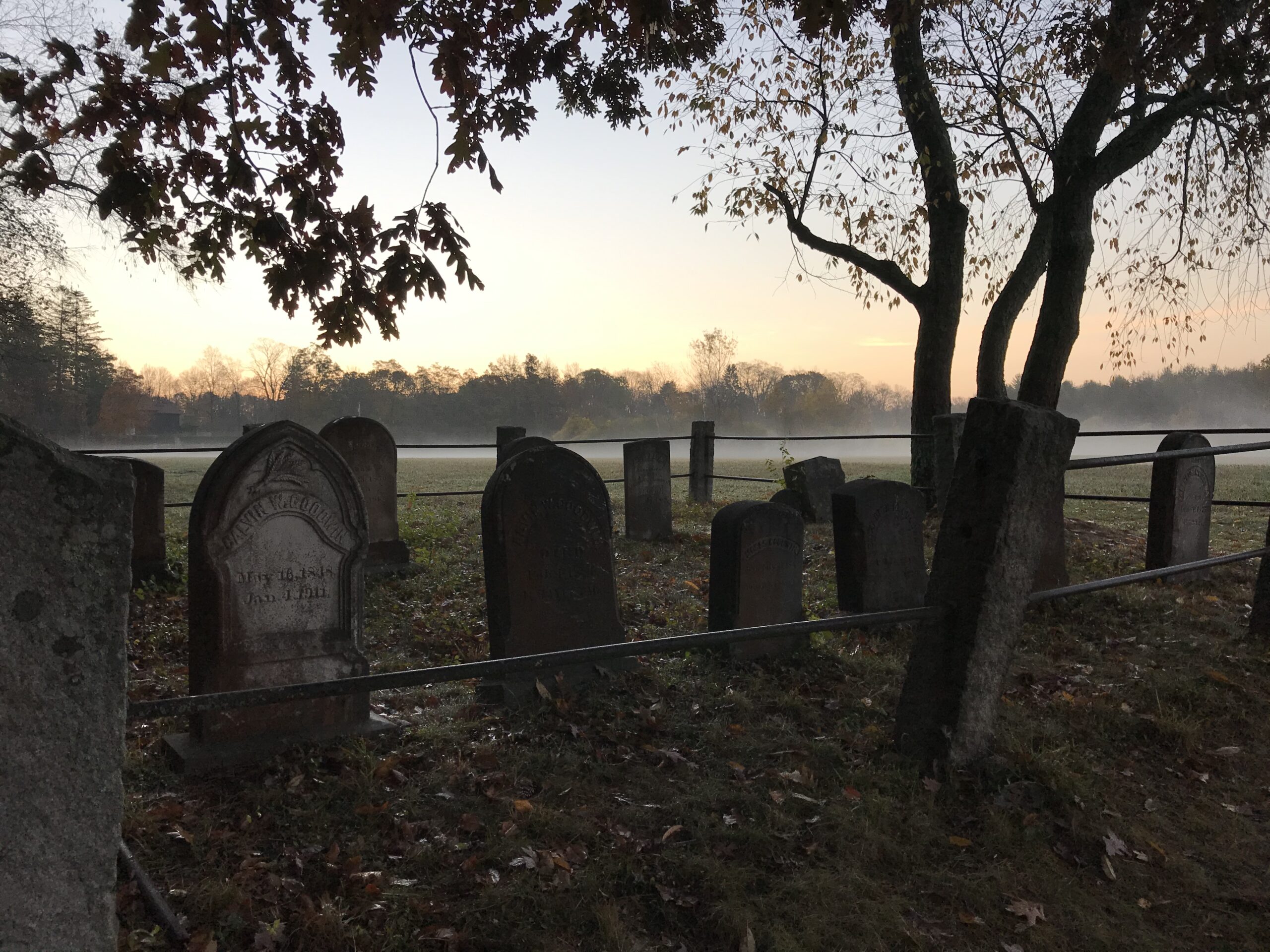
The Tyson family’s tenure at Hamilton House is most often the focus of tours, but one feature that shines a spotlight on another owner is the Goodwin Family Cemetery. Prior to becoming a summer retreat for the Tyson family, the Goodwin family owned Hamilton House from 1839 to 1898. The Goodwins were farmers who raised various crops and sheep. Located to the side of Hamilton House’s main hay field, twelve members of the Goodwin family are known to be buried in the family plot, including Alpheus (d. 1875) and Betsey Goodwin (d. 1888), the patriarch and matriarch of the family. “OUR FATHER” and “OUR MOTHER” are carved into their headstones. “These inscriptions show how attitudes toward death changed during the Victorian era, shifting from a cold formality to the embrace of more emotional expression.
Visit: The Goodwin Family Cemetery is open daily from dawn to dusk.
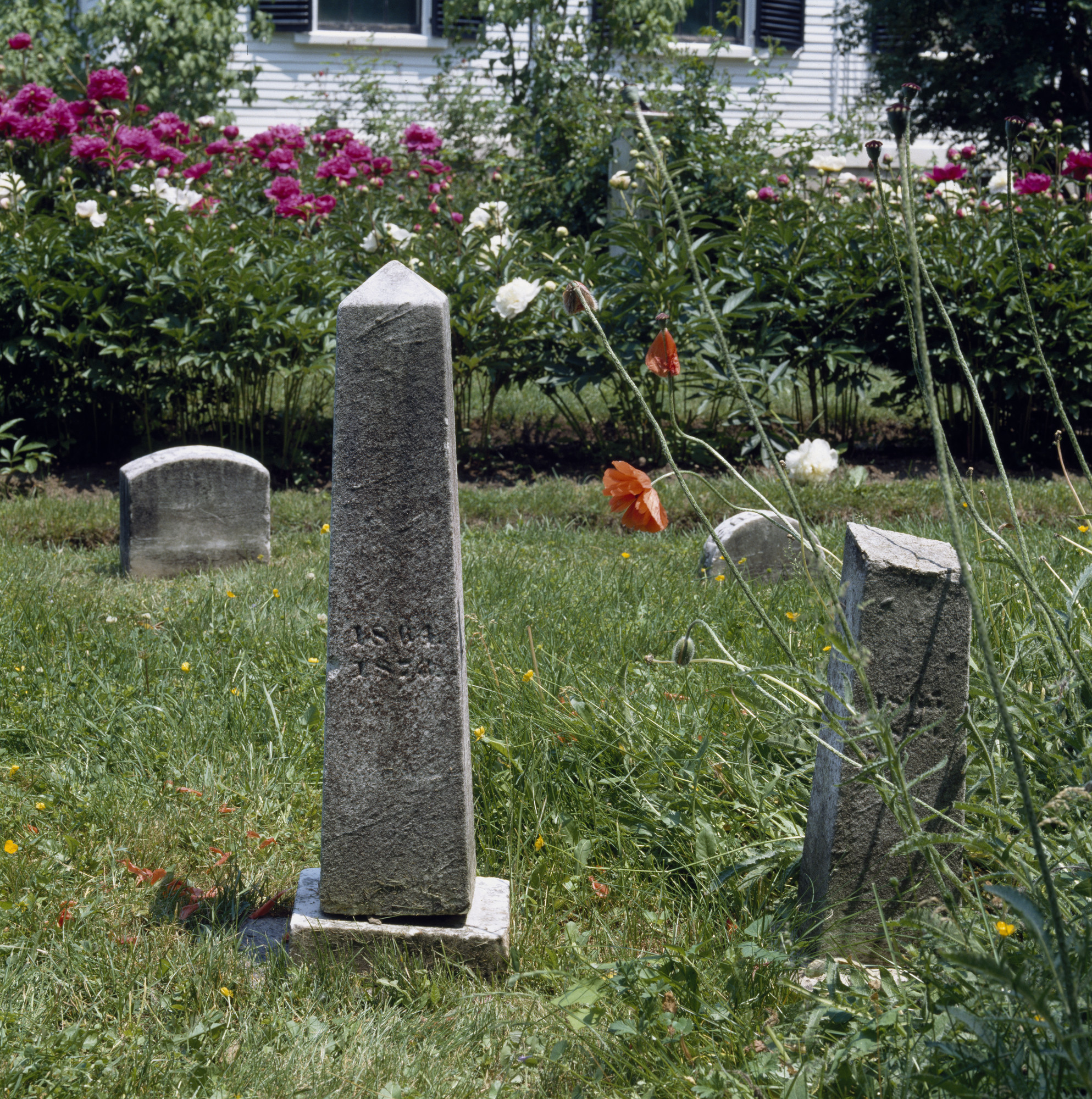
The pet cemetery at Rundlet-May House sits along the southern edge of the property and serves as the final resting place for many of James Rundlet May and Ralph May’s beloved furry (and feathered!) friends. The father and son were well-known animal lovers; James co-founded the New Hampshire chapter of the Society for the Preservation Cruelty to Animals and Ralph later served on its board. Inside Rundlet-May House, photographs and objects reflect the Mays’ affinity for animals, especially dogs, and include a license for a dog named Hylax; a photograph of Ralph with his poodle, Pepin; and a collar belonging to a dog named Argus. Both Pepin and Argus are buried in the cemetery, but Hylax’s final resting place is unknown. Among the eleven pets buried in the cemetery are ten dogs and one bird—Sunny Boy, a canary said to be a favorite of Mary Morison May, James’ wife and Ralph’s mother.
Visit: The pet cemetery at Rundlet-May House is open daily from dawn to dusk.
We invite you to explore our cemeteries year-round, but what better time to do so than in October? When visiting, please be mindful and respectful of the space and those who rest there.
Written by Christina Pokwatka, Preservation Project Manager, North Shore and Piscataqua
Sign up to our newsletter for our latest news and events