
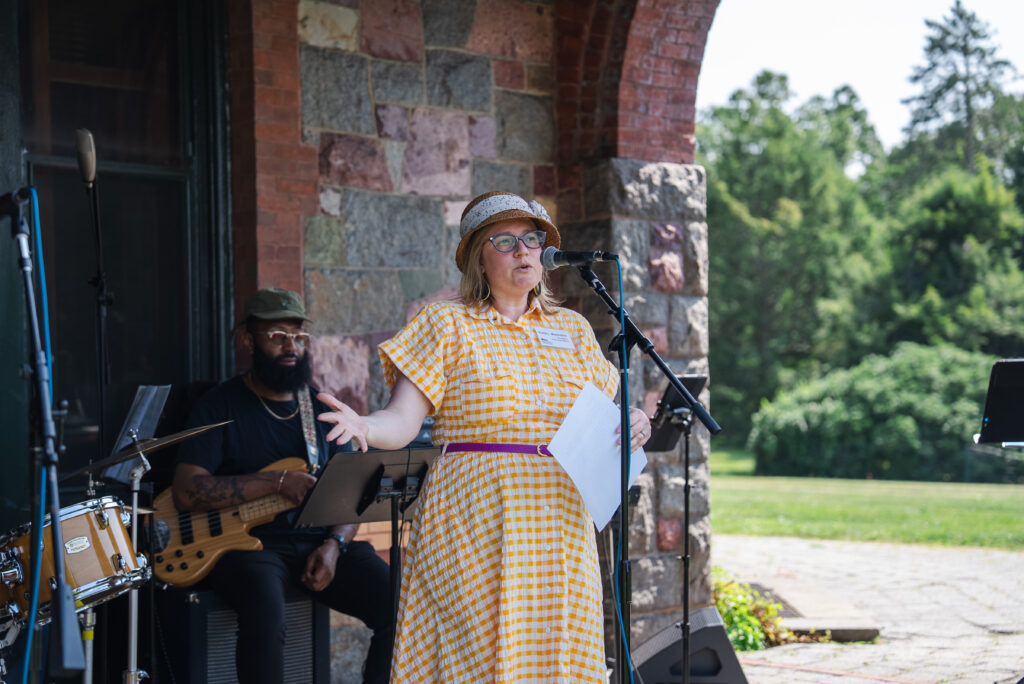
I have been steeped in the Gilded Age for quite some time, even before I realized that I would be focusing on that period. My graduate program in art history at NYU’s Institute of Fine Arts was in Doris Duke’s childhood home on Fifth Avenue. After graduation, I worked across the street at the Metropolitan Museum of Art, founded by the millionaires of New York in the 1870s. My family moved to Rhode Island in 2013 and I started working at the Newport Mansions, where I spent time in all eleven of those impressive houses. After the Eustis Estate opened as a house museum in 2017, I was thrilled to have the opportunity to work at this incredible Gilded Age mansion.
One of the things I like best about my job is that every day is different; I am almost never at my desk in my office. On busy days, I am running a big program like our David Chesnut Jazz Festival and welcoming hundreds of people to the Eustis Estate. Some days I get the joy of visiting an archive, where I can do things like bring interns to the Quincy Historical Society to look through historical maps while we work on a new specialty tour. I end up having meetings and conversations with interesting people nearly every day as we plan events or make connections in the community.
There are many photographs of the Eustis family riding bicycles in the 1890s, just as the trend was taking off in the United States. We discovered that several of the bicycles were still in the attic space of the gatehouse building. Most were Columbia Bicycles, a company based in Hartford, Connecticut, that started making bicycles in 1878, the year the Eustis Estate was built. It was very exciting to see the space for attaching an oil lamp, the wooden wheels, and even a chainless model that was supposed to be ideal for ladies. We occasionally bring them out for programs and visitors get a kick out of seeing them.
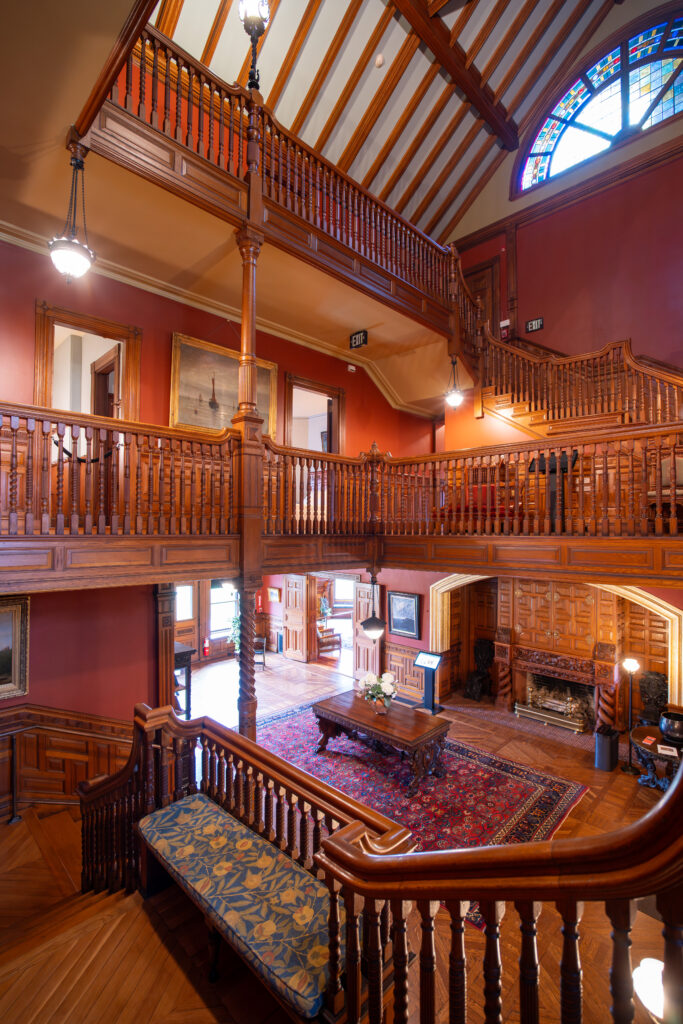
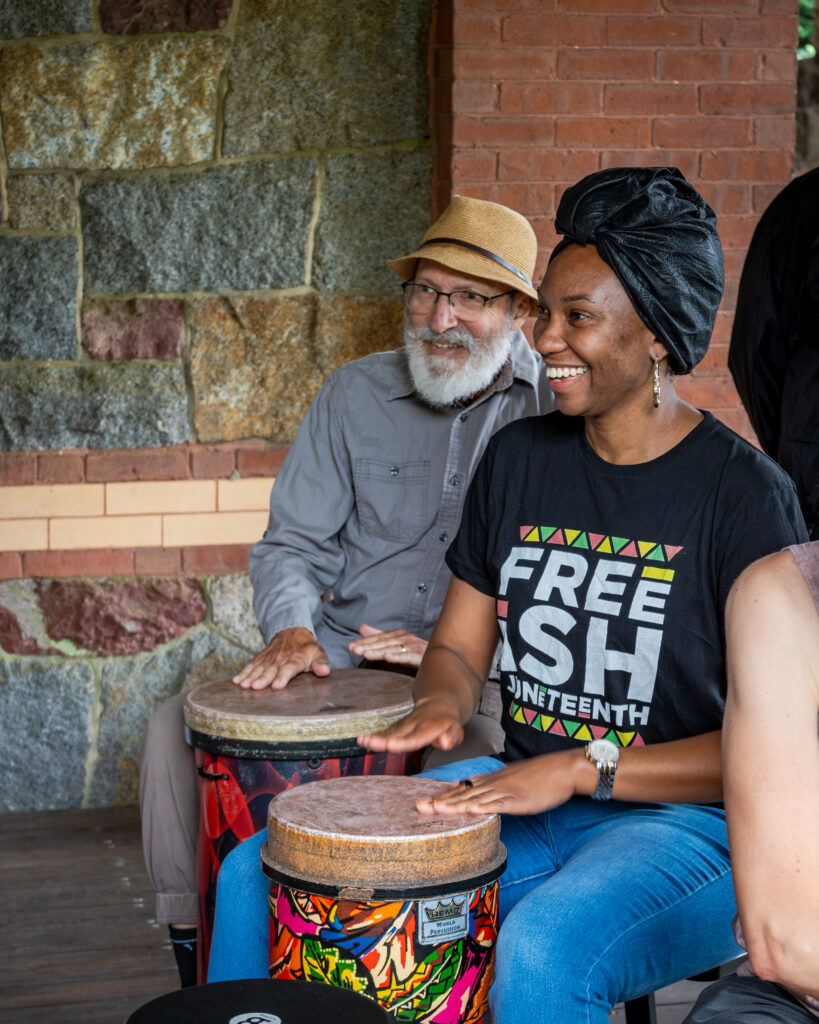
We often have large outdoor events that bring new audiences to the Eustis Estate—music and theater events, our annual Juneteenth Community Celebration, and the Fairies in the Foliage—and I love the reveal of the inside of the house. For those who have never stepped inside, the Aesthetic Movement interior is so rich with decoration: the colors, textures, and soaring spaces are really showstopping. Once these visitors are inside, Eustis Estate guides have the opportunity to talk to them about family and staff stories and invite them to make themselves at home, now and in the future. We are so happy when we hear people tell us they’ll be back or need to bring a friend next time.
The Victorian Spiritualism Party at the Eustis Estate on October 17 is a Halloween event that mixes historic interests of the period with a fun, spooky atmosphere. With the special exhibition Myth and Memory: Stories of the American Revolution opening, we will have some great related programs at the Eustis Estate. We’ll have an immersive theater performance for Deborah Sampson day, a fashion history curator’s panel, and a day focused on craft and the role of women in the Revolution. We’ll also be highlighting these revolutionary women at the Quincy House with a new tour on the Quincy women during the Revolution and some new outdoor programming.
For me, it is always about where to get lunch. Quincy is a great city for food and some recent favorites include Niveaux Pâtisserie, Rubato, or Lê Madeline. We are working on a food tour to share the history of the neighborhood around Quincy House through a culinary lens that will reflect the changing communities and cultures of the area over time.
To learn more about these and other events at Karla’s sites, visit HistoricNewEngland.org/Events.
Sign up to our newsletter for our latest news and events