
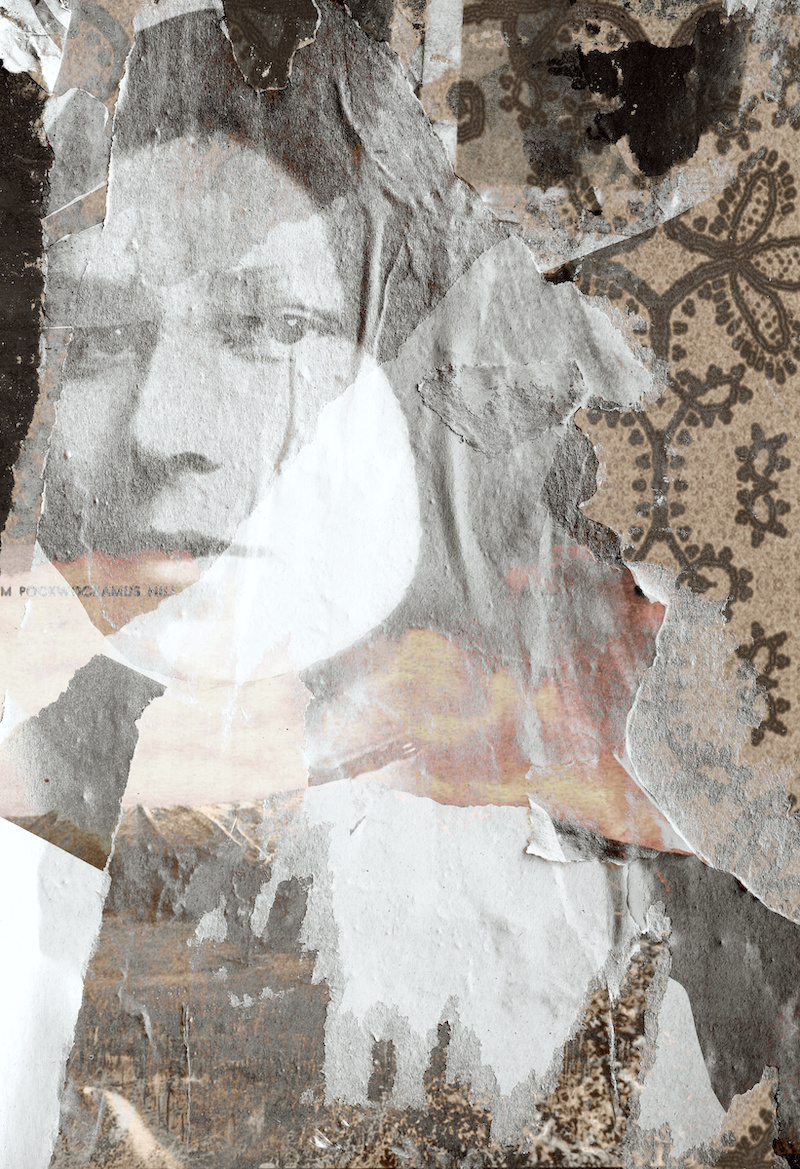
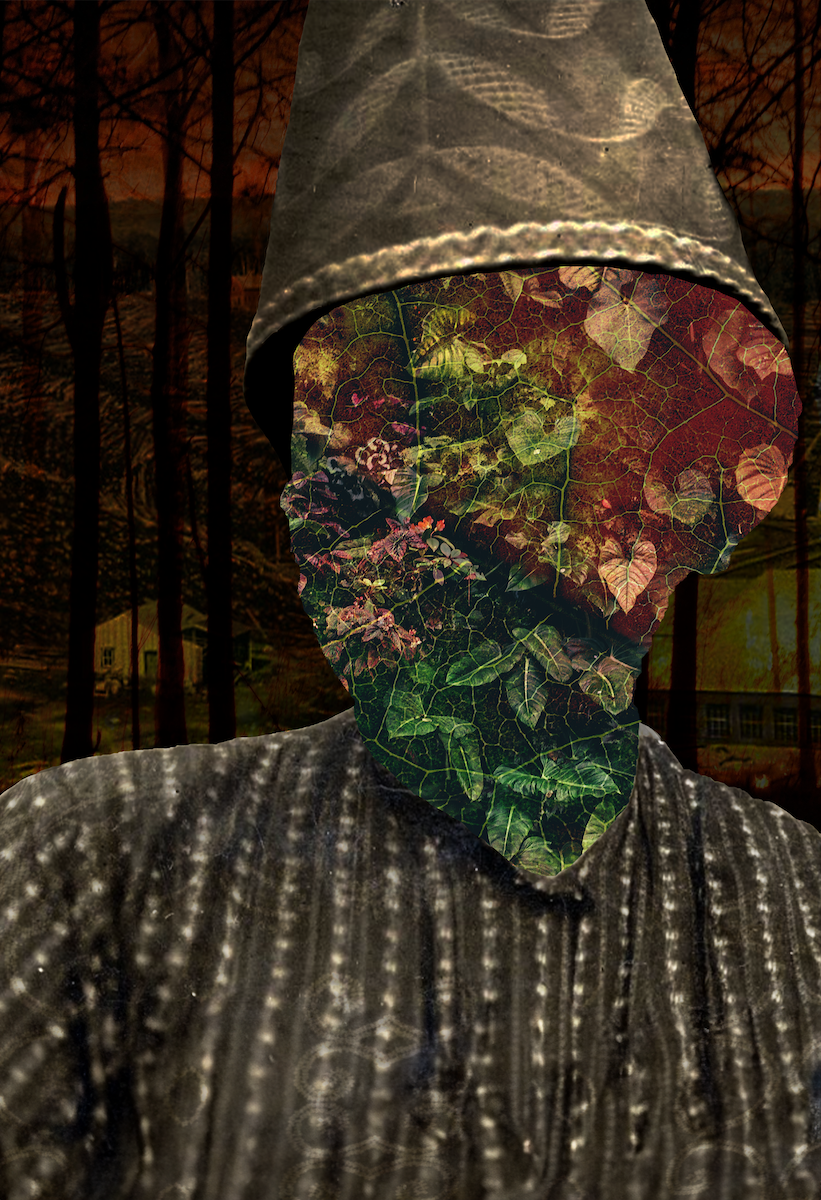
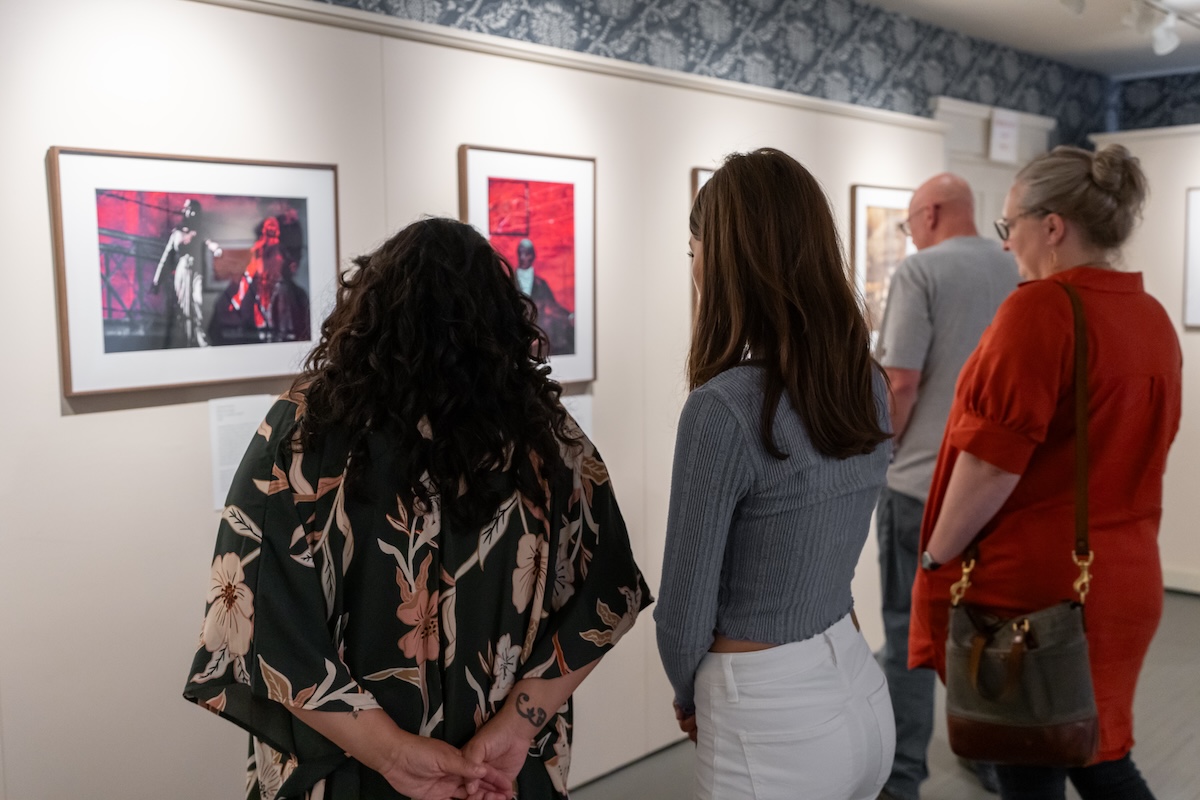
Historic Wαpánahkəyak, a visual arts exhibition featuring works by Panawáhpskewi artist Lokotah Sanborn, is on view at Sarah Orne Jewett House Museum and Visitor Center in South Berwick, Maine, until October 13. “Wαpánahkəyak” translates to “the Dawnland”—the regions of northern New England, Canada’s Maritimes provinces, Newfoundland, and Quebec south of the Saint Lawrence River. These are the Wabanaki Confederacy’s homelands, currently consisting of five principle Tribal Nations: Panawáhpskek, Peskotomuhkatiyik, Mi’kmaq, Wolastoqiyik, and Abenaki.
Sanborn recontextualizes historic photographs of Indigenous Peoples taken as part of late nineteenth-and early twentieth-century salvage anthropology, when Euro-American anthropologists sought to document the “vanishing” races and cultures of Indigenous North Americans whose lifeways were threatened by assimilation policies enacted by the United States and Canadian governments. Sanborn honors the subjects in these photographs by reimagining their likenesses in digital collages to illustrate Wapánahki cultural continuity, epistemology, oral history, and spirituality. His oeuvre includes pieces that depict histories present within the narratives of Historic New England’s museums, such as land theft across Wαpánahkəyak and the deforestation, pollution, and damming of waterways driven by industrialization. Artist statements and interpretive texts displayed throughout the gallery informed visitors of the connection between the art and Historic New England’s museums.
Sanborn’s artwork, in its methods and message, is exemplary of decolonization. Decolonization involves dismantling the structures and legacies of colonialism while working to undo centuries of erasure and marginalization. Decolonization challenges dominant colonial narratives and affirms Indigenous Peoples’ rights to self-determination over their lands, cultures, and political and economic systems. Many of these goals are also reflected in Historic New England’s Recovering New England’s Voices (RNEV) initiative. RNEV uses research, art, storytelling, and technology to create spaces that amplify historically underrepresented voices. Through this work, we unearth neglected or suppressed stories and incorporate them into our tours and programs. Historic Wαpánahkəyak is an extension of our RNEV work and our commitment to support healing from past harm inflicted upon marginalized communities.
To view Lokotah Sanborn’s portfolio, visit lokotahsanborn.com. Visit the digital exhibition at HistoricNewEngland.org/Sanborn. The exhibition and related programming were made possible by the generous support of the New Hampshire Charitable Foundation and the Maine Community Foundation.
This blog post is adapted from an article by Danikah Chartier appearing in the fall 2024 issue of Historic New England magazine. Danikah Chartier (Mi’kmaw) is the co-curator, with Lokotah Sanborn, of Historic Wαpánahkəyak. In 2023-2024, she was the Northern Region Indigenous Community Liaison and Researcher for Recovering New England’s Voices.
Sign up to our newsletter for our latest news and events