
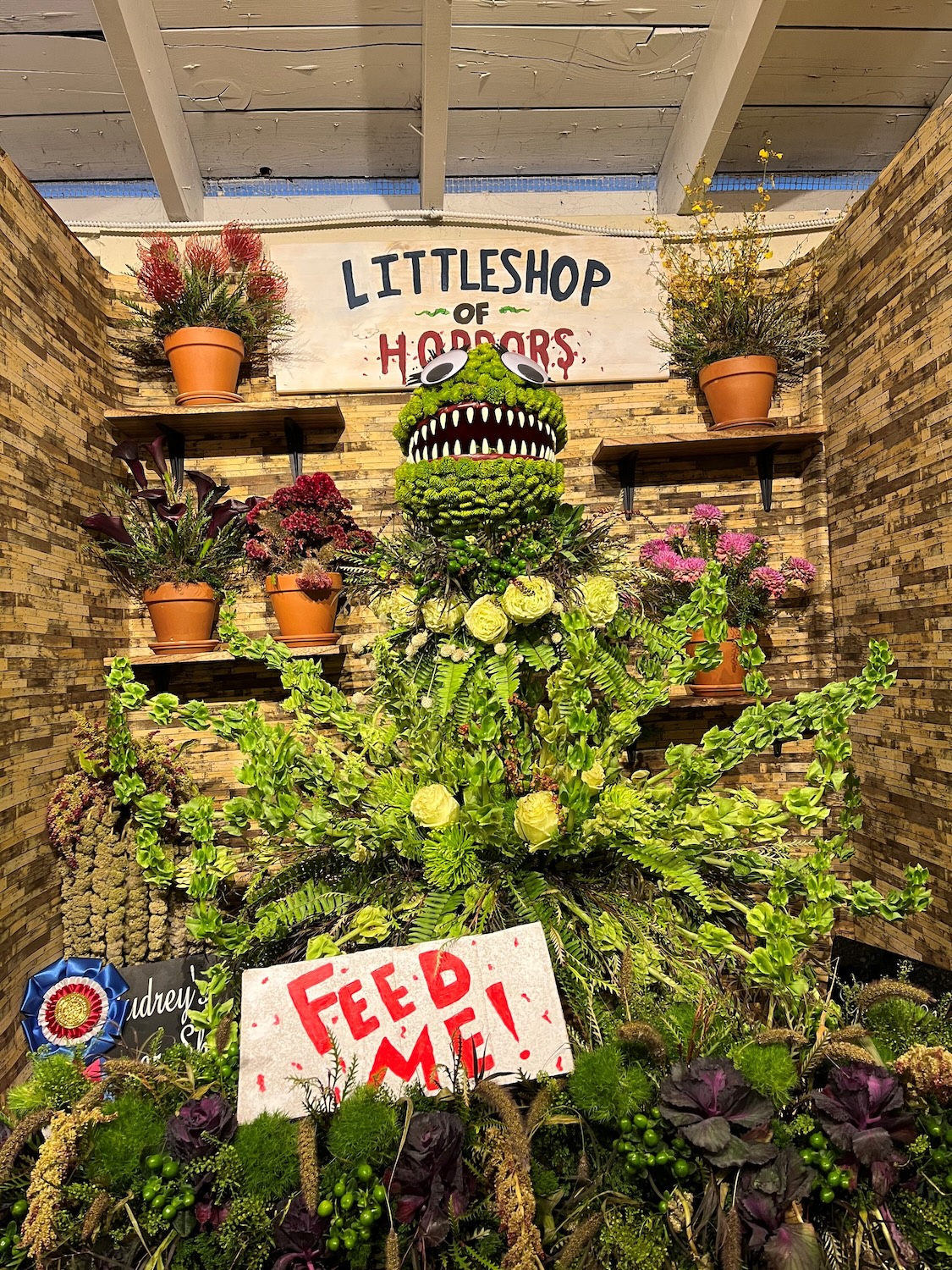
Ah, the Topsfield Fair, a fall tradition since 1818. Fried dough and smoked turkey legs. An extraordinarily giant pumpkin. Magnificent Clydesdales and tiny piglets. Historic New England’s education programs. Midway rides and. . .
Wait, what? Back up—Historic New England’s education programs? What does that have to do with the fair?
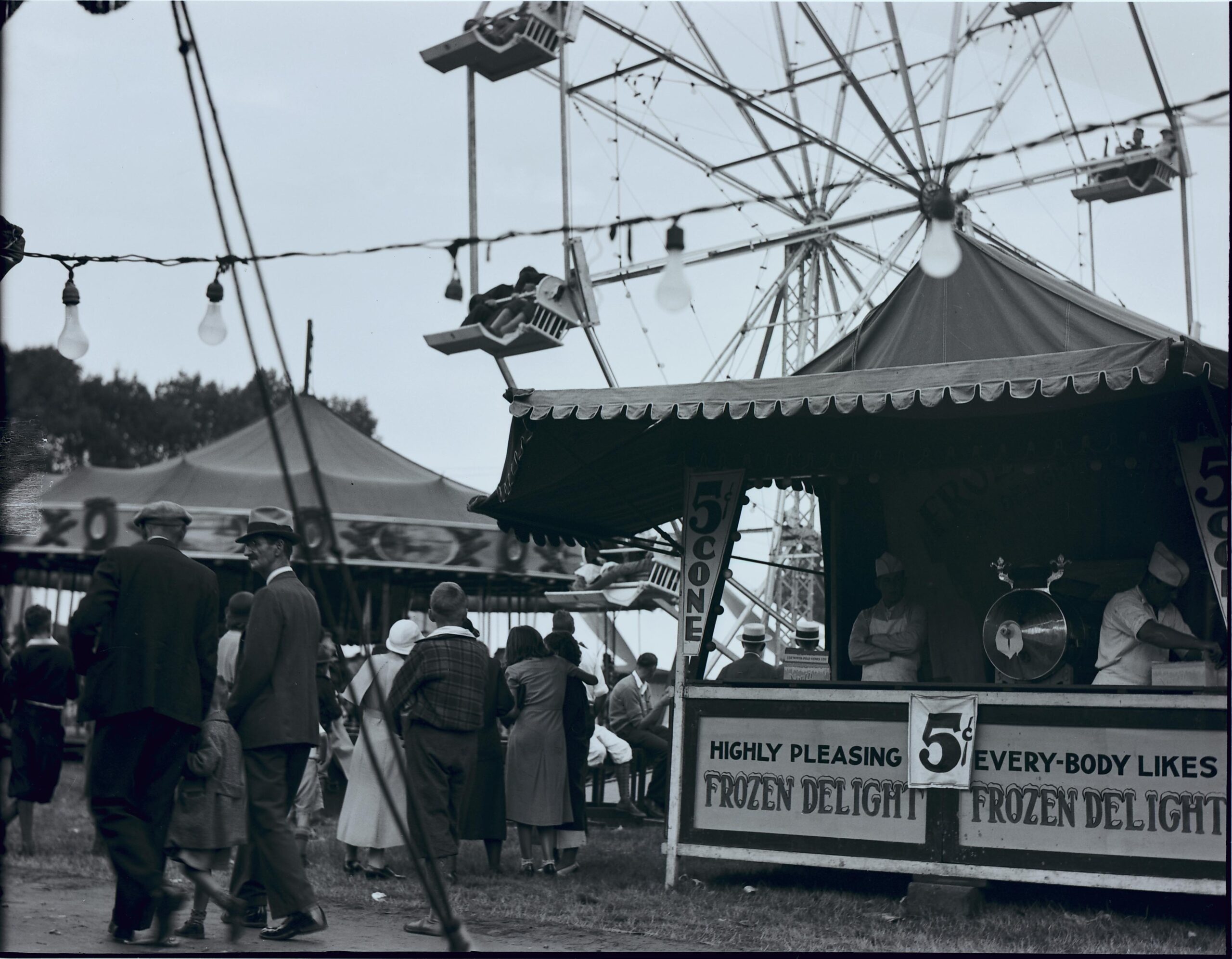
Big yellow school buses pulling up to the fairgrounds and disgorging loads of children to wander through the exhibits, vendors, and midway have long been a fair fixture. In 2010, the Essex Agricultural Society, which owns and operates the fair, decided to organize the chaos by offering half-hour educational experiences on a variety of topics. The following year, they invited Historic New England to participate, and a fruitful partnership has flourished ever since.
The first full week of October each year, Historic New England sets up camp at the fair to teach condensed versions of two existing programs, Sheep to Shawl and Colonial Trades: Making Community Work, and one we developed specifically for the fair, Before the Tractor. Schools register for these programs through the Topsfield Fair. School trips to the fair are free for students up through grade five, and the fair offers a free lunch program for districts with demonstrated need. To qualify for free admission, each class must sign up for at least one half-hour program.
Sheep to Shawl, a Spencer-Peirce-Little Farm based program, is endlessly adaptable to all ages, spaces, and time constraints. This program takes place in a quiet corner of the function hall at the fairgrounds, a rare example of an enclosed space that allows students a break from the chaos. In the program, students learn the steps for processing wool, starting from when it is still attached to the sheep and going all the way to becoming a finished garment for a person to wear. Everyone who participates walks away with a hand-spun bracelet made from the wool of one of the sheep at Spencer-Peirce-Little Farm.
Before the Tractor shares a space with Sheep to Shawl and is the only program we have developed specifically for the fair. It is primarily an artifact analysis exercise looking at nineteenth-century farming implements from our education collection. The program exposes students to the original purpose of the fair, which was to showcase new agricultural innovations and to invite the public to learn about and participate in the farming community—it reminds students that beyond the rides and cotton candy there is a purpose to the fair.
After both programs, we challenge students to go out into the fair and learn more about the animals, farming technologies, and exhibits they see.
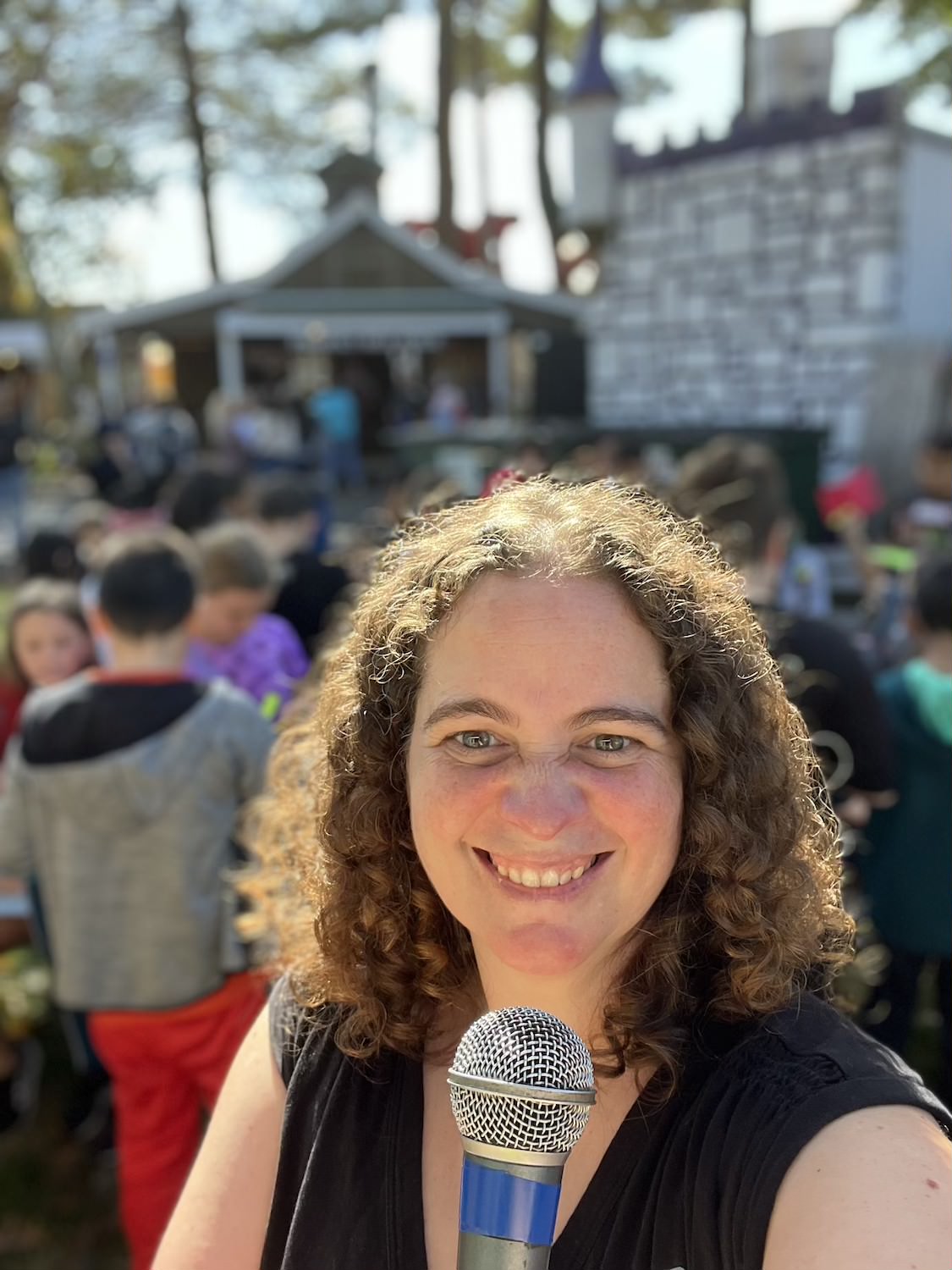
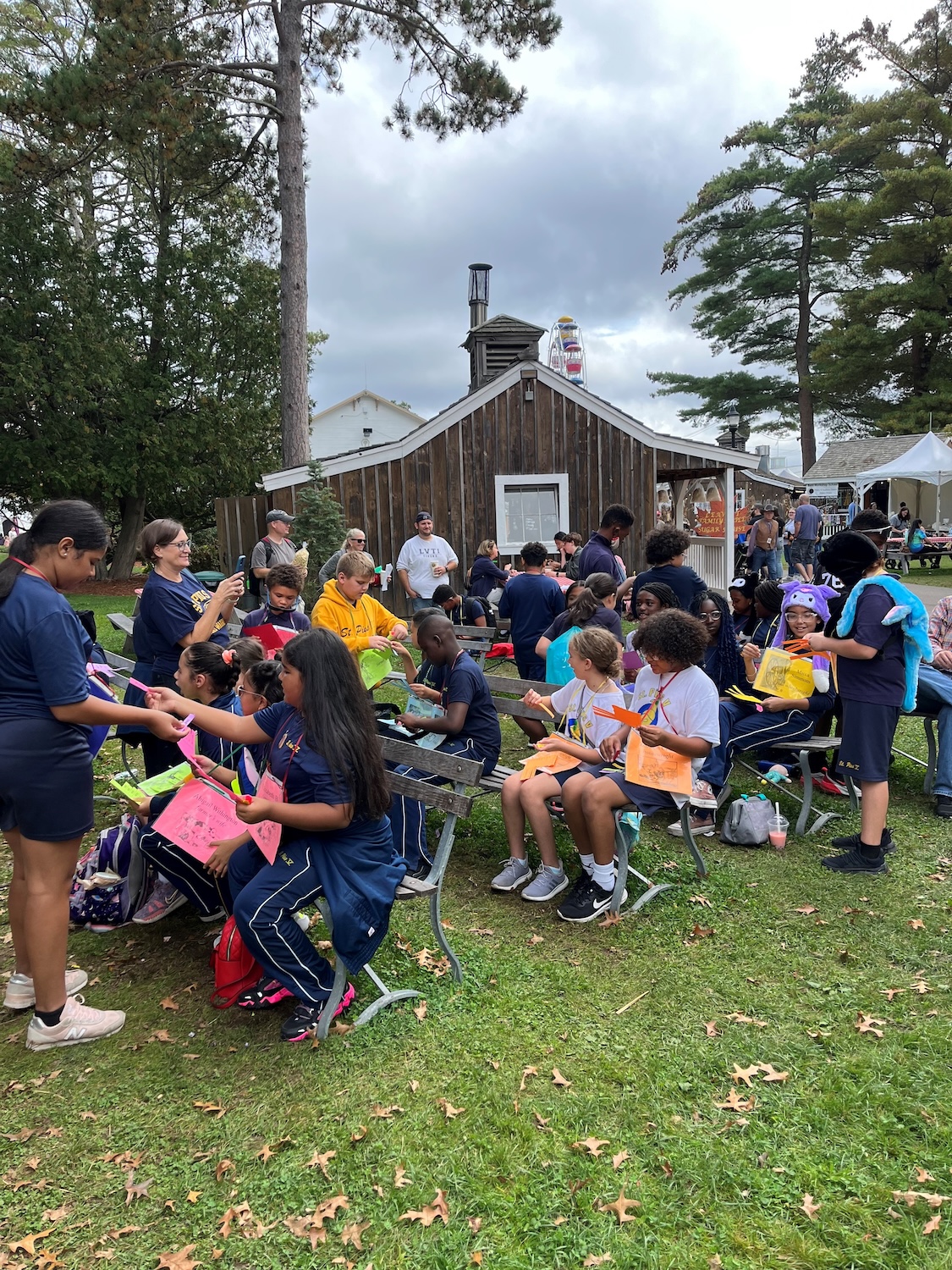
For Colonial Trades, a Pierce House-based program, we are right in the middle of things on a small stage and students can interact with the traditional craftspeople set up nearby. Colonial Trades is based on an account book kept by Samuel Pierce in the mid- to late eighteenth century, which details bartering between Pierce, a farmer, ans others in his colonial Dorchester community. During the program, students learn about the jobs of farmers, shoemakers, housewrights, weavers, blacksmiths, and others and how everyone in the community bartered with each other, exchanging the goods they grew or produced for items they needed. When students participate in Colonial Trades at Pierce House or in their classroom, they are able to see and touch reproduction artifacts, including leather shoes, iron nails, and linen cloth. At the fair, in addition to these items and others that we bring, they visit with real blacksmiths from Prospect Hill Forge in Waltham, Massachusetts, whose workshop is right across the path from our stage; with a woodturner using traditional equipment to shape bowls and spinning tops; and with an apple cider maker with an old fashioned cider press set up beside their shop.
As for the Education team, the Topsfield Fair keeps us on our toes! With groups scheduled every half hour, it took us a few years to figure out how to set up our materials, seat the students, get through all the content, and have them done and moving on by the time the next group arrives, all while making sure the students are engaged and do not feel rushed. For the most part, we have it down, even though our heads are spinning at the end of each day! It is a lot of work, but also one of our favorite weeks of the year.
The Topsfield Fair takes place October 4-14, 2024. Students must be registered through their school to participate in one of Historic New England’s programs at the fair, but if you happen to pass by at the right time, you may catch our Education Team in action during Colonial Trades.
Written by Carolin Collins, Education Program Manager
Sign up to our newsletter for our latest news and events