
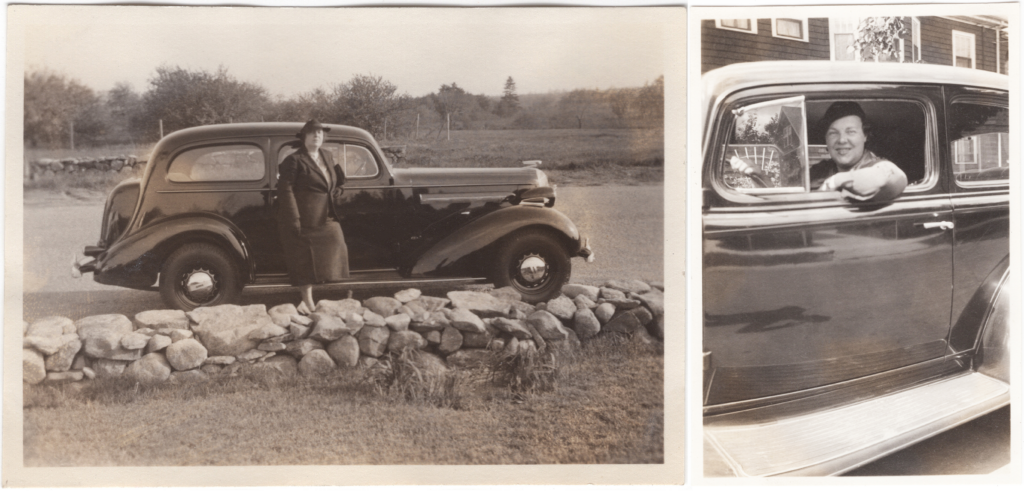
To spark ideas for her daily comic, Edith loved hitting the road in search of inspiration. She often toured New England’s tourist attractions and trendy hot spots, listening in on conversations and observing emerging styles and cultural shifts. Her constant companion on these adventures was a sleek black 1936 Buick, celebrated for its aerodynamic design and reliability, which frequently appeared in her travel snapshots. (Fun fact: Edith cherished this car for decades, keeping it safely in her garage for nearly forty years before finally parting with it in the mid-1970s.)
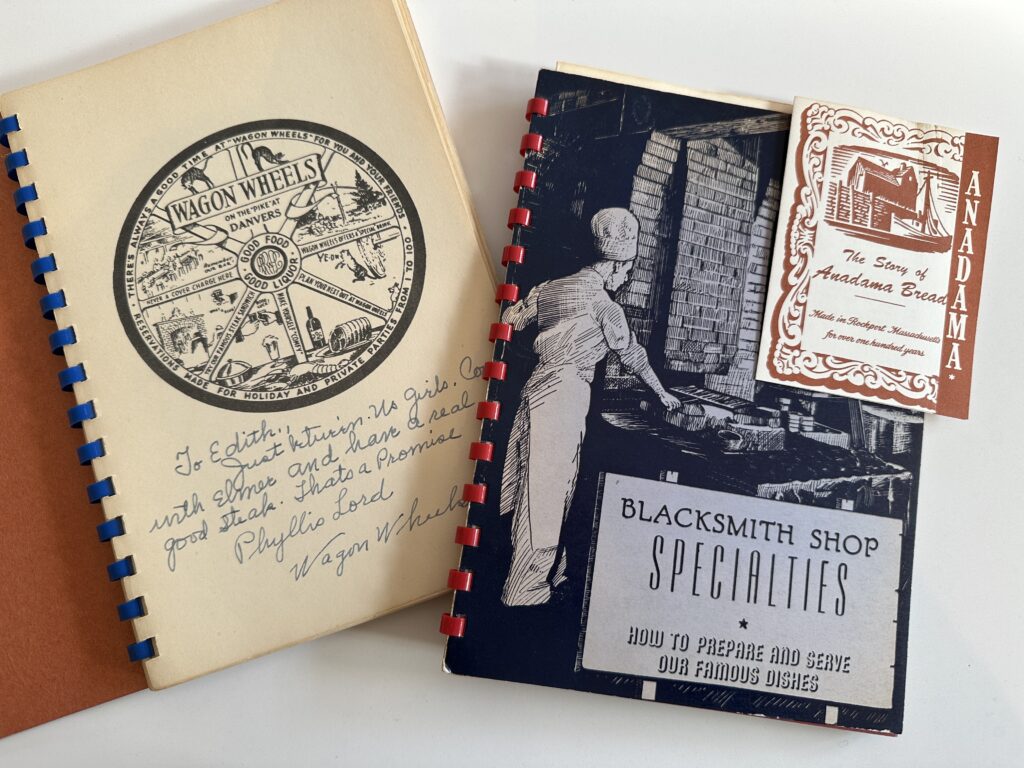
During her travels, Edith loved sampling local cuisine and getting to know the women behind some of New England’s most beloved eateries. She became friendly with Melissa Smith, proprietor of the Blacksmith Shop in Rockport, Massachusetts, famous for its signature Anadama bread. She also connected with Phyllis Lord of Wagon Wheels in Danvers, Massachusetts, who in 1947 published the popular cookbook, Wagon Wheels on the ‘Pike’ at Danvers, a celebration of traditional New England fare. Perhaps most notably, Edith formed a close friendship with Ruth Wakefield, the legendary owner of the Toll House Inn in Whitman, Massachusetts.
For Edith, these journeys were about more than food, they were about forging relationships and championing women in business long before it became a movement.
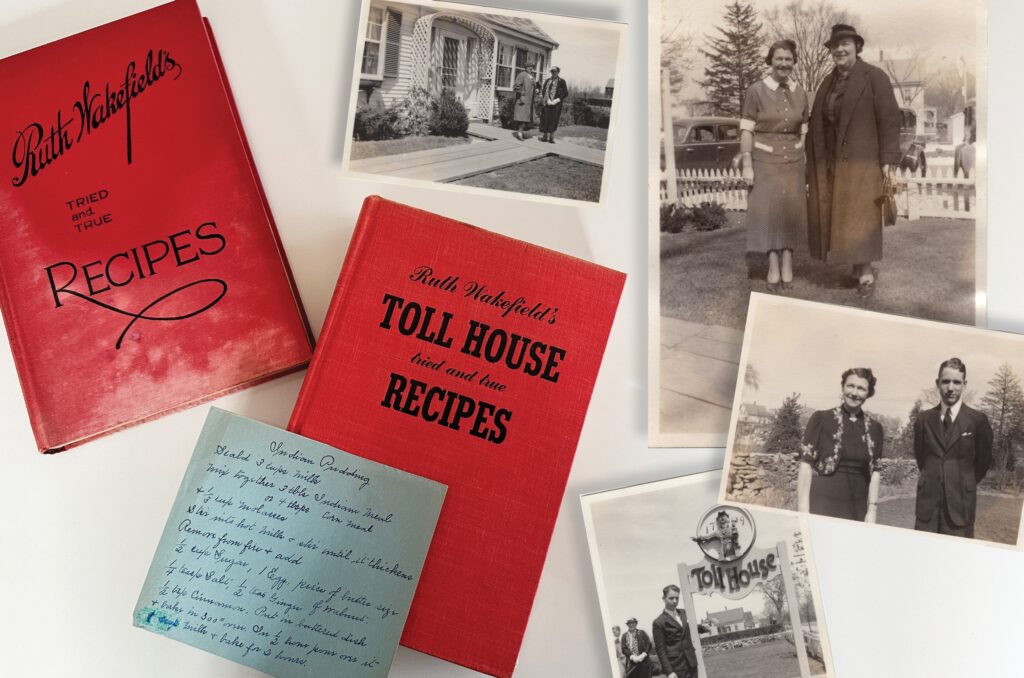
Edith visited Ruth Wakefield at the Toll House Inn numerous times over the years, and those trips became memorable family outings. Ruth, born in 1903, was a contemporary of Edith’s and rose to fame thanks to her iconic cookie recipe. It’s easy to imagine the two bonding over their shared experiences as trailblazers in their fields and the challenges they faced as successful women in the 1930s.
Edith’s first visit to Ruth appears to have been in 1935, accompanied by her mother, Margaret Stevens, and her foster brother (my father), Sherman Davison. Each visit was well documented with photographs, and their friendship endured for decades. Edith treasured Ruth’s cookbooks, which remain well-worn from frequent use. Tucked between the pages are clippings about Ruth and a handwritten recipe for Indian Pudding, a favorite of Edith’s, given to her by Ruth herself.
Just a few years after Edith and Ruth first met, Ruth made culinary history by inventing the chocolate chip cookie. In 1938, while mixing a batch of cookies, she decided to add broken pieces of semi-sweet chocolate to the dough, expecting them to melt completely. Instead, the chocolate softened but held its shape, creating a creamy texture and the world’s first chocolate chip cookie was born.
The recipe sparked a sensation. Ruth received an avalanche of letters requesting it and eventually struck a deal with Nestlé: They could print the recipe and promote their semi-sweet chocolate as the essential ingredient. In return, Ruth received $1 for the rights and a lifetime supply of baking chocolate.
Decades later, in 1997, the chocolate chip cookie was declared the official cookie of the Commonwealth of Massachusetts and is widely considered the most popular cookie of all time. It was certainly Edith’s favorite.
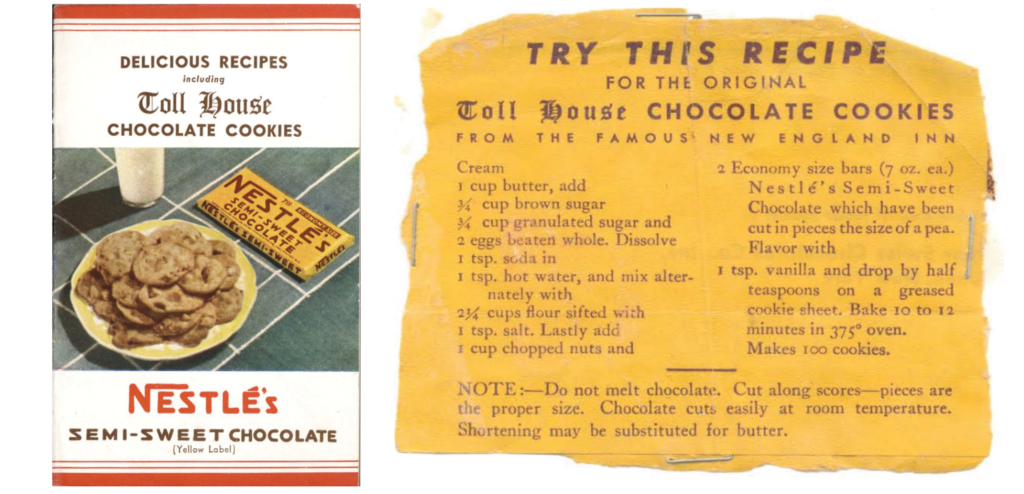
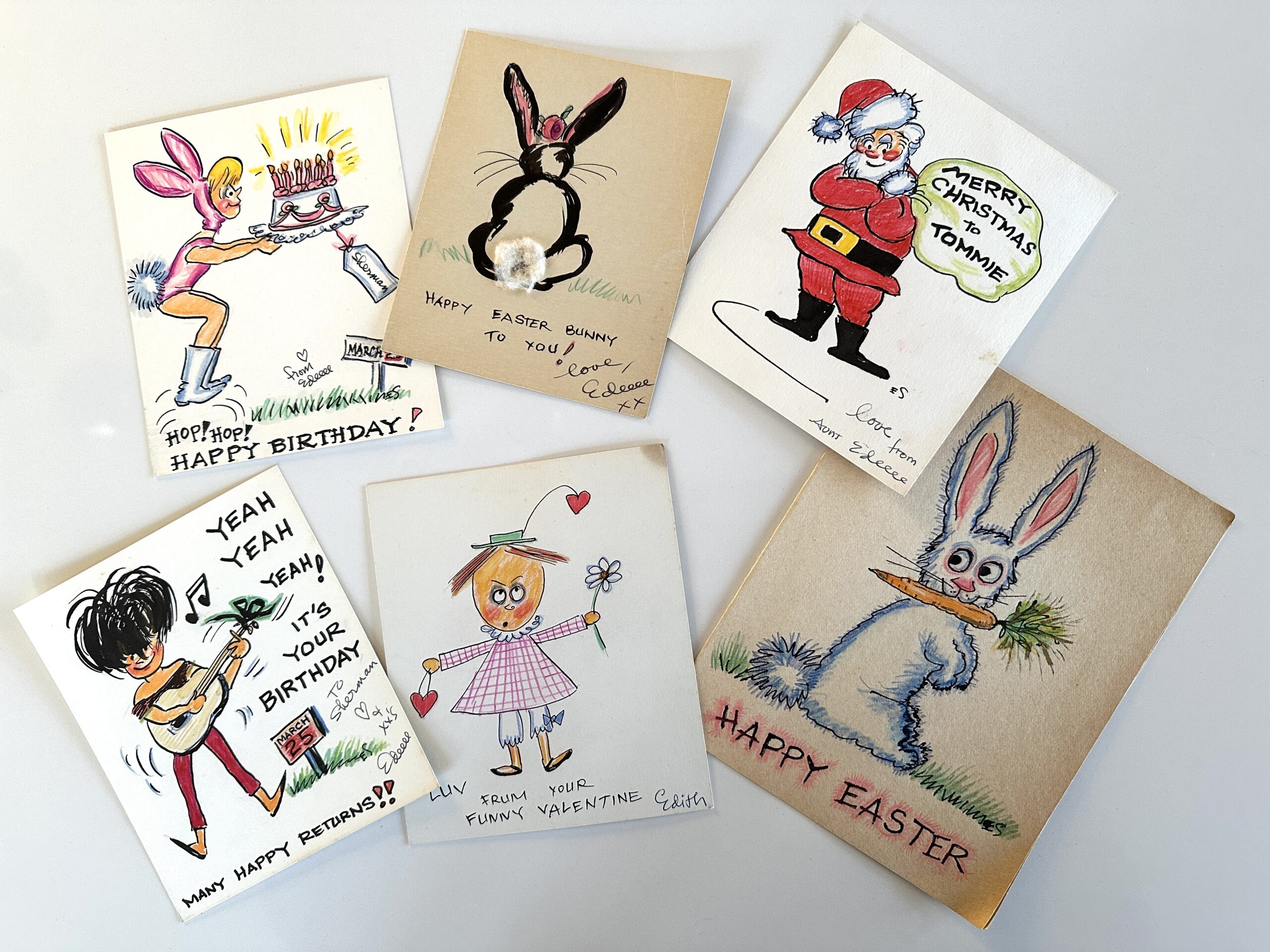
When I was a child, holidays were made sweeter by Edith’s Toll House cookies, baked from Ruth’s original recipe that called for broken pieces of semi-sweet chocolate, not the chips that later became standard. Edith packed the cookies in tins decorated with flowers, lined with wax paper, and topped each with a hand-drawn card. The best part? Each of us, my brother, sister, and I, got our own tin, a rare treat that meant no sharing was required.
Sometimes the bottoms of the cookies were a little burnt, perhaps thanks to her old electric oven. I never minded; that slight char added a depth of flavor that paired nicely with the rich chocolate. That taste has stayed with me all these years. Even now, when I bake Toll House cookies, I intentionally let the bottoms brown just a bit—to recreate that magic taste and to bring back the memory of Aunt Edee, which never fails to make me smile.
Written by Robert S. Davison
Robert S. Davison is Creative Director at Boston University’s Marketing & Creative Services Department. He serves on the Alumni Board of Directors at Massachusetts College of Art and Design, where he is also an Assistant Professor of Communication Design. To learn more about the remarkable life and career of Edith Stevens, watch our recent webinar, read Davison’s profiles of his aunt for Historic New England magazine and this blog, or visit edithstevens.com.
All images used courtesy of the author.
Sign up to our newsletter for our latest news and events