
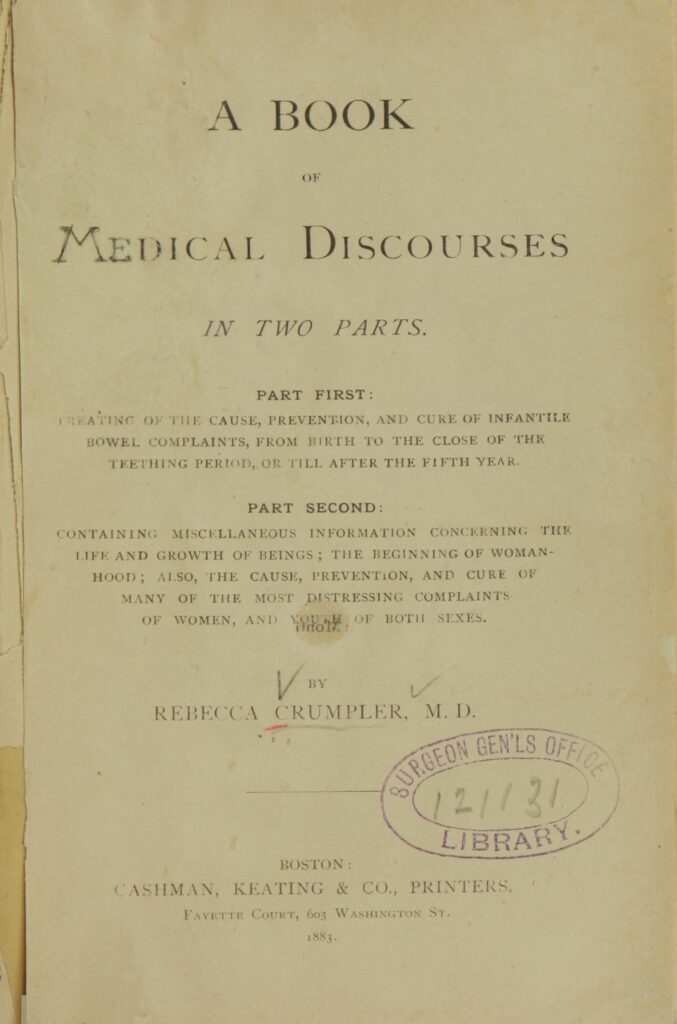
Dr. Rebecca Lee Crumpler was a woman of firsts. When she graduated from Boston’s New England Female Medical College in 1864, she became the first Black woman in the United States to earn an MD. Almost two decades later, she wrote A Book of Medical Discourses in Two Parts, likely the first book published by a Black woman physician in the United States. Primarily a medical advice book with autobiographical sections, it is also the only known primary source written in her own words.
According to A Book of Medical Discourses, Crumpler (née Davis) was born in Delaware and raised in Pennsylvania by her aunt, who was a community healer. Her aunt inspired Crumpler’s passion for “reliev[ing] the suffering of others.” After working for eight years as a nurse in Charlestown, Massachusetts, she was accepted to medical school. During her time in the program, Crumpler’s first husband, Wyatt Lee, passed away. She also faced pushback from some of the White male faculty for what they perceived as her slow progress. Despite this personal loss and educational hostility, she was granted the degree of Doctress of Medicine (MD) four years later.
Crumpler graduated from medical school a year before the Civil War ended, and she relocated south to work for the Freedmen’s Bureau in Richmond, Virginia, only a year after slavery was abolished. Crumpler considered this to be essential “missionary” work because she treated underserved Black women and children, many of whom had survived enslavement and the Civil War. Crumpler was the only Black woman doctor in Richmond, which had been both the capital of the Confederacy and a center of the American slave trade. Although she later reflected on this experience as fulfilling and educational, she faced significant prejudice for her race and gender. Pharmacists would not fill her prescriptions, and her colleagues disregarded her observations.
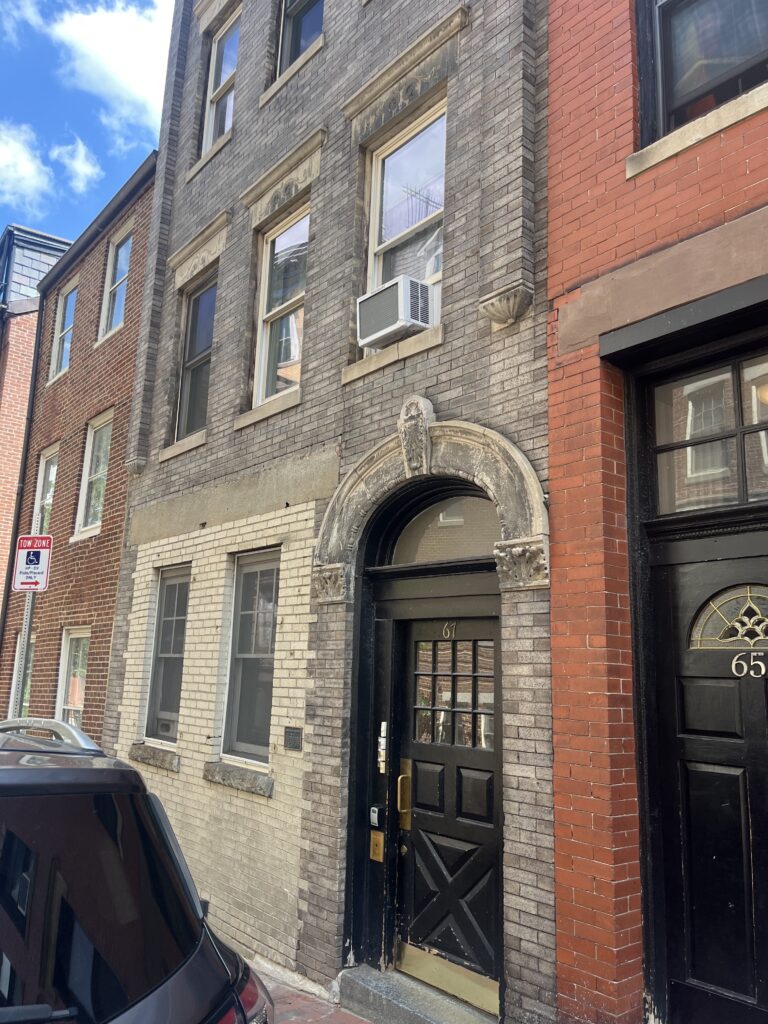
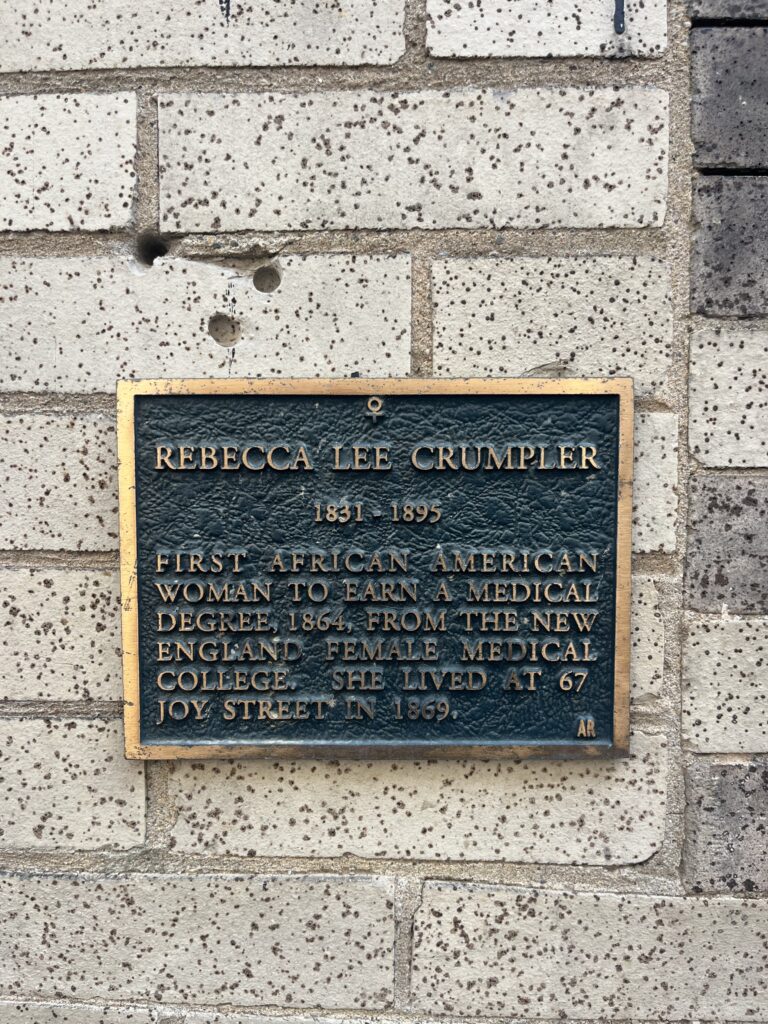
When she returned to Boston around 1867, Crumpler and her second husband Arthur (who had self-emancipated from enslavement in Virginia) moved to 67 Joy Street on Beacon Hill. This placed the couple fewer than five hundred feet away from Historic New England’s Otis House, which itself was home to two pioneering White women doctors a few decades prior. On Joy Street, the Crumplers would have been immersed in Boston’s thriving Black community. There, they lived across the street from the African Meeting House, one of the oldest Black churches in the United States and a major center for Black political activism.
Crumpler primarily treated women and children at her Joy Street address, and subsequently, the house she moved to in Boston’s Hyde Park neighborhood. It is unknown when she stopped practicing medicine (if she did at all), but she eventually decided to turn her personal journal into A Book of Medical Discourses. Her diverse life experiences clearly influenced her writing, which she intended for general audiences. In addition to providing advice on women’s healthcare, childbirth, and home remedies, she advocated for women to have access to medical literature, education, and training. She also wrote passionately about the intersections between race and public health. Crumpler wrote that women “work hard. . . nor does there ever seem to be an end to their toils. Especially do some of the laboring women of my race appear to work under heavy disadvantage.”
She also condemned casual racism and depictions of violence in popular entertainment as harmful to public health and child development. Observing Punch and Judy—apuppet show often punctuated with racist phrases and violent imagery–on the Boston Common, Crumpler asked, “May not such shameful scenes prove to be the primary lessons in pugilism, murder, and suicide?” In her previous residence on Joy Street near Otis House, Crumpler would have been a short walk to the Boston Common; it is likely that she witnessed things there that inspired her commentary.
A Book of Medical Discourses circulated through Crumpler’s larger social and political networks. On June 23, 1883, The New York Globe advertised a promotional event at Boston’s Twelfth Baptist Church for her new book. Over a decade later, Crumpler was mentioned in a Boston Daily Globe article about Boston’s accomplished Black community and received praise for being the “author of a rather valuable book.” Crumpler died on March 9, 1895, only a year after the article was published. The record of her death noted her occupation as “doctress,” referencing the title that she had worked so hard to achieve in the face of systemic racism and sexism.
Crumpler’s legacy has been secured by other Black women doctors, who intervened to expand the incomplete historical record. Dr. Melody McCloud joined the Rebecca Lee Society—founded to support other Black women physicians—as a young practitioner in Atlanta in the 1980s and undertook a decades-long effort to suitably memorialize Crumpler. In 2020, Crumpler and her husband Arthur finally received proper headstones in Boston’s Fairview Cemetery that commemorated their accomplishments. Permanently engraved in the granite is a celebration of her work as a doctor, nurse, writer, and advocate.
Written by Rebecca Lo Presti. Lo Presti is a PhD student at the University of Massachusetts Amherst and interned with Historic New England’s Study Center in 2025.
Beginning summer 2026, Otis House will offer walking tours exploring Beacon Hill’s nineteenth-century medical history. Dates and times will be announced this spring; visit Historic New England’s Events Calendar for updates and registration information.
Sign up to our newsletter for our latest news and events