
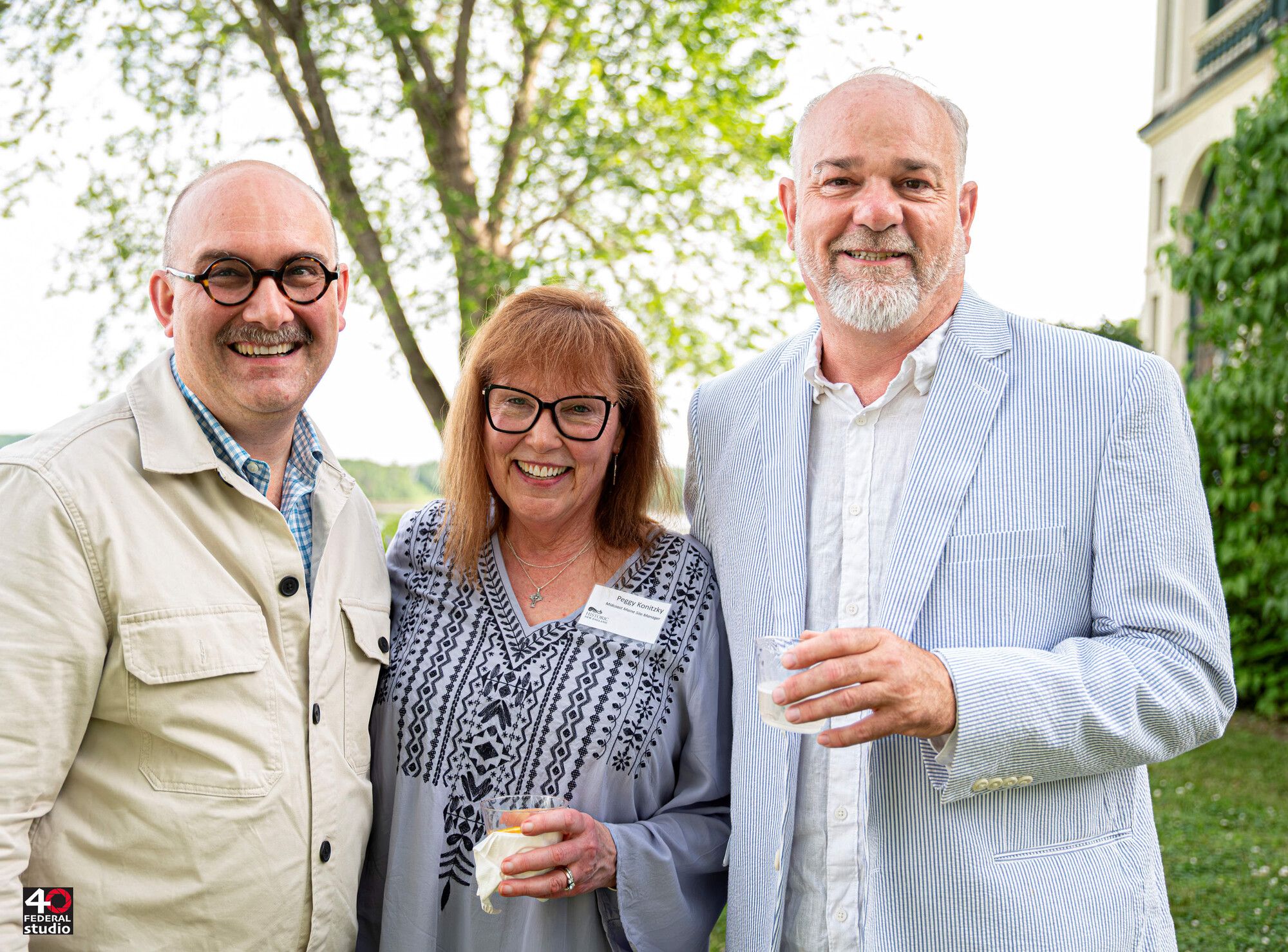
I grew up in New Jersey, Crossroads of the Revolution! We joyfully went everywhere George Washington slept, battles took place, or where there were museums or historic houses. The Met and the Cloisters are still my happy places. I studied History and Art History at Georgetown University, then escaped from the international marketing corporate world in 1996 when I followed my passion for history to Maine, Tufts University, then to Historic New England.
Site Managers never know what is going to happen during a day at the sites! All you can depend on is that whatever you THOUGHT you were going to be doing isn’t what will happen.
One of my favorite objects is a drawing at Marrett House. It’s a sweet view of the property ca. 1830 showing the house and farm, with barns, outbuildings, a person on horseback, another sitting under a tree and a man holding a child’s hand. It even shows the little schoolhouse that makes me think of Helen, Mary, and Frances Marrett—all teachers. I especially love the cows!
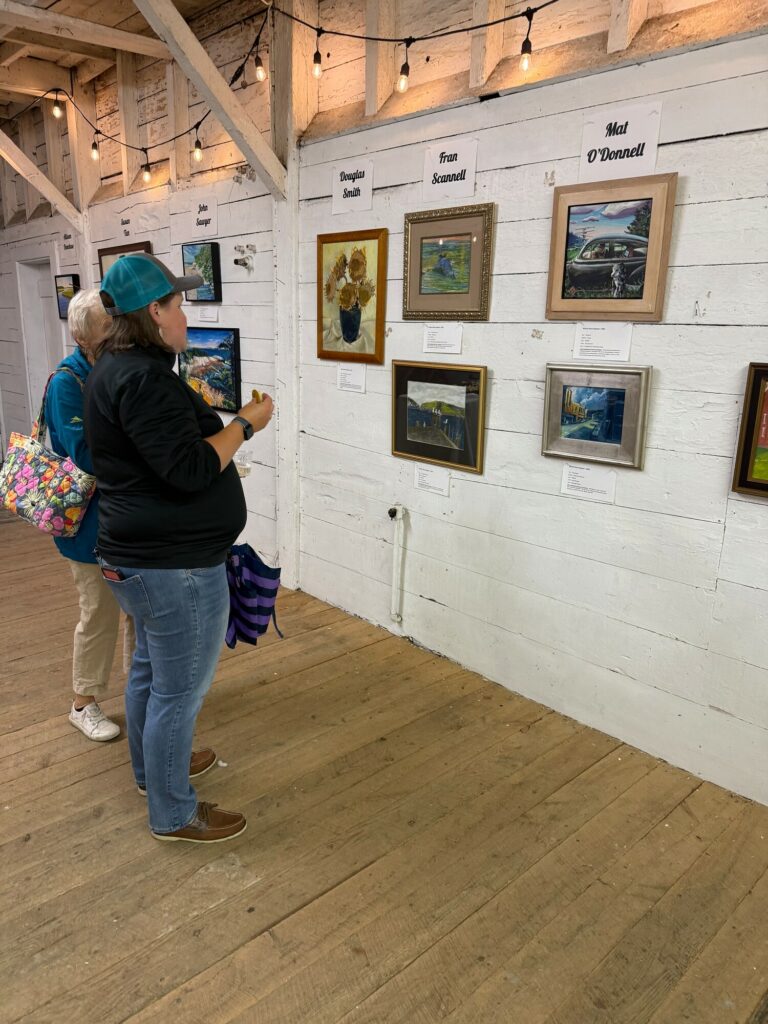
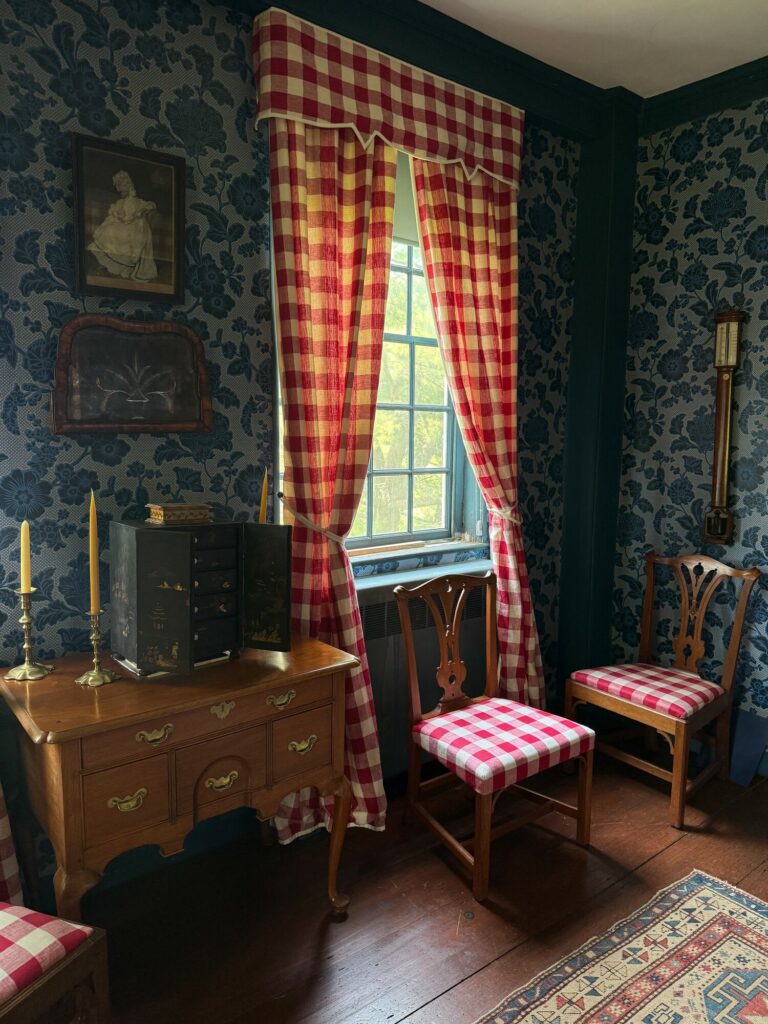
Sharing stories of the past and watching as the people in our stories come alive to visitors.
We’ll share stories about how families connected to our sites were affected to the American Revolution in different ways. The Bowman family, who lived in the Bowman House in Dresden during the Revolution, experienced its impact as immediate and deeply personal. Silas and Tempe Lee, who built Castle Tucker in Wiscasset in 1807, were not living in Maine during the war. However, the Revolution still shaped their lives: Tempe lost a parent, and Silas—like Daniel Marrett, who built Marrett House in Standish in 1789—grew up in Concord at a time when it stood at the center of revolutionary activity. Silas was a Patriot teenager with a Loyalist father in Concord at a time when it stood at the center of revolutionary activity. For later generations, the connection was one of legacy and identity. Alvin and Gertrude Sortwell expressed their pride in their family’s revolutionary history by decorating Nickels-Sortwell House in Wiscasset in the Colonial Revival style in the early twentieth century.
A mystery, a history, and Baroque music.
To learn more about these and other events at Peggy’s sites, visit HistoricNewEngland.org/Events.
Sign up to our newsletter for our latest news and events