Larger and more imposing than most of the houses nearby, the architectural style of the house is unadorned Georgian. Bowman furnished it with exquisite Chippendale-style furniture, Chinese export porcelain, and imported silver and glassware, creating a world of beauty and elegance far away from the rough reality and challenges of life on the Maine frontier. Receipts show that he continued buying for the house right up to his death.
In 1770, Jonathan Bowman married Mary Lowell Emerson, the widow of a ship captain. The family soon grew to include three sons and a daughter. By then, Bowman was Judge of the Courts and Probate, and a power behind most of what went on in the region. He had also grown his participation in shipping, including owning all or part of at least seven international trading ships.
Although it is difficult to imagine today, the Kennebec River was busy with shipping traffic through the early nineteenth century. Bowman ships carried vast amounts of lumber and salted fish down the Kennebec River to Baltimore and other southern ports, Liverpool, Leith, Glasgow, St. Kitts, and Eustatia. The ships brought back sugar, rum, whiskey, wine, coffee, chocolate, spices, linens, silk, cotton, sewing tools, knives, tobacco, tea, snuff, pipes, books, magazines, and manufactured goods.
The Bowmans enslaved at least two Black men, Cicero and Cornelius. We only know of Cornelius from Bowman’s receipts for his labor and clothing. Cicero was enslaved by Mary Bowman’s first husband, Edward Emmerson, sometime in 1765 and brought to their home in Portsmouth. Cicero was about nine years old at the time. After Emmerson’s death, Mary brought Cicero to Pownalborough when she married Jonathan Bowman in 1770.
On November 1, 1775, Cicero self-emancipated. At Bowman House, he would have been present for heated discussions about English tyranny, the rights of men and the need for independence. Bowman and his friends were staunch Patriots and members of the local Committee of Safety. Bowman’s November 6 runaway slave ad vividly describes the twenty-one-year-old young man and says that he left with a rifleman and was assumed to be going to join the army. Reuben Colburn, a Pownalborough neighbor, took the job of slave catcher. Military records show Cicero enlisting in two regiments in the Piscataqua area, the first being disbanded and reorganized. Colburn’s billing to Bowman shows Cicero in the second regiment that travelled to Cambridge, MA to join up with the Continental Army. Colburn discovered Cicero in Cambridge and returned him to Bowman in January 1776.
The Revolutionary War was a bitter civil war in Pownalborough, with roots in religious feuds as well as politics. Bowman and Cushing were descendants of seventeenth-century Puritan immigrants. Both were staunch Congregationalists who did not want the Anglican church in their community. Their former classmate Anglican Rev. Jacob Bailey was controlled by his patron, the wealthy Sylvester Gardiner.
Gardiner made enemies of Thomas and John Hancock when he used fraudulent legal methods to try to claim land they owned. His machinations ensured that Jonathan Bowman would become an even greater foe. Gardiner and Bailey were Tories. Bowman and (now Sheriff) Cushing, both patriots, became leaders of the Committee of Safety. After Bailey refused to read the Declaration of Independence to his congregation, local fighting intensified. Gardiner and Bailey were forced to flee to Canada. Bowman and Cushing remained in positions of power, with their prewar wealth intact.
Sylvester Gardiner wrote the only known contemporary description of Jonathan Bowman, describing him as tall and striking in appearance, with strong features and silver hair. He particularly noted Bowman’s clothing, described as a full black suit with silk stockings and large glittering shoe buckles.
Mary Bowman died in 1785. In 1798, sixty-three-year-old Bowman married thirty-three-year-old Nancy Goodwin, of the neighboring courthouse family. A condolence letter from Bowman to Nancy on the death of her brother Charles in 1790 shows a friendship well before their marriage. Jonathan Bowman died in 1804. Nancy outlived him by fifty-two years, and it is through her family descendants that Bowman furniture, objects, accounts, and correspondence were saved.


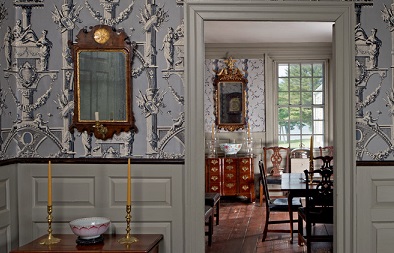 The Bowmans’ Mansion House
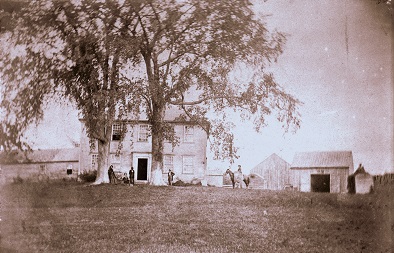 The Carney Farm
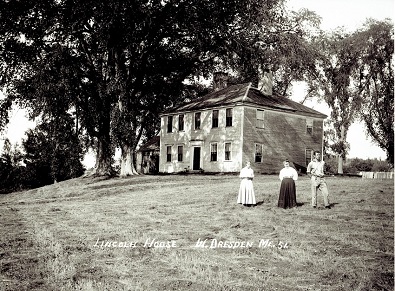 The Ice Company
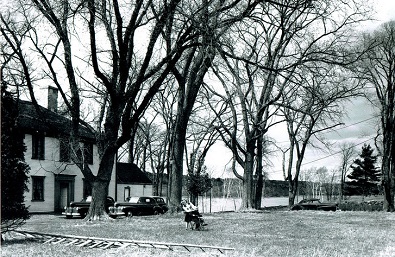 Passed Between Preservationists
 Bill Waters’ Bowman House