1938
HAV-01-403-Z-L-404
GUSN-364857
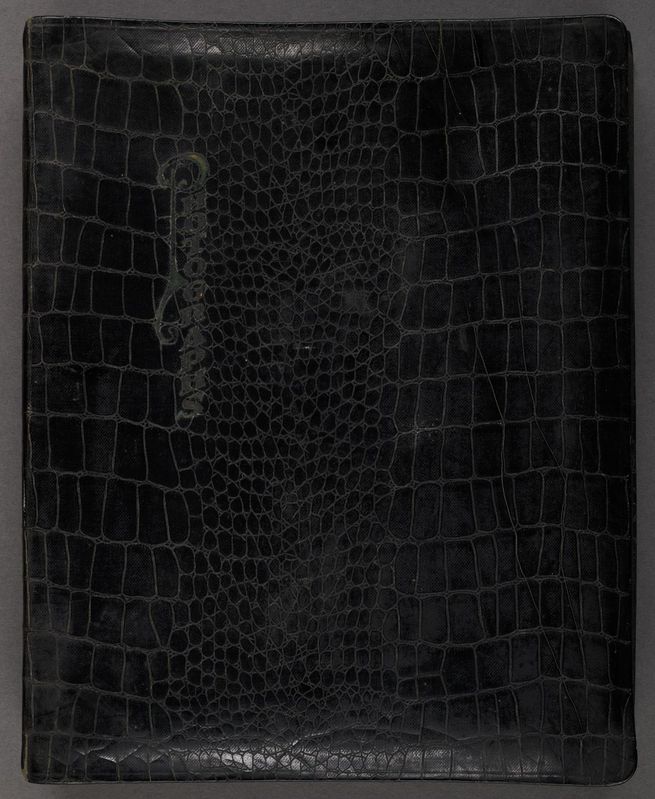
Black photograph album containing 102 pages, 74 of which are blank.
Pages 42-101 are blank and were not photographed.
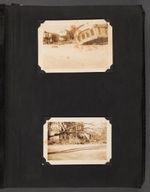
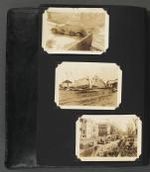
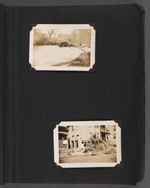
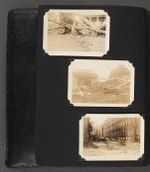
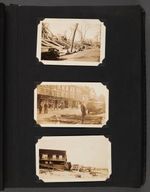
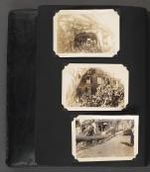
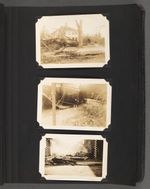
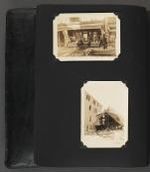
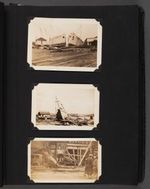
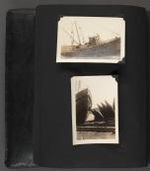
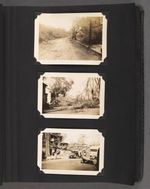
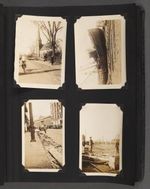
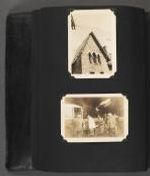
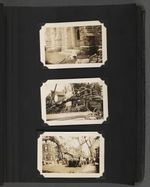
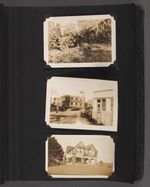
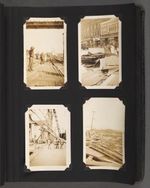
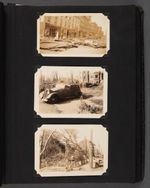
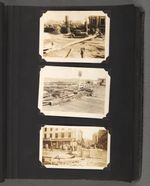
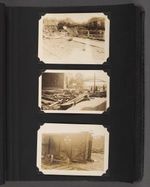
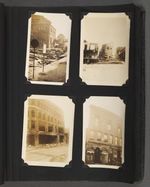
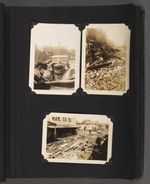
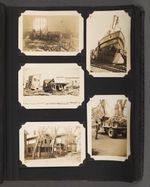
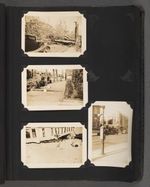
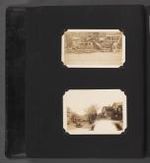
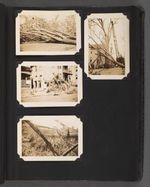
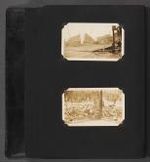
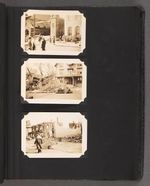
The remaining 28 pages contain 85 black-and-white photographs documenting the damage done at various locations and structures, including, but not limited to, neighborhoods, the shoreline, and the business district in New London, Connecticut. The damage sustained by modes of transporation such as autombiles and boats is also heavily documented throughout the album.
hurricanes
weather
houses
trees
boats
wharves
automobiles
streets
storefronts
stores
restaurants
railroads
ferries
photograph albums
photographs
1 photograph album, 102 pages : black-and-white photographs ; 11 1/4 x 9 inches
PC009
Photograph albums collection
2024
PC009.311
Library & Archives Purchase
Library & Archives purchase, 2024
New London (New London county, Connecticut)
photograph albums
photographs
Photograph
Hurricane damage
A small number photographs in the album are damaged. Some of the photographs have dislodged from their pages. Handle with care.
Item
HAV-01-403-Z-L-404
A Photographic Record of the New England Hurricane and Flood, 1938
The New England Hurricane of 1938 is sometimes called the "Long Island Express".
The hurricane caused the death of approximately 700 men, women, and children. With respect to property, 4,500 homes, 2,600 boats, and 26,000 automobiles were destroyed, and the total cost of property lost amounted to $400 million. During the storm response, the Coast Guard assisted over 500 vessels and rescued over 1,000 persons. For people who lived through the storm, it remains the weather event of their lifetimes.
On September 21, 1938, Long Island, New York absorbed the initial impact of the hurricane. The storm came ashore as a Category 3 hurricane, with estimated sustained winds of 120 miles per hour and a storm surge over 10-feet. The impact registered on seismographs in Alaska.
In Connecticut, where the eastern coastline was not buffered by Long Island, damage was extensive. New London was devastated by wind, floods, and fires. In New London harbor, the tidal surge drove the five-masted school ship Marsala into a warehouse complex along the docks, setting off a10 hour fire which consumed a quarter-mile area of the business district. Ships torn from their moorings wrecked wharfs before sinking or beaching themselves. The permanently anchored 240-ton lightship at the head of the New London Harbor was found on a sand bar two miles away.
Ultimately, the storm became the deadliest and costliest storm in Connecticut history.
Janick, Herbert F. (2022, September 21). The Hurricane of 1938 Rocks Connecticut. Connecticut History. connecticuthistory.org/the-hurricane-of-1938-rocks-connecticut/\n
New Hampshire Public Broadcasting Service. (n.d.) American Experience, The Path of the Hurricane of 38 pbs.org/wgbh/americanexperience/features/hurricane-path/\n
Thiesen, William H. (2023, October 20). The Long Blue Line: The Great New England Hurricane of 1938. My CG, United States Coast Guard. mycg.uscg.mil\n
1938 New England hurricane. 2025, September 25). In Wikipedia. https://en.wikipedia.org/wiki/1938_New_England_hurricane \n
Historic New England is committed to implementing reparative language description for existing collections and creating respectful and inclusive language description for new collections. If you encounter language in Historic England's Collections Access Portal that is harmful or offensive, or you find materials that would benefit from a content warning, please contact info@historicnewengland.org.
Sign up to our newsletter for our latest news and events

 Loading...