

Lobster rolls and lighthouses are usually the first things people imagine when they think of Maine. Maine’s rugged coastlines and small-town communities have long nurtured authors whose imaginations have shaped American literature. For many readers, Stephen King defines Maine literature with his tales of the paranormal, but the state’s Gothic literary tradition began long before him. In fact, one of Maine’s earliest published female novelists, Sally Sayward Barrell Keating Wood, was writing Gothic fiction from her seaside home in York, Maine, 150 years before King was born. Wood published her first book in 1800, the first of four in as many years.
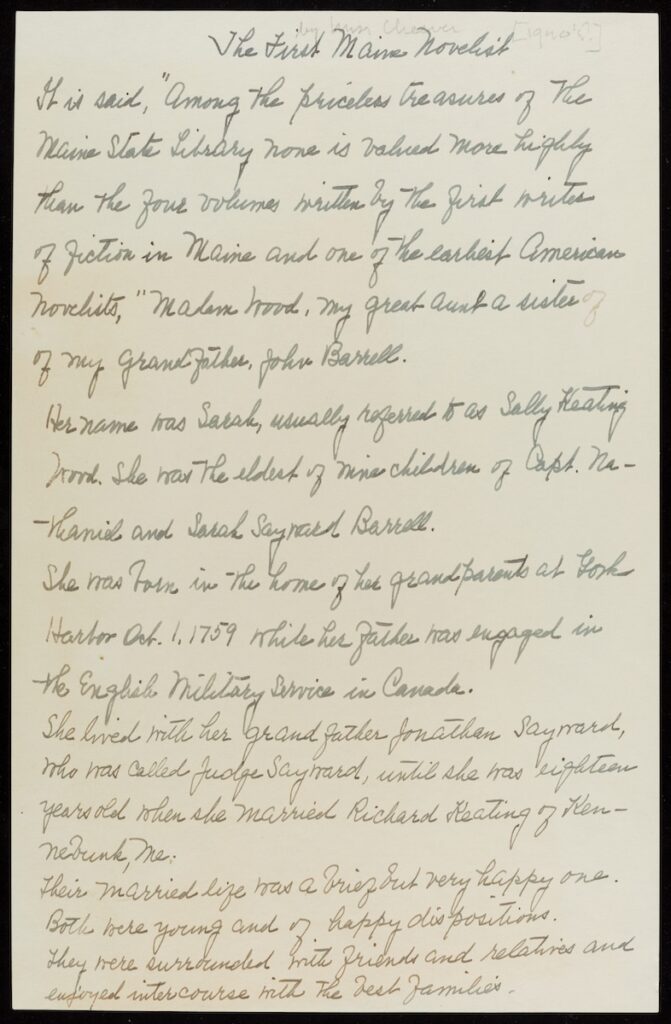
The eldest of eleven children, Wood was born in her grandfather’s house, now Historic New England’s Sayward-Wheeler House. Even after her family moved to a larger home across town, she continued to spend many hours there with her grandfather, Jonathan Sayward, and later returned to live in the house for a few years as a teenager. As a judge and trader, Sayward was a community leader. He had remained a Loyalist during the American Revolution, but regained his social standing after the war ended. Growing up in his home, Wood was introduced to Sayward’s frequent—and often influential—visitors, encountering people from many walks of life. Combined with access to his vast library, these experiences opened her world and helped form the vivid imagination she later brought to her writing.
After Wood married, her grandfather continued to play an important role in her life. Her first husband, Richard Keating, worked as a clerk in Sayward’s maritime business, and Sayward built the young couple a home across the street from his own. When Wood was twenty-five, Keating passed away unexpectedly, leaving her with two young children and pregnant with their third. Sayward, who knew the pain of losing a spouse, supported Wood and her children financially for the next fifteen years, until his death in 1796. After his death and the loss of that support, Wood began writing to cover household expenses. Though she framed her work as a practical necessity, it was also perhaps a way for her to process the events of her time. Her novels often challenged conventional expectations that women would be loyal and dutiful daughters, wives, and mothers.
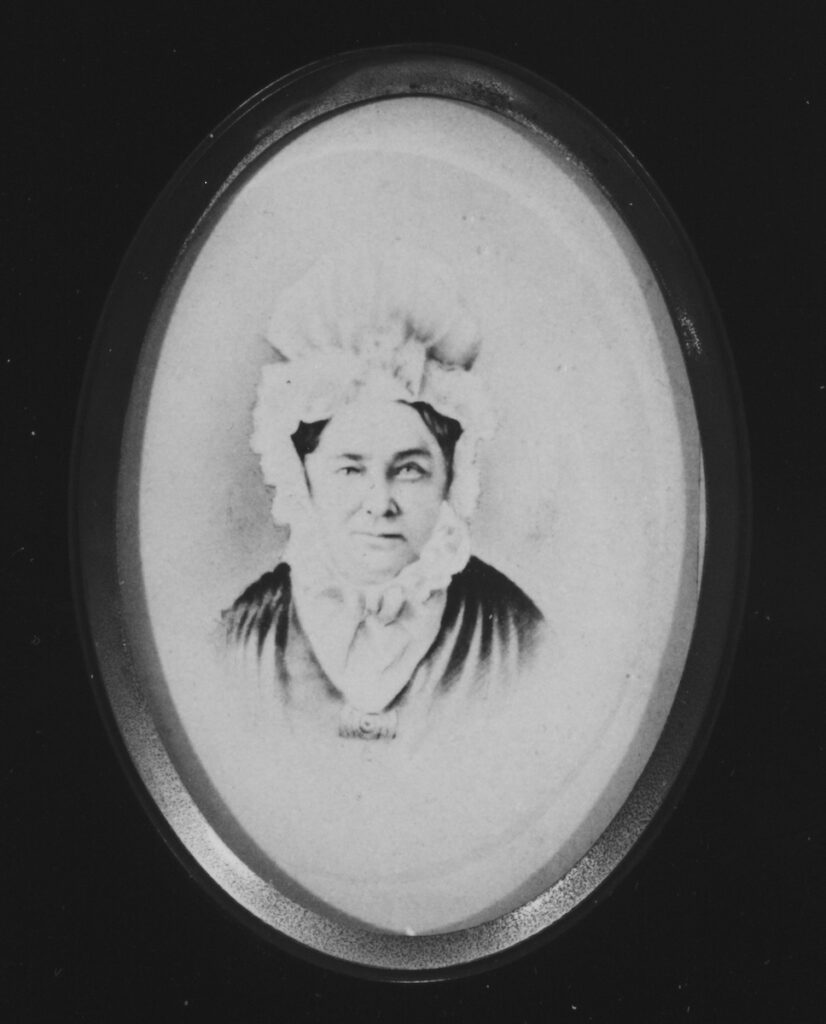
Born in 1759, Wood shared her adolescent years with the American Revolution, and the new nation and Wood went through their rebellious and experimental phases togetherTaking inspiration from the events of her time,Wood combined classic elements of Gothic fiction—such as overreaching villains, threatened virtue, mysterious castles, hidden pasts, abductions, sexual scandals, and murders—with the conservative political ideas of the Federalist Party. Her dramatic Gothic stories reflected Federalist concerns about order, authority, and social stability. In Wood’s first book, Julia and the Illuminated Baron, the main character, Julia, is abducted and held hostage in a castle. She must navigate an aristocratic society and resist a murderous baron, reflecting Federalist fears of the radical French Revolution. Wood’s second book, Dorval; or The Speculator, takes place during the unstable first years after the American Revolution, in which the main character, Aurelia, is forced to carry the weight of the family’s finances on her shoulders after her father loses their savings in a land scam. Surrounded by families facing similar circumstances, Wood crafted a story that conveyed her anxiety over financial instability and social upheaval, concerns she knew her audience would relate to.
Wood began writing when novels were first becoming a popular form of entertainment in both Europe and the new United States. Female authors faced skepticism and even outright resistance. Wood knew that stepping into the public eye as a female author carried risks for her own reputation and her family’s and she published under pseudonyms, first as A Lady from Massachusetts, and after Maine statehood, as A Lady from Maine. And to further protect her reputation, she assured readers in the dedication to her first book that “not one social, not one domestic duty [had] ever been sacrificed by her pen.”
Wood evidently believed the risk was worth it. She published five novels during her lifetime, each featuring a strong female protagonist. Her idea of female strength differs from the “strong woman” archetype we see in today’s media, yet it made a similar call to women of her time to draw on inner strength to protect the people around them.
Written by Alyssa Sweet, Site Manager, Southern Maine
Sign up to our newsletter for our latest news and events