
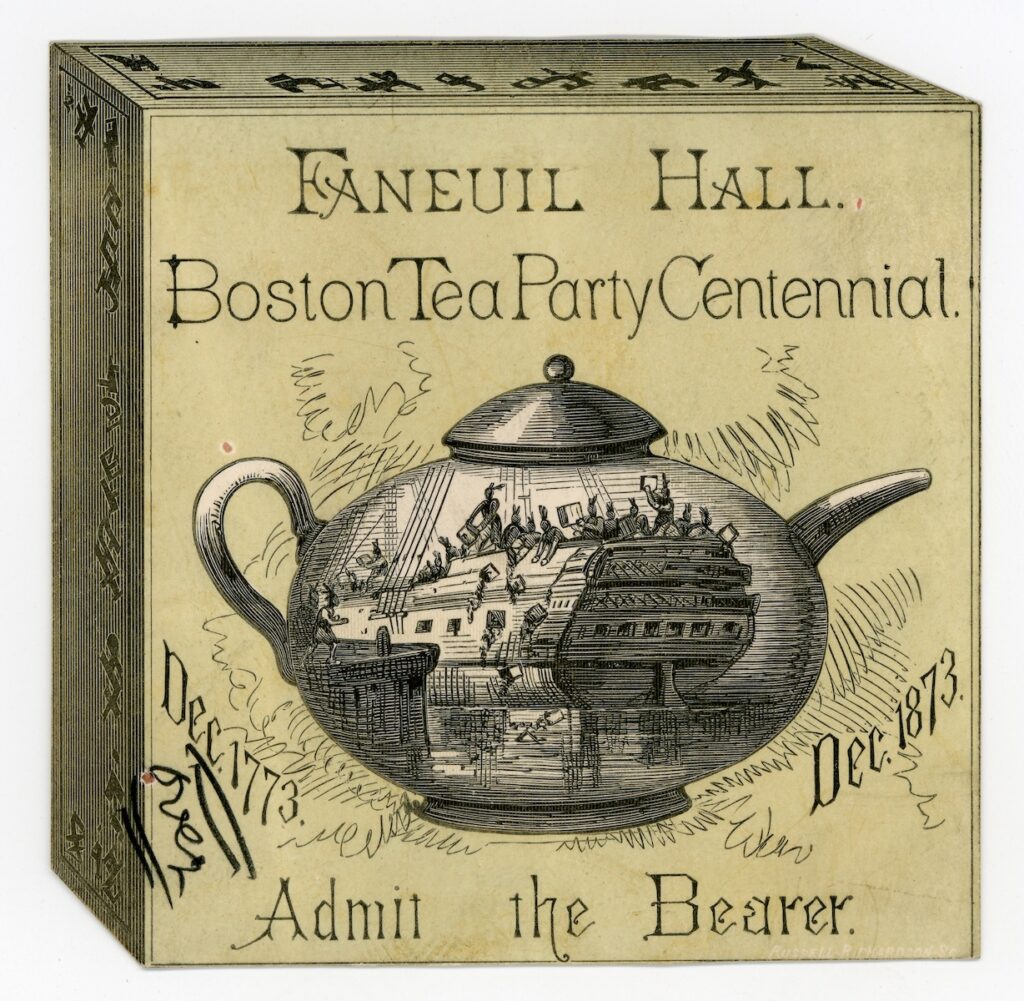
On December 16, 1873, New Englanders gathered at Faneuil Hall in Boston to celebrate the Boston Tea Party Centennial. They each presented their admission ticket: a card illustrated with a teapot bearing a scene of colonists dumping boxes of tea off a ship.
This scene referenced events which took place one hundred years earlier, as American colonists responded with anger to British Parliament passing the Tea Act, which allowed the British East India Company to sell tea directly to the colonies, harming American merchants and shippers. On December 16, 1773, the Sons of Liberty had gathered at the Old South Meeting House to rally their fellow colonists. Disguised as Native Americans, they boarded a ship carrying a major shipment of East Indian Company tea and threw about 340 chests into Boston Harbor.
News traveled fast. A few days later, in nearby Dorchester, Massachusetts, Samuel Pierce recorded his diary: “There was the Destruction of the Tee they supposd there to be about 340 Chests destroyd all thrown into the Dock in one Nite &c.” The significance of this event merited its inclusion in Pierce’s daily log of life on his farm (featured in Myth and Memory), sandwiched between updates about his cattle and orchards.
The Tea Party’s participants knew their actions far exceeded protest—it was outright rebellion. That night, in a speech delivered to the crowd at Old South, Josiah Quincy Jr. (also featured in Myth and Memory) warned them of what was to come: “The exertions of this day will call forth events which will make a very different spirit necessary for our salvation.” If the Sons of Liberty went through with their actions, then they must expect Parliament to retaliate. “We must be blind to that malice, inveteracy & insatiable revenge which actuate our enemies, public & private, abroad & in our bosom, to hope we shall end this controversy without the sharpest conflicts.” Quincy ended his speech by urging folks to “weigh & consider before we advance to those measures which must bring on the most trying & terrible struggle this country ever saw.”
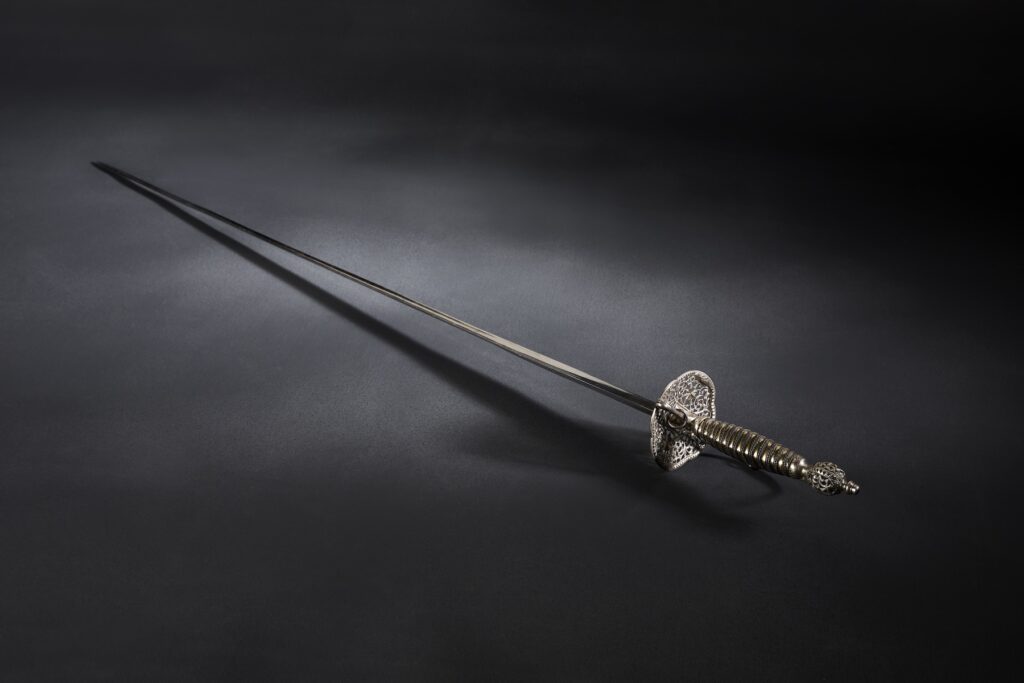
His fellow colonists made their decision that night, and the ensuing punitive legislation—the Intolerable Acts—led Quincy to invoke the sword in a statement delivered after Parliament closed the ports of Boston. “The sword should never be in the hands of any, but those who have an interest in the safety of the community,” he wrote, adding: “What a deformed monster is a standing army in a free nation? Free, did I say? What people are truly free, whose monarch has a numerous body of armed mercenaries at his heels?”
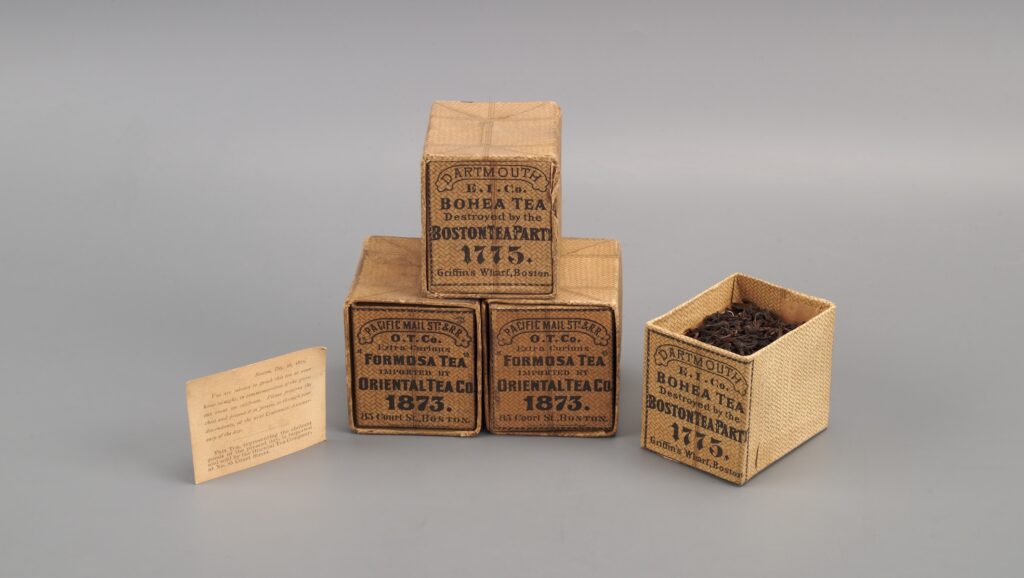
The Boston Tea Party has since been mythologized by Americans as a radical act of resistance—the spark that lit the tinderbox of revolution. Accordingly, the centennial on December 16, 1873, was a much-anticipated affair, stretching across three locations: Faneuil Hall, Tremont Temple, and the Ruggles Street Baptist Church. The New York Times reported on the event, describing speeches, music, reenactments, and—of course—tea “served by pretty young women dressed in the costume of a hundred years ago.” Attendees were also offered “a small souvenir tea-chest, filled with real Bohea tea” provided by Boston’s Oriental Tea Company (est. 1868).
Each box of tea came with a small note, which urged its new owners to preserve the box and “present it in person, or through your descendants, at the next Centennial Anniversary of the day.” Many New Englanders did indeed hold onto their boxes and pass them on to the next generation; however, a few of them came to Historic New England in the first half of the twentieth century. The collection contains boxes donated in 1922, 1931, and 1940. Clearly, these donors understood the historic value of the souvenirs and did not want to risk losing them.
A day earlier, on December 15, 1873, a different kind of tea party took place at Faneuil Hall: a “New England Woman’s Tea Party,” organized by Boston suffragists seeking to connect their broader goal of women’s political enfranchisement with the revolutionary sentiments that inspired their ancestors to fight for independence. According to a speech published in the Women’s Home Journal, “The women of New England who believe that ‘TAXATION WITHOUT REPRESENTATION IS TYRANNY,’ and that our forefathers were justified in resisting despotic power by throwing the tea into Boston Harbor, hereby invite the men and women of New England to unite with them in celebrating the One Hundredth Anniversary of that event.” Speakers at the event included abolitionist Wendell Phillips and activist Julia Ward Howe, who reminded guests that the American Revolution did not end the battle for independence among all Americans.
The Boston Tea Party remains an iconic and iconographic moment in American History, and its sacralizing power extends to the people and places associated with the events of December 16, 1773. In the twentieth century, a woman from Lynn, Massachusetts, assembled a collection of historic “relics” that included a long carpenter’s nail from Old South Meeting House. In a handmade label, she emphasized the nail originated from the site where colonists planned and launched the Boston Tea Party. This unassuming item took on almost mythic properties through the act of preservation and commemoration—the same as many of the items in Myth and Memory: Stories of the American Revolution.
Written by Erica Lome, Curator of Collections
Exhibitions like this are made possible by the generous support of Historic New England’s members and friends. Support Myth and Memory and help preserve our shared stories.
Sign up to our newsletter for our latest news and events