
In just about a week, we will be saying goodbye to the old year and welcoming in the new. It is a time to take stock and look back over the past year, both to see what we have accomplished and to think about what we might do better in the year to come. In the spirit of this annual tradition, I’d like to share some climate action-related accomplishments we’ve seen in New England this year.
Starting with my home state of Maine, the Maine Climate Council just released their most recent update, which was full of great news about the progress Maine is making toward meeting the state’s climate goals. With 181,024 installations, Maine is more than halfway towards its goal of installing 275,000 heat pumps by 2027. This reduces greenhouse gas emissions and improves air quality inside the home and in the neighborhood, which benefits everyone!
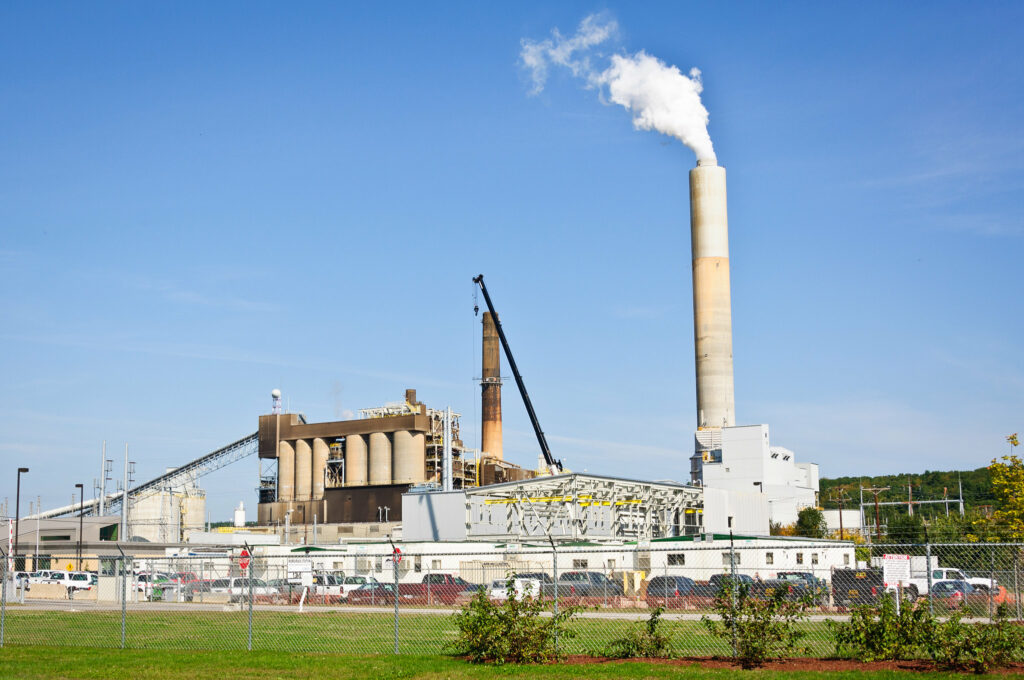
In New Hampshire, the last coal-fired powerplant in New England shut down. Merrimack Station in Bow stopped operations on September 12, 2025. This significant action means that coal is no longer burned in New England to power the electric grid. Granite Shore Power, the company that ran the plant, hopes to turn the facility into a renewable energy park that would support battery storage and solar power.
Vermont is taking action to reduce waste sent to landfills by encouraging reuse. This year, Vermont’s Department of Environmental Conservation started a new program called ReVT. The program, which held its first meeting in May, seeks to support reuse and repair initiatives to prevent items from ending up in the landfill.
The Massachusetts Department of Fish and Game’s Division of Ecological Resources recently received a grant to support dam removal studies in seven municipalities across the state. Removing dams that are no longer needed can decrease flood risk, improve water quality, and open rivers for fish to return. It is an important first step to restoring river health and biodiversity.
Over the summer, Connecticut passed a law that requires the state to be carbon neutral by 2050. The new law not only sets a target for emission reduction but also offers incentives for switching to renewable energy and for growing jobs in the renewable energy sector.
In Rhode Island, urban farmers are helping feed their community through a local produce aggregation program that purchases food from multiple small farms and distributes the food to local programs addressing food insecurity. The program provides a market to smaller urban farms and helps provide people with locally grown produce. Recipients receive not only food but also recipes and food storage tips.
Looking ahead to the year to come, it is clear that while climate has a global impact, much of the work around climate issues is done at the local level with the support of local organizations and people in the community. The actions we take in our communities might feel small in the face of such a large problem, but it is very rare that there is only one among us, or any single community, taking action. There are thousands, even millions, of people doing this work and it is together that we can move forward to build a more resilient world.
Written by Joie Grandbois, Director of Sustainability
Sign up to our newsletter for our latest news and events