
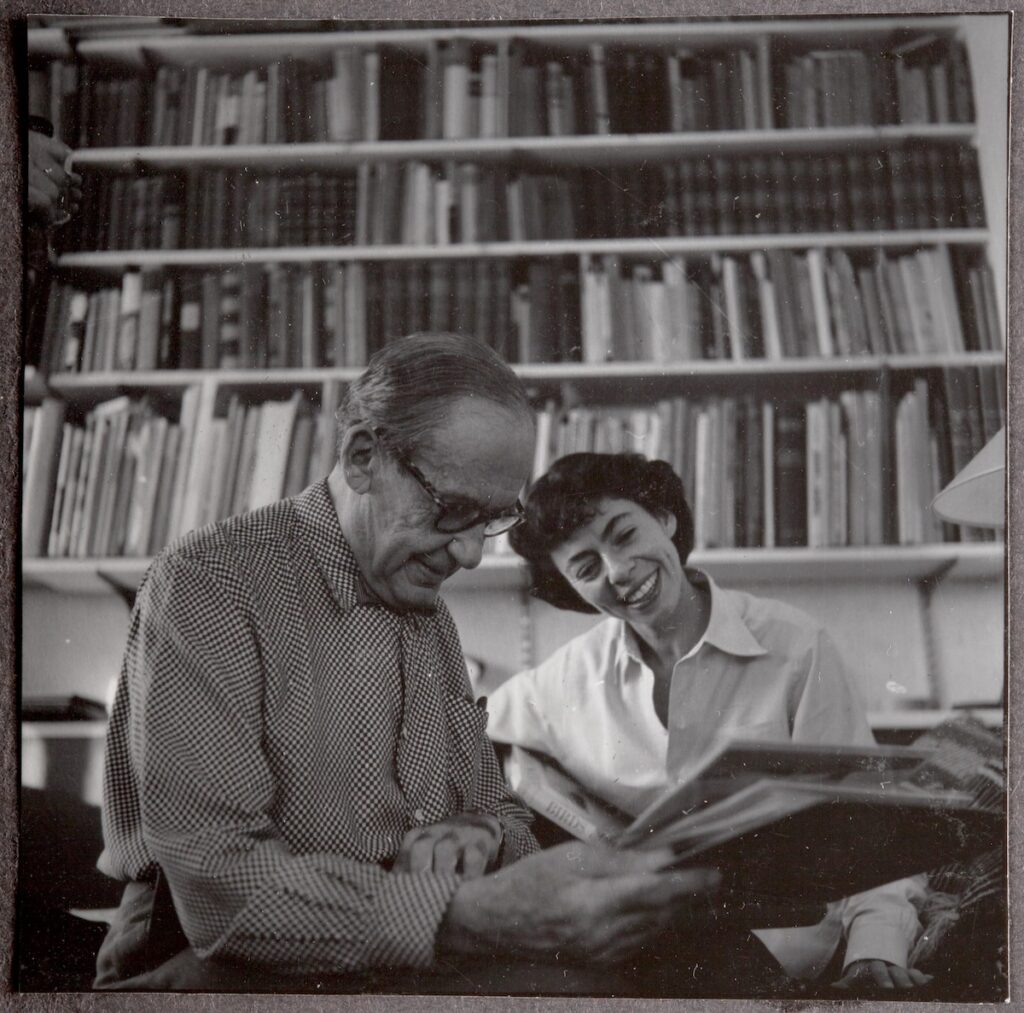
Ati Gropius Forberg Johansen, who died in 2014, would have turned 100 on December 19, 2025. She was the only child of Bauhaus founder Walter Gropius and his wife and collaborator, Ise. Ati had an outsized personality; an artist and educator, she was smart, opinionated, and a fierce protector of her parents’ legacy. She transformed the way Historic New England came to understand Gropius House—her childhood home in Lincoln, Massachusetts, and one of her father’s masterpieces—and how to present its story to the public. To mark the occasion of her centenary, Peter Gittleman, now Vice President, Visitor Experience, reflects on nearly thirty years of working with Ati to ensure Gropius House remains true to her parents’ design intent and the way they lived in their home. This is the first installment in a two-part series; read part two here.
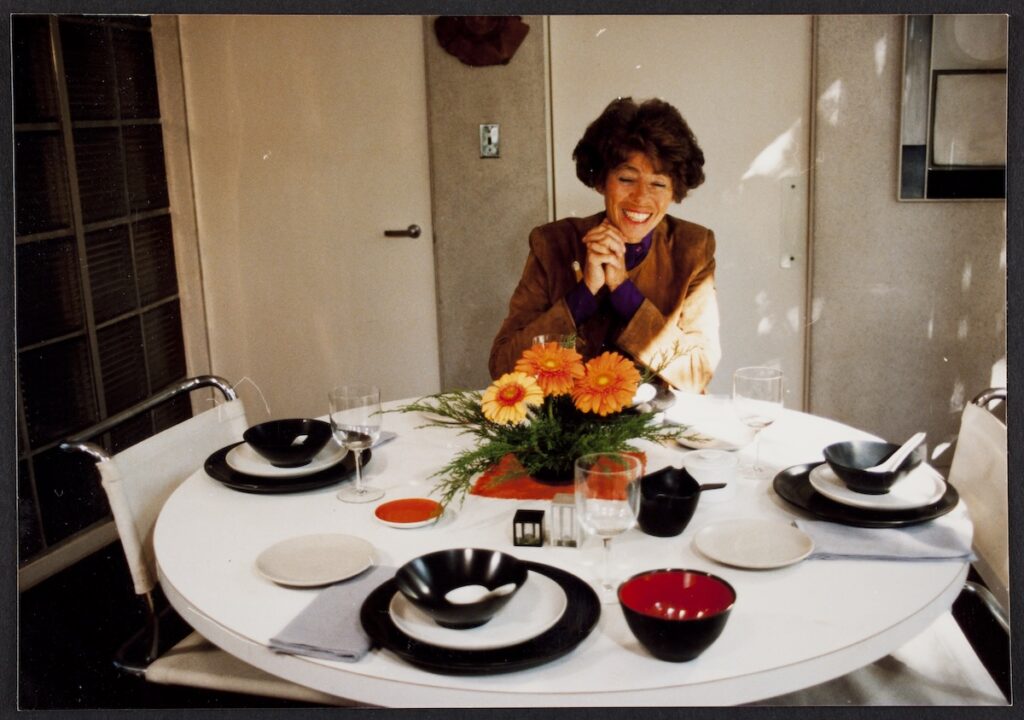
I first met Ati in 1986, shortly after Gropius House opened for tours. Her mother, Ise Gropius, died in the summer of 1983, leaving the house and its contents to Historic New England to become a museum. Ise wanted to preserve an example of a home designed according to the Bauhaus philosophy, at a moment when modern design was misunderstood and often maligned. Three years later, I was among the first cohort of guides hired to show the house to the thousands of people waiting to see what was behind the iconic facade facing Baker Bridge Road in Lincoln, Massachusetts.
Ati had not seen her parents’ home since her mother’s memorial service. She contacted Historic New England’s administrative offices, then located at Otis House in Boston, and left a message with the receptionist stating that she was planning to make a visit that afternoon to what her family called “the Lincoln House,” to see how it was faring under our stewardship. I happened to be giving tours at Otis House that day and since I was also a Gropius House guide, I was told to drop what I was doing to meet Gropius’s daughter in Lincoln. I hopped in my car and pulled into the driveway just as Ati arrived from New York City.
Ati and I entered together through the back door into the kitchen, which was at that time part of the apartment occupied by our resident caretaker. We immediately walked to the first public room in the museum to begin Ati’s inspection. As soon as we entered the dining room, Ati began to scowl. She picked up a huge photograph of her mother that was leaning on the sideboard and said, “What is this, a shrine to my mother? This portrait was only put here for her memorial service. Get rid of it!” and placed it face down on the floor. Ati moved from room to room, declaring how wrong things looked. In keeping with standard practice at the time and our approach at other museums, we displayed Gropius House exactly as it looked when it came into care, inside and out. Every surface was bare as it had been left following the memorial gathering in 1983.
To Ati, the house had been stripped of all life and the essence of her parents’ forty-plus years there. She began searching for specific objects that were always on display, such as her father’s brass egg, hand, and foot, which served as paperweights on his desk in the study. They had been there as long as she could remember, and they were nowhere to be found. Up the staircase she went into her childhood bedroom. Her bed, which had most recently been slept in by Ise Gropius’s nurse, had been stripped and had nothing but a white sheet on it. “Where is the gold blanket that was always on my bed?” she demanded. “Have you lost that, too?” Ati started opening closets and rummaging through shelves until she spotted something that looked gold in color. She pulled it out, and along with her bed cover came two dead mice, which landed at our feet. Another shriveled mouse was adhered to the strands of the Orlon blanket, and we pulled it off with a Kleenex.
As Ati moved around the house, I took detailed notes regarding everything she said was wrong in or absent from each room. No towels or shower curtains in the bathrooms, missing pillows in the living room and guest room, her mother’s jewelry and lacquered boxes were not on her dressing table, and the houseplants and dried arrangements that made the spaces feel alive had been removed. I wrote furiously for more than an hour as Ati (also furiously) described how each room should be arranged. She announced that she would return in three days to see if we had recovered or replaced the missing items.
When Ati left me that day, I was in a state of shock. I was twenty-three years old and had to drive back to Boston to relay to the head of the organization the fury I had just experienced from the Gropiuses’ only child. Ati gave me a list of demands that Historic New England would need to meet in order to regain her trust; otherwise, she warned, she would tell the architectural community that we had betrayed the intent of her mother’s gift. To their great credit, Historic New England’s leadership and curatorial team responded quickly and thoughtfully, showing a genuine desire to rebuild trust with Ati and agreeing to change the way Gropius House was presented. Because I had developed a rapport with her while taking notes on our walkthrough, I was charged with implementing it. It was an unexpected responsibility for a young guide with no prior curatorial experience, but Ati’s instructions were so detailed—and her deadline so tight—that the curators were comfortable letting me carry them out.
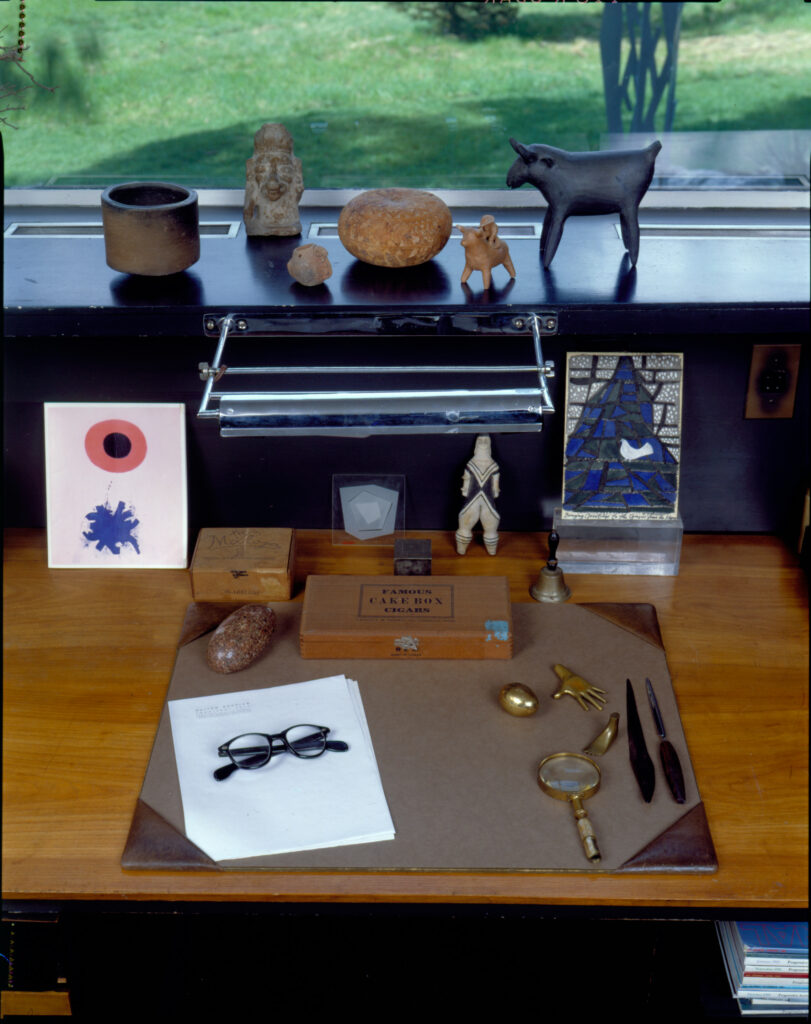
The following day, I returned to Gropius House to try to make things right. I was allowed to bring a helper, a young woman who had been volunteering at Otis House. She and I spent a full day going through every drawer and closet, every box and basket, every cupboard and shelf in search of the missing items. We didn’t know whether the house had been “sterilized” for Ise’s memorial in 1983 or if Ise had tucked away precious objects to protect them from the caregivers who had been living on and off in the house during her final year. Fortunately, we found the brass egg, hand, and foot in the back of a drawer in the study. By the end of the day, we had located and reinstalled each item Ati described.
Missing still were the everyday items like towels, shower curtains, bathmats, and houseplants that presumably had been thrown away when Ise died. Luckily, Ati had provided detailed descriptions of what to look for if we needed to purchase new items, and so on our second day before her return, we shopped. Armed with $150 in petty cash, we went to Sears for black and white bathroom items and Mahoney’s Nursery for houseplants. A Jade plant had survived the months when nobody was living in the house prior to Ise’s death and was rescued by our live-in caretaker. We removed it from his bedroom and reinstalled it in the upper hall, where Ati told us it belonged. Other than a few minor items we could not find in local stores, we had crossed everything off Ati’s list.
I met Ati back at Gropius House three days later, accompanied by our chief curator, who was ready to handle any delicate conversations. Ati was pleased with how much progress we had made in two days’ time and ultimately recognized we had not been careless or indifferent to the house—we were simply uneducated as to how the house was supposed to look. Historic New England may have been a leader in presenting seventeenth-, eighteenth-, and nineteenth-century homes, but its staff had little knowledge of the Modern Movement or the Bauhaus, the school at which Ati’s father had introduced modern architecture and design to Germany and the world. What we didn’t understand was that the stripped-down rooms we had inherited were not an accurate representation of daily life for Walter and Ise Gropius. Curators met with Ati over the next few months to learn just how much the house had evolved over the years and made the decision to present the house as it was lived in by the Gropiuses in the late 1960s, the final years that Walter Gropius was alive. This began a restoration of the Gropius House, both house and grounds, with Ati as our advisor that would last more than twenty-five years.
Written by Peter Gittleman, Vice President, Visitor Experience
Sign up to our newsletter for our latest news and events