
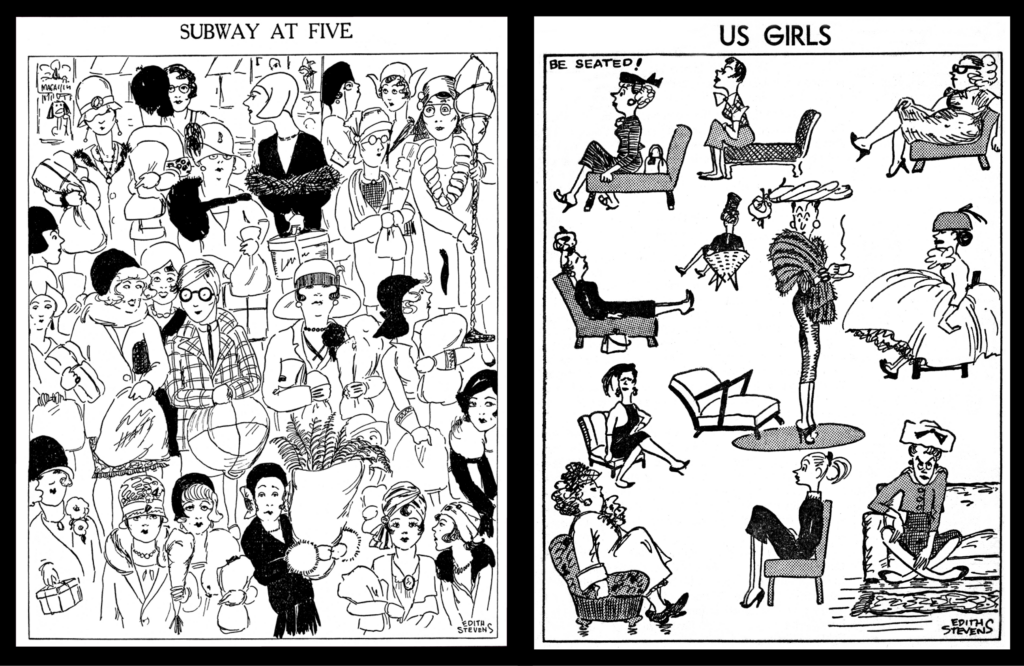
Edith had an uncanny way of reflecting fashion and style trends. While most of her cartoons had captions that drove the story, sometimes she conveyed volumes without using any words at all. On the left, in a cartoon from 1929, she highlights the different flapper styles of the day and how they came to life. I’m sure she saw these, and more, each day while commuting by bus and subway from Arlington, Massachusetts, to downtown Boston. This is one of my favorite cartoons of Edith’s, which I believe could have been a great cover for The New Yorker magazine. On the right is a cartoon from 1956, almost thirty years later, showcasing Edith’s commentary on how mid-century fashion and furniture trends did not always blend smoothly. I really feel for these women!
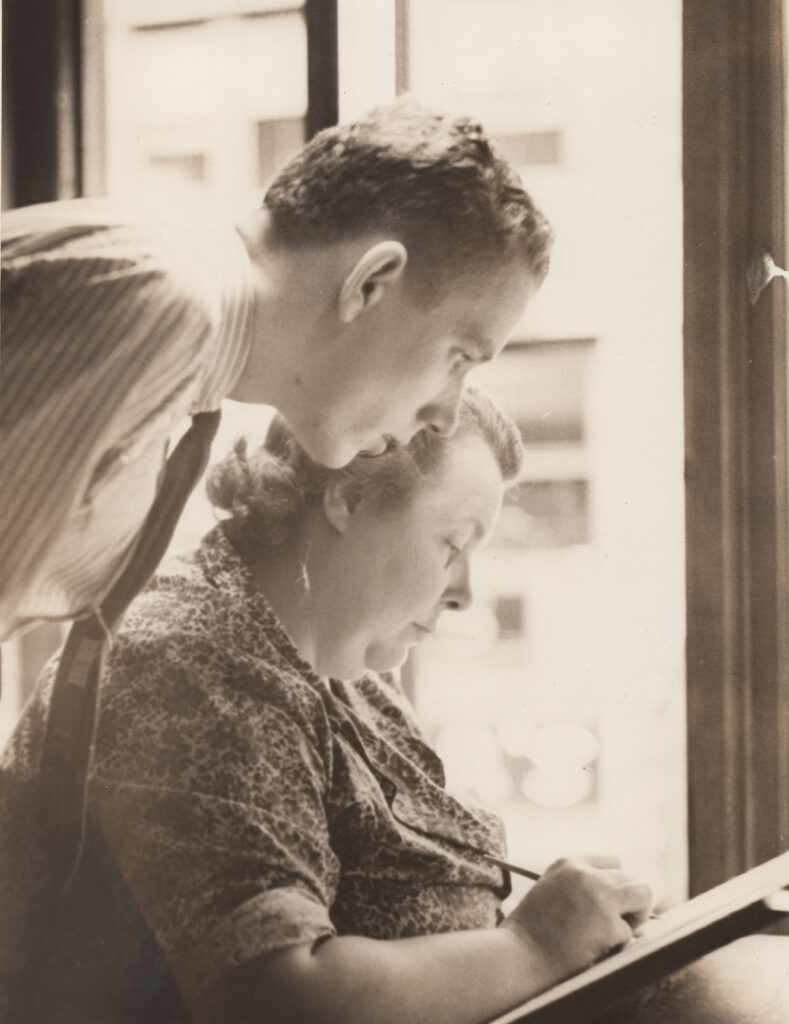
Edith often spoke about people visiting The Boston Post, located on Washington Street in downtown Boston, to watch her draw her cartoon, Us Girls. These visitors included family, friends, and sometimes just curious “looky loos.” Here is a photo of Edith with my father, Sherman Davison, at her workspace at The Boston Post, which she affectionately called “crumb corner” due to its humble and somewhat messy appearance. What stands out to me is that she was situated right by the windows, which I think would have been a prime spot. She told me she enjoyed having visitors but also mentioned that it could make her feel pressured to perform. This need to draw on demand became a theme in Edith’s career, as she drew Us Girls six days a week for over thirty years, never missing a deadline. Remarkable!
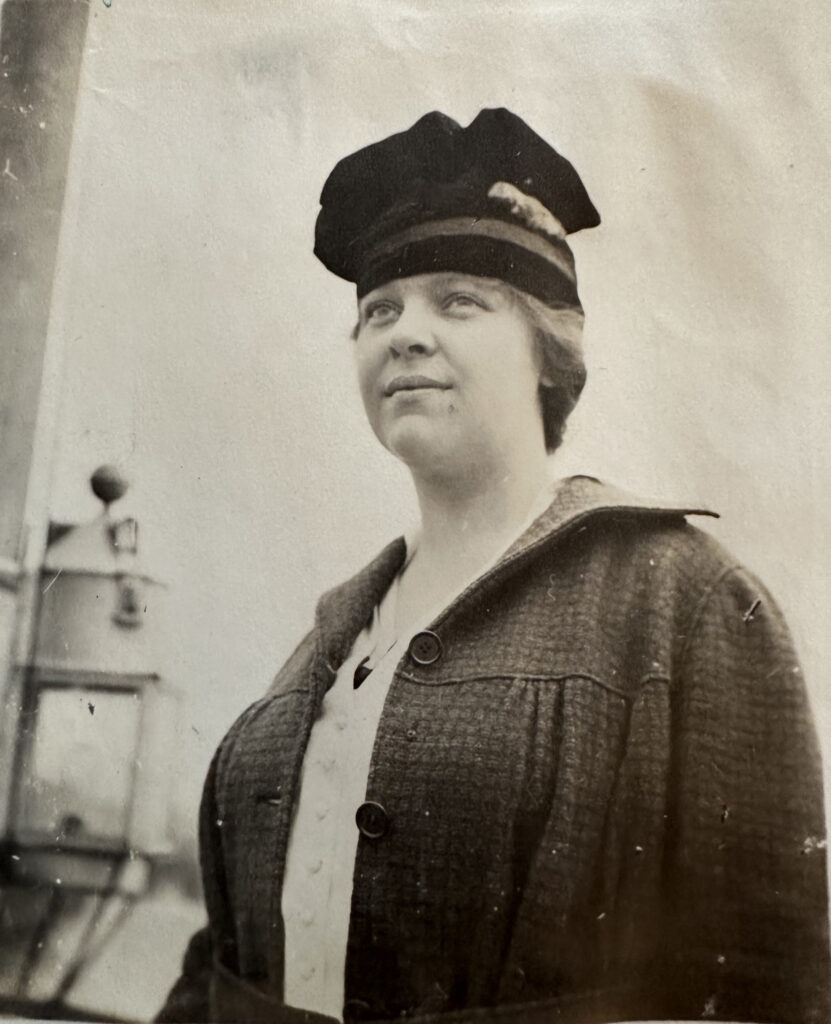
As a young girl, Edith dreamed of becoming an artist, but she had to find a job right after high school to help support her family. She started working as a clerk at Factory Mutual Insurance Company. Determined to expand her horizons, she asked her colleagues to teach her drafting and lettering, which she practiced in her spare time. Her hard work paid off, and she was eventually transferred to the Plan division, where she was the only “drafts girl.” This pattern of being the only woman in male-dominated roles would continue when Edith joined The Boston Post, where she was the only woman in the entire art department.
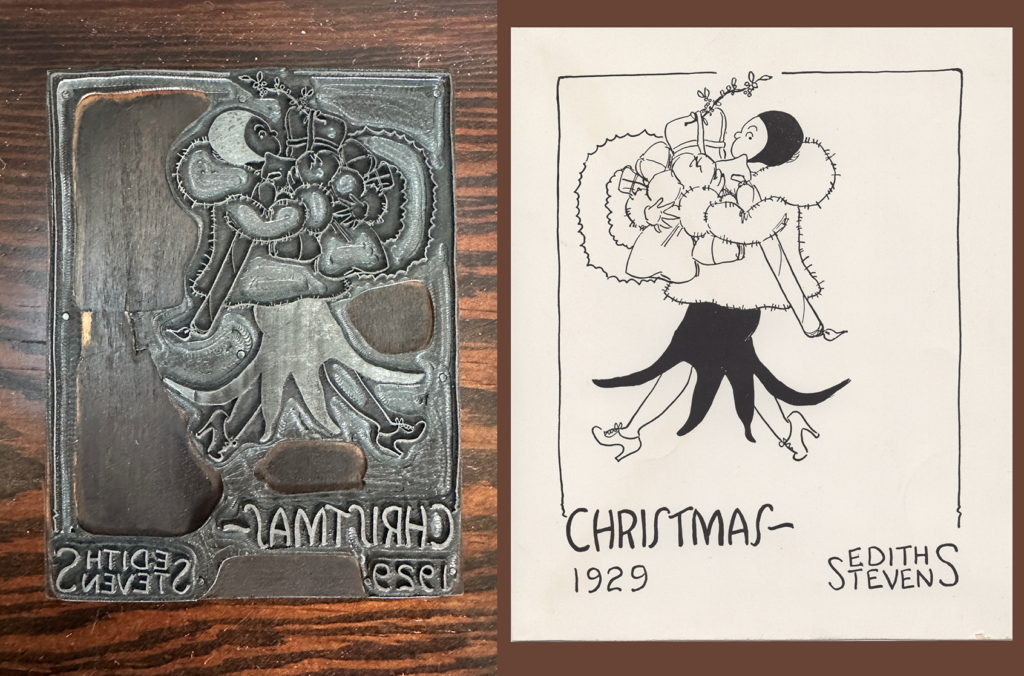
Each year, Edith designed her own holiday card to send to family, friends, and her legions of fans who wrote to her. The drawings were lighthearted vignettes that always highlighted women’s fashion trends of the day. Each drawing was made into metal printing plates, attached to a wood panel, and manually inked and printed—a process that was far from easy! She started this tradition in 1929, the year she launched Us Girls, and continued making these cards for over thirty years, until the early 1960s. On warm days, the printing plates still smell like ink!
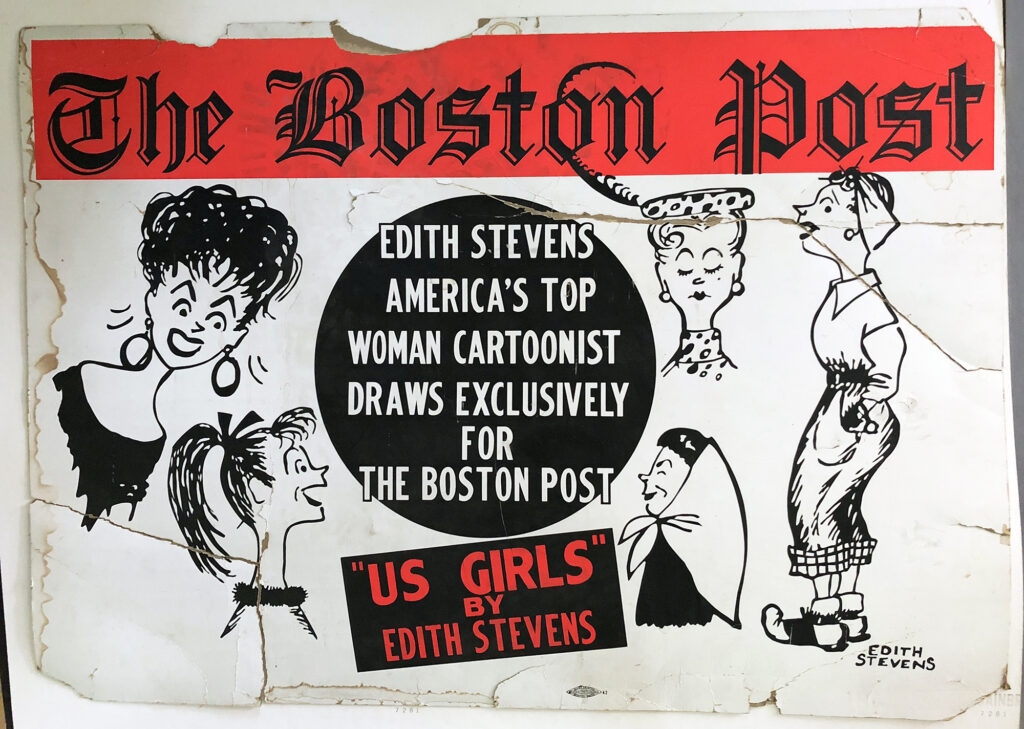
In 1953, The Boston Post advertised Edith and Us Girls through a series of billboards in MBTA stations around Boston, including one at Park Street Station, not far from “newspaper row” on Washington Street, where The Boston Post offices were located. Edith suggested syndicating Us Girls numerous times, but the idea was repeatedly shot down, as The Boston Post wanted to be the exclusive outlet for this popular cartoon. Edith kept one of the billboards in her attic. As a young boy, I remember spotting it tucked in the eaves. Seeing this was my first true inkling of Edith’s celebrity and influence back in the day. It was in this moment that I started to think of her as more than just my Aunt Edee.
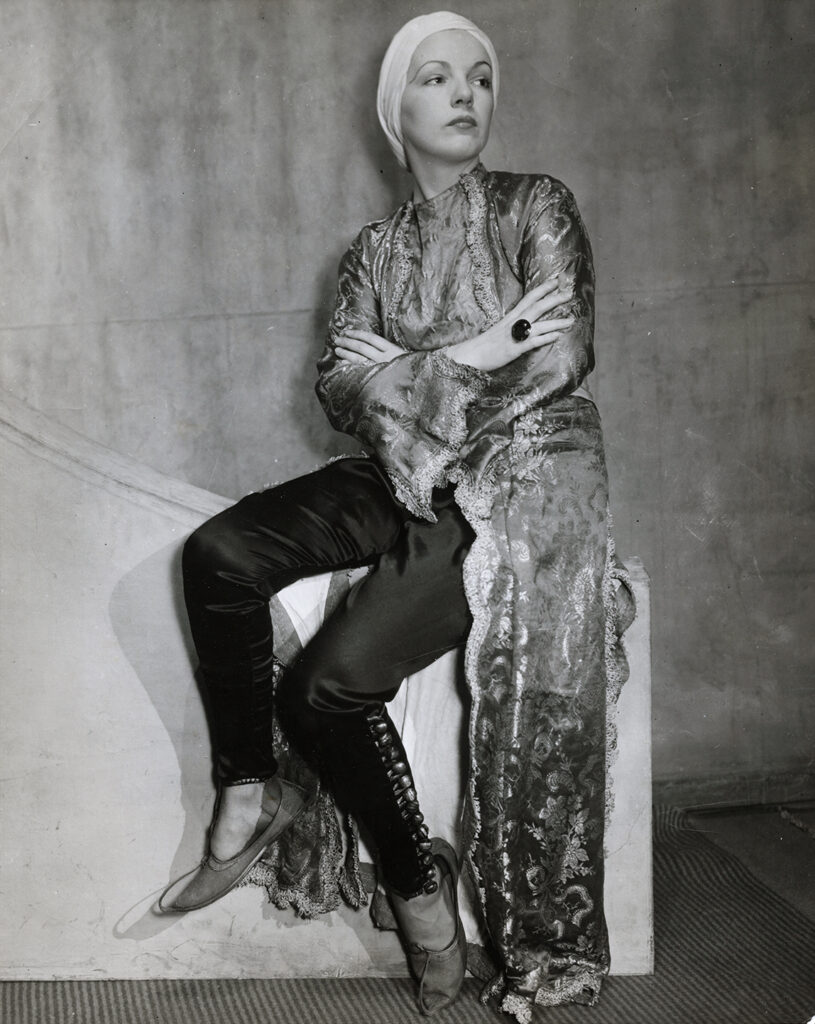
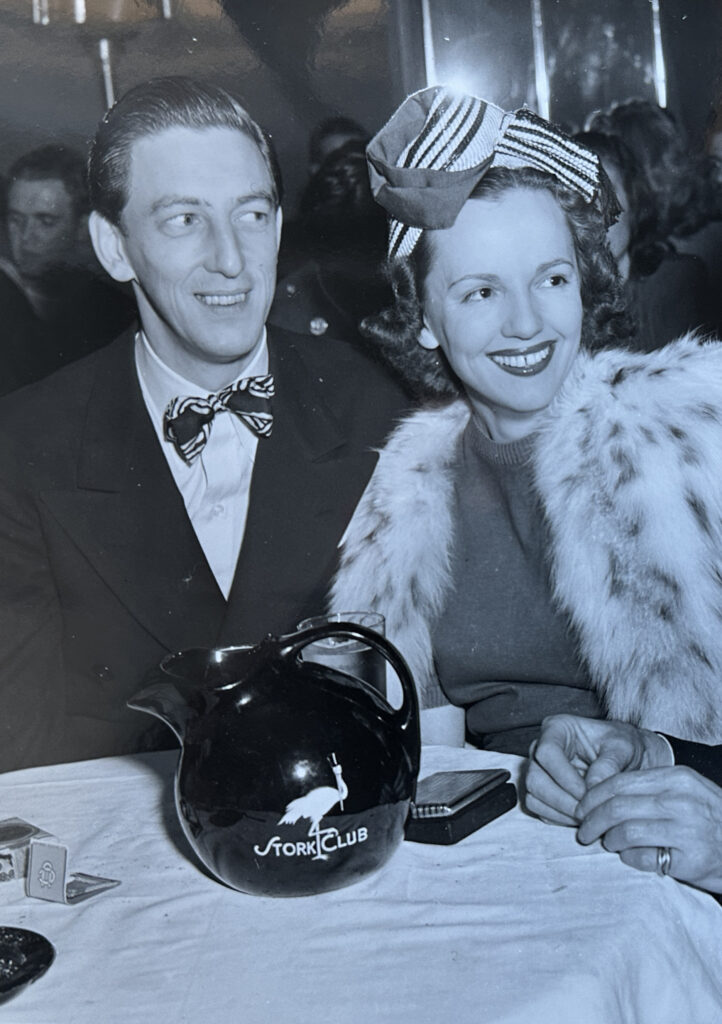
One of Edith’s closest friends was Barbara Hudnut Boston, the niece of Richard Hudnut, a highly influential and wealthy perfume magnate. Barbara was a debutante who married well and dabbled in writing columns for magazines such as The New Yorker and Town & Country. Although they were an unlikely pair, they had lots of fun together. Barbara exposed Edith to the high society of New York City and took her to star-studded establishments such as the Stork Club. Edith often called herself an outsider, but when she visited Barbara, she was given a front-row seat to New York City glamour and fashion, which provided plenty of material for her to dissect and lampoon in her Us Girls cartoons.
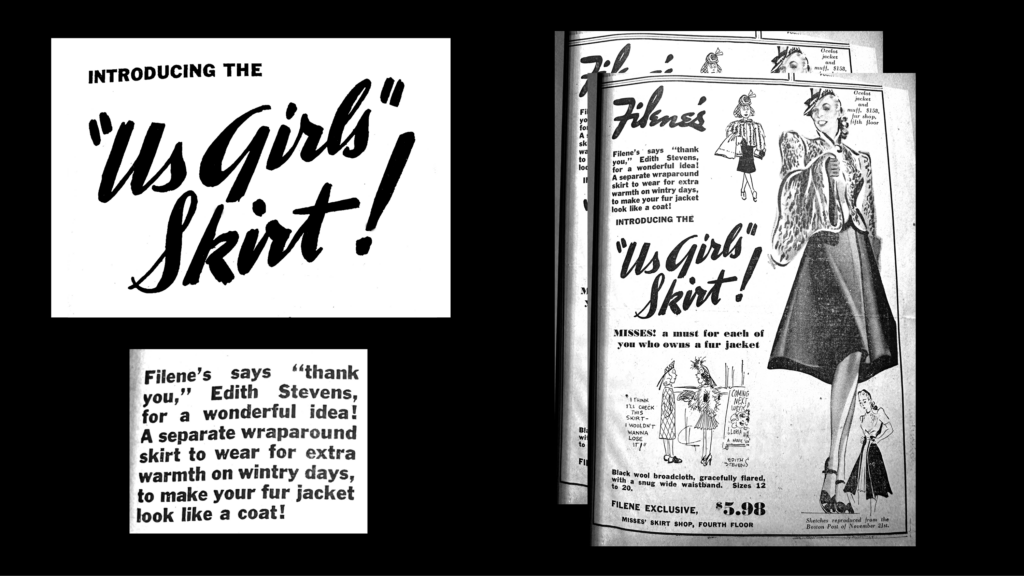
While Edith often commented on fashion trends, there was one time she actually created one. In a cartoon from 1939, she mused about the idea of a “topper skirt.” The day after this cartoon appeared, local retailers were inundated with calls for the skirt. In response, Filene’s rushed to put the idea into production, naming it the “Us Girls Skirt.” It became a sensation, repeatedly selling out as soon as it appeared. Other retailers in Providence, Washington, Cleveland, and New York City jumped on the Us Girls Skirt bandwagon, including high-end stores like Abraham & Strauss and Bloomingdale’s. Clearly, this idea resonated, and the success of the “topper skirt” continued. If only Edith had received a cut of the profits!
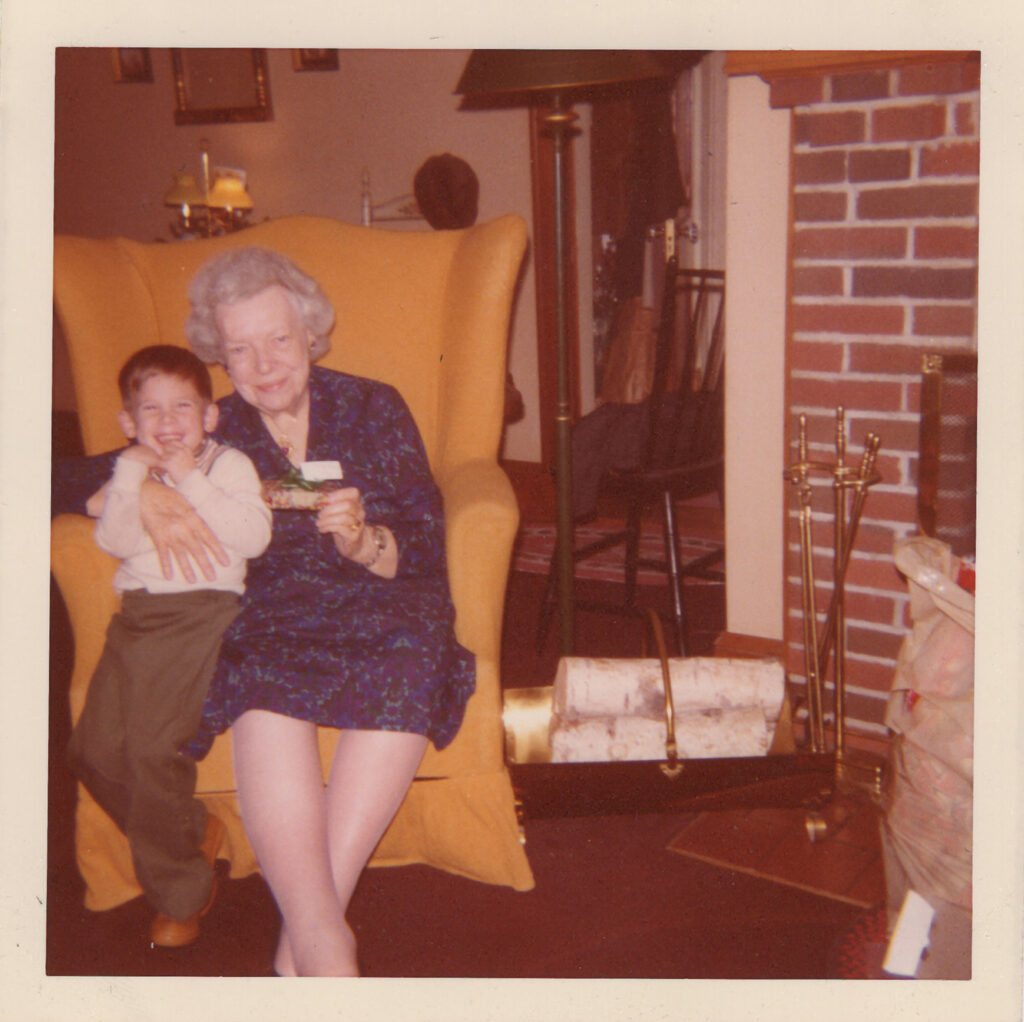
Here I am with Edith in 1970. She was a major influence on me growing up. She introduced me to the love of old objects and the deeper meanings they can hold in our lives. She would often have me fetch something from her bookcase or desk and then tell me the story of how she acquired it and what it meant to her. She taught me about art and introduced me to the idea of making it a career. For almost every occasion, she would create elaborate hand-drawn cards for everyone in my family, many of which survive today, as my mother carefully stored them away after we displayed them. One of Edith’s favorite hobbies was oil painting, and the house my family shared with her often reeked of turpentine. To this day, whenever I catch a whiff of that distinctive aroma, I smile and think of her.
Written by Robert S. Davison
Robert S. Davison is Creative Director at Boston University’s Marketing & Creative Services Department. He serves on the Alumni Board of Directors at Massachusetts College of Art and Design, where he is also an Assistant Professor of Communication Design. To learn more about the remarkable life and career of Edith Stevens, watch our recent webinar, read Davison’s article in the Spring 2025 issue of Historic New England magazine, or visit edithstevens.com. All images here used courtesy of the author.
Sign up to our newsletter for our latest news and events