
In Newbury, Massachusetts, the Lower Green is today a wide-open field where children play, dogs catch frisbees, and in which stands a historic one-room schoolhouse. Colonial era houses surround the Lower Green, which sits just north of the Parker River. What today is referred to as Newbury is part of the ancestral lands of the Pawtucket people, who seasonally hunted, fished and farmed the area. English colonists took the land in 1635, building their town center around the Lower Green. The colonial history of Newbury remains visible to this day in the historic houses, large fields and, of course, the Lower Green itself.
But this area is completely unprotected from development and alteration. In fact, over the last decade, there have been multiple modern houses built on minimally sized lots. The bucolic, semi-rural atmosphere around the Lower Green is changing. The history that the area still displays is slowly being lost, eroded to accommodate McMansions with expansive three-car garages and long, winding driveways that pave over the agricultural, community-driven past of Newbury.
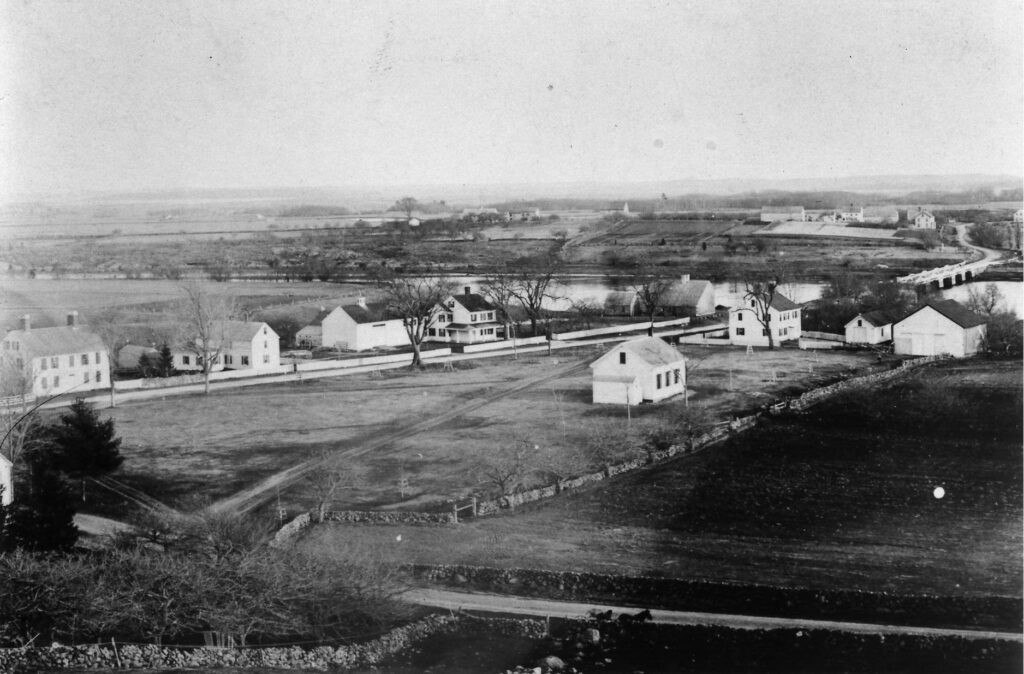
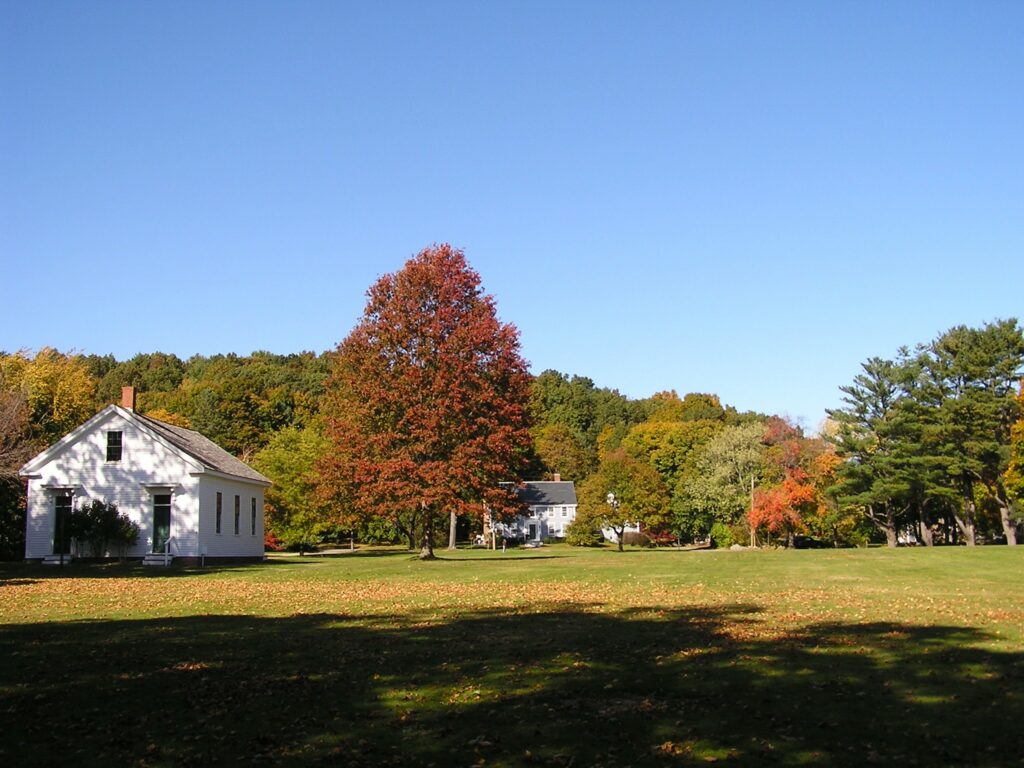
In response to unchecked development, the citizens of Newbury submitted a petition for the town to form the Lower Green Local Historic District Study Committee in 2022. Its task would be to research the history of the Lower Green and surrounding neighborhood and identify the built and natural landscapes that still existed. The committee would also conduct community surveys to determine whether the residents of the properties surrounding the Lower Green wanted to protect their houses and histories, and to find out what concerns they might have about adding regulations to their properties.
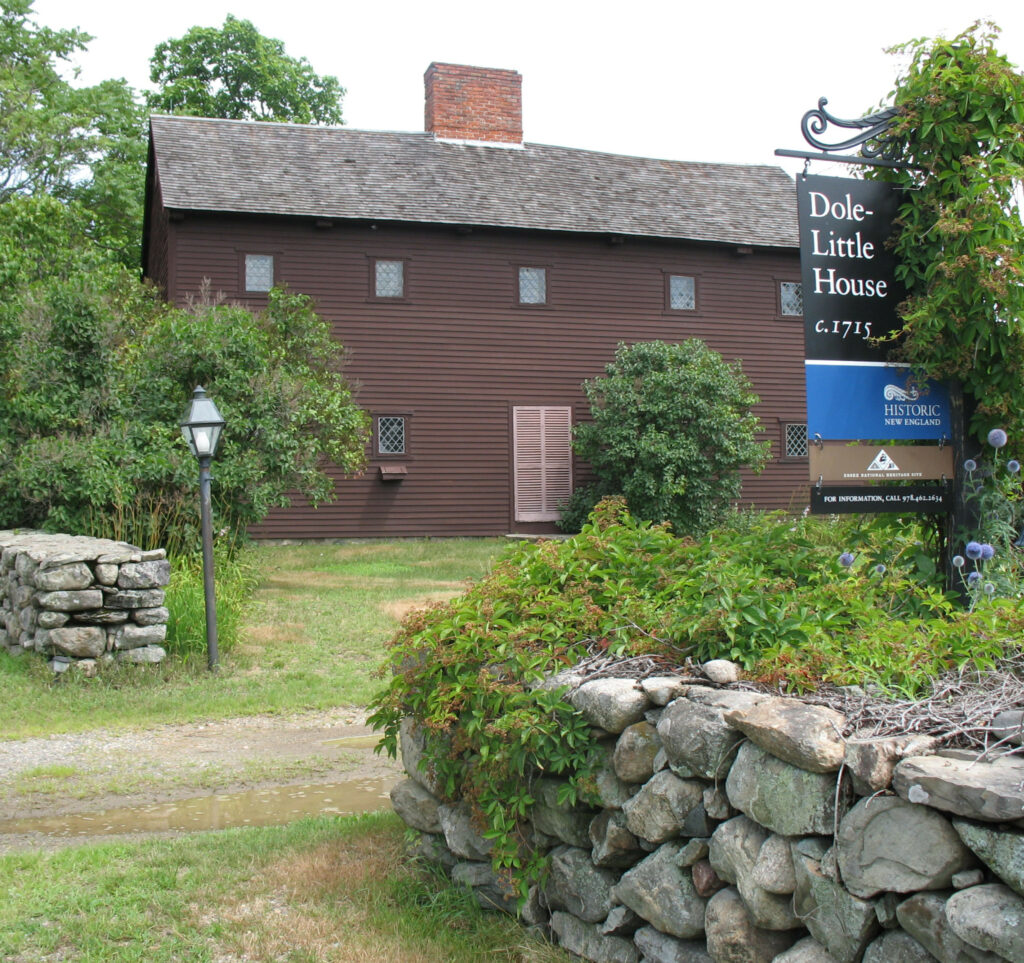
As an organization who has been involved in preserving Newbury for almost a hundred years, Historic New England was well-placed to provide support and expertise to this committee. We protect three privately-owned Newbury properties through preservation easements and operate four museums in the community, including the Dole-Little House, an early eighteenth-century building that practically abuts the Lower Green. For those reasons, I joined the Lower Green Local Historic District Study Committee to help protect the context of the area’s historical properties and landscapes.
But let’s take a step back. What is a Local Historic District? It can encompass a single property or several hundred and regulates changes to buildings’ exteriors. Local Historic Districts, or LHDs, acknowledge that the unique character of a community can sometimes be best preserved through zoning regulations. LHDs are meant to balance an owner’s right to alter their property with the community benefit of a visually cohesive historic neighborhood, whether that is characterized by colonial houses in a rural setting, densely-packed historic buildings on narrow streets, or anything in between. That is why only changes to those elevations and features of a building that are visible from the public way are reviewed by a Local Historic District Commission.
During the process of establishing a LHD, the local community weighs in on what types of features would be protected or exempt from review by the LHD Commission. For example, in Newbury, the proposed Lower Green LHD Commission would not have any say over a building’s paint color. Additionally, renewable energy technologies would be specifically allowed so long as the Commission reviewed location and installation method. In this way, an LHD can protect the history and unique character of an area while allowing the properties within it to continue to change and be updated to suit modern needs.
The Lower Green LHD Study Committee aims to submit its report for review by the Massachusetts Historical Commission and the Newbury Planning Board at the end of this month. Then, we will ask for formal input from Newbury residents. Their suggestions will be used to revise the report, whose aim is to protect what locals love about their community. In accordance with Massachusetts General Law, to establish an LHD in a town, the proposed district map and by-law must be approved by the citizens of that town at their annual Town Meeting, where local laws and regulations are discussed.
One of the common challenges facing preservation throughout Massachusetts—and the region—is education about what preservation actually means. Many people read “Local Historic District” and only see more regulations and less control over private property. They don’t recognize the economic benefit of protecting the cohesiveness of an area, its potential effect on property values, or tourism. They may not appreciate the community-wide value of preserving our shared history or understand that historic buildings and structures are demolished across the country every day and cannot be replaced.
Historic New England will continue in our efforts to promote preservation and educate our broad audiences on why history and historic properties are vital for a prosperous future. Newbury will vote on whether to create the Lower Green LHD in Spring 2026, and in the meantime, we are partnering with citizens to help spread the word on why this action is so important to our collective future. You can learn more at the Town of Newbury, Massachusetts, website.
Written by Elizabeth Paliga, Preservation Services Manager, Northern New England. Paliga also serves as Secretary for Newbury’s Lower Green Local Historic District Study Committee.
This post is part of our Preservation at Work series, where we share stories from the field about current and emerging issues related to historic preservation in New England and beyond.
Sign up to our newsletter for our latest news and events