
This blog post is excerpted from an article by Timothy T. Orwig that appeared in the in the Spring 2014 issue of Historic New England magazine. Orwig, an architectural and social historian, is author of Cape Cod Canal, a photographic history published by Arcadia Publishing and based on Historic New England’s Nina Heald Webber Cape Cod Canal collection. Nina Heald Webber turned her childhood fascination with the Cape Cod Canal into an extraordinary collection of photographs, postcards, maps, manuscripts, ephemera, and other items that document the history of the canal and surrounding area. In 2013, she donated the archive to Historic New England, where it has become a major resource for the public. She continues to find and acquire rare and wonderful items related to the canal, which she promptly gives to Historic New England. We are tremendously grateful to Nina for her ongoing enthusiasm and generosity.
On July 4, 1914, Cape Cod suddenly became an island, and the distance by boat between Boston and New York became shorter by seventy miles. On that day, after a ten-year-long push, the monumental task of building a canal across the cape was finally completed. As shovels cut into the top of the last dike, water from the high tide in Cape Cod Bay rushed through to join the lower tidal waters of Buzzards Bay. The Cape Cod Canal had become a reality.
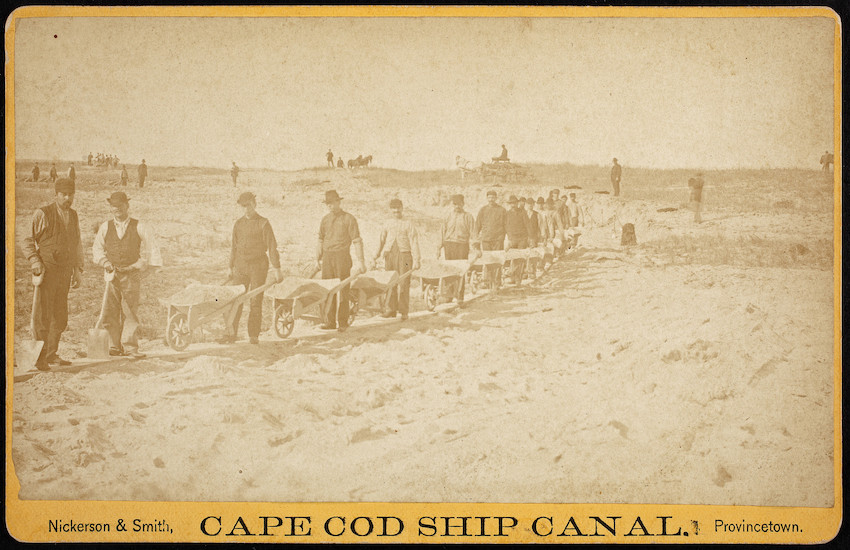
Cape Cod, formed during the last ice age by glaciers pushing sand and rocks out into the Atlantic Ocean, has one of the stormiest and most treacherous coastlines along the Atlantic. Over the centuries, fierce storms in these hazardous waters claimed hundreds of boats and the lives of countless travelers. In 1623, Miles Standish was the first to propose building a canal across Cape Cod, an idea that was to become a dreamer’s goal for almost three centuries. In 1776, General George Washington ordered the cape surveyed for a canal after he was forced to send supplies overland because British warships controlled the outer cape. Despite many subsequent surveys and charters, no real progress was made toward the goal until 1880, when the Cape Cod Ship Canal Company made the first concerted effort to dig across the valley. But the job required more than picks and wheelbarrows, and the effort failed.
Almost thirty years later, August Perry Belmont (1853–1924), a legendary New York entrepreneur and racehorse owner, entered the scene. He had financed the Interborough Rapid Transit Company in New York, the city’s first subway, completed in 1904. He brought the leadership, experience, connections, and public relations skills necessary to complete the job. (Belmont had sentimental ties to the region—his maternal grandfather, the distinguished Commodore Matthew Perry, had been born on the Perry farm, which lay in the path of the canal.) After studying the challenges for several years, Belmont formed the Boston, Cape Cod, and New York Canal Company and sought contractors in 1907.
Belmont hired the best engineer in the business, his friend William Barclay Parsons (1859–1932). Parsons began his career in railroad design, supervising the construction of a thousand-mile railroad line through areas of China previously closed to Westerners and had worked with Belmont on the construction of the New York subway. (His engineering firm continues today as Parsons Brinckerhoff.) Parsons came to the job after leaving the planning of the Panama Canal because the Army Corps of Engineers rejected his idea of a sea-level canal. Parsons insisted that the Cape Cod Canal be constructed without locks or dams.
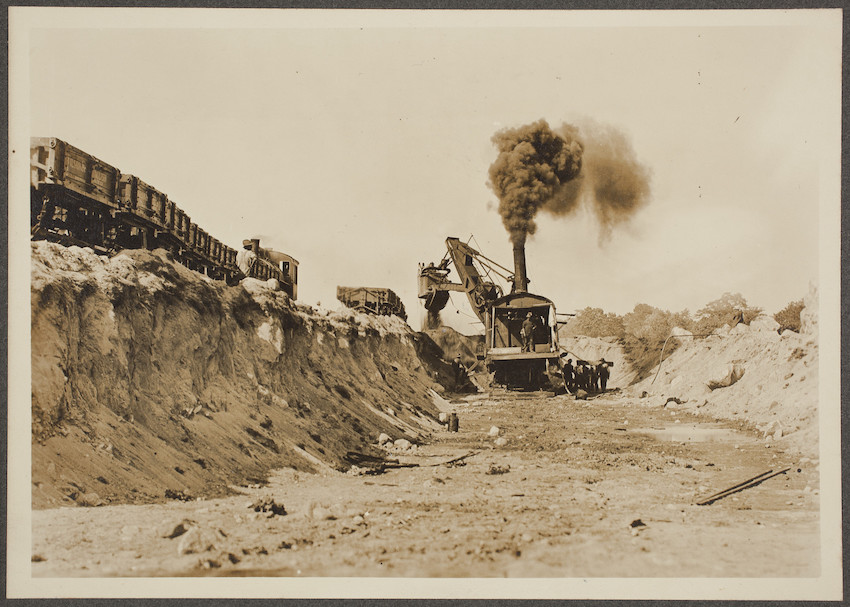
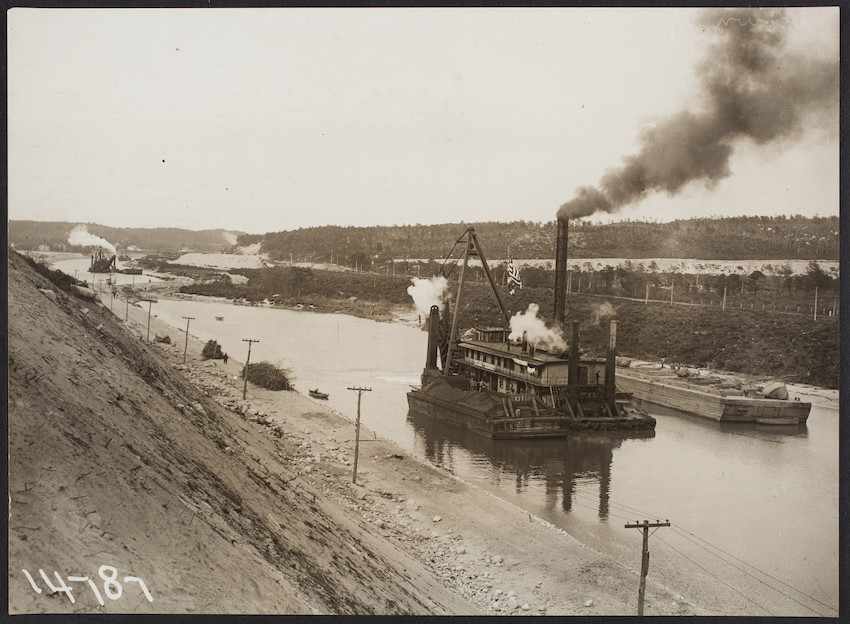
When digging began in 1909, the main problem was not quicksand, which Parsons had feared, but thousands of huge boulders buried in the cape’s sandy soil. The only way to get rid of them was to blow them up with dynamite, a slow and dangerous process that extended construction for two years longer than Belmont had planned. Boats sank, and six workers died building the canal. In 1912, at the height of construction, more than two dozen vessels were at work— tugboats, lighters, barges, and various dredges, such as ladder, dipper, and hydraulic. Construction of the canal meant relocating houses, roads, railroad tracks, and a cemetery; building new depots; and erecting three high bridges across the new canal to replace the old river bridges.
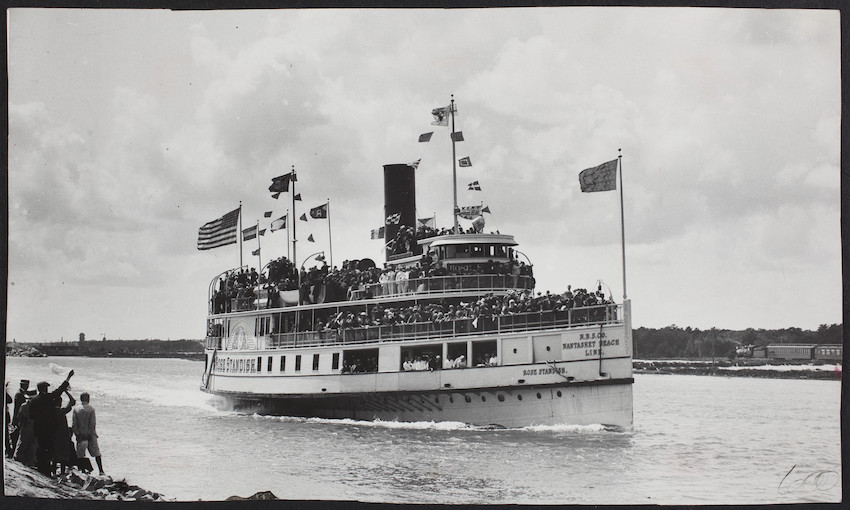
That final shovelful of dirt on July 4, 1914, was but one of millions. The dredges completed their work in time for the canal’s official opening on July 29 with a parade of ships. The Cape Cod Canal was thirteen miles long, counting the channel approaches, with eight miles dug through land. Not until 1916, though, would Belmont finish the channel to its original specifications of twenty-five feet deep and one hundred feet wide. Belmont finally fulfilled a pledge he made in 1909: “I promise not to desert the task until the last shovelful has been dug.”
To learn more about the Cape Cod Canal and Historic New England’s Nina Heald Webber Cape Cod Canal collection, watch the most recent episode of Collecting Perspectives!
Sign up to our newsletter for our latest news and events