
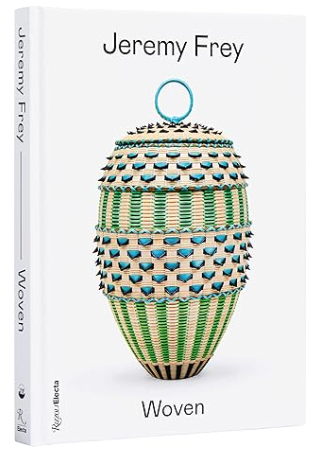
The Historic New England Book Prize honors publications about New England’s architecture, landscape, and material culture.This year’s winner, Jeremy Frey: Woven, edited by Theresa Secord and Ramey Mize with contributions by Andrew James Hamilton, Dakota Hoska, and Jaime DeSimone, is explores the life and artistry of Wabanaki basket maker Jeremy Frey. Frey’s work has reshaped contemporary understandings of Indigenous craft by pushing the technical and aesthetic boundaries of basketry. The book accompanies the first major retrospective of Frey’s work, which was organized by the Portland Museum of Art and travelled to the Art Institute of Chicago, and the Bruce Museum in Greenwich, Connecticut, marking the first time a Wabanaki artist has received a solo show in a major fine art museum in the United States.
The two Honor Books similarly ask readers to consider the past in new ways, one offering a fresh perspective on a well-known architect and the other bridging disciplines to tell a new story about a quintessential Maine retreat.
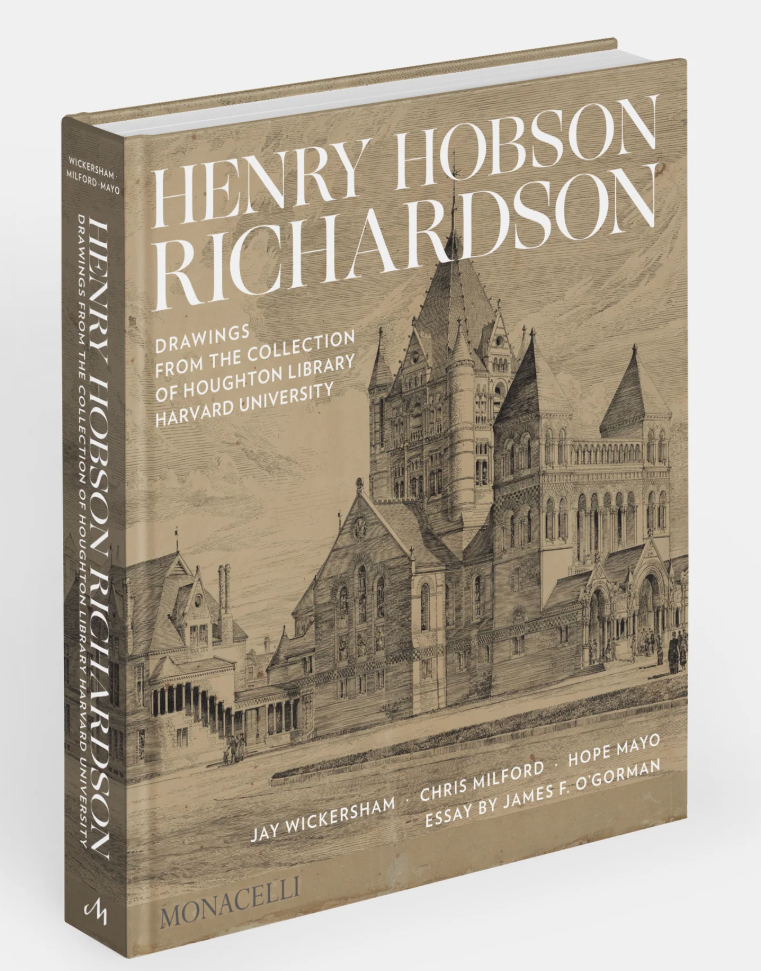
Henry Hobson Richardson: Drawings from the Collection of Houghton Library, Harvard University, by Jay Wickersham, Chris Milford, and Hope Mayo, with an essay by James F. O’Gorman, provides a detailed look at the working methods of one of the most important nineteenth-century American architects. Drawing on more than 4,000 drawings at Houghton Library—most previously unpublished—the book offers a rare view into the careful planning and experimentation behind some of the country’s most notable buildings. Readers gain insight into Richardson’s creative process, including how he collaborated with clients, craftsmen, and other architects.
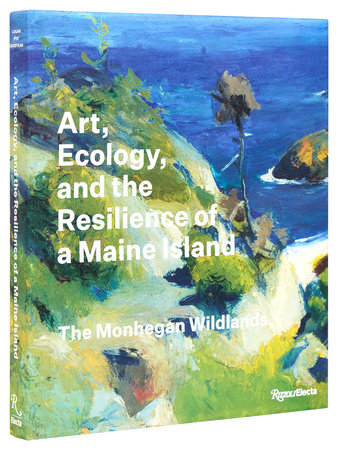
Art, Ecology, and the Resilience of a Maine Island: The Monhegan Wildlands, by Barry A. Logan, Jennifer Pye, and Frank H. Goodyear III, blends art, science, and history to trace the island’s ecological story through its depiction in visual art. The historic fishing village has long attracted artists inspired by its dramatic ocean views and wild landscapes, as well as ecologists interested in its unique natural history. The authors offer a groundbreaking survey of Monhegan’s art through an ecological lens, showing how the island’s environmental and cultural histories are deeply intertwined.
Where the Book Prize recognizes historical research and interpretation, the Prize for Collecting Works on Paper honors the stewardship of private collectors. The 2025 recipients reflect two aspects of that work: saving endangered materials and building collections that document the region.
Claudia T. Covert, head of Special Collections at the Fleet Library at the Rhode Island School of Design, was awarded a prize for her leadership in preserving the archives of the Reed & Barton silversmithing company after its Taunton factory closed in 2015. More than 11,000 drawings and documents, representing nearly two centuries of design// history, were carefully transferred to the Fleet Library under her guidance. Some of the material has been digitized and is available to the public through JSTOR.
Michael A. Shortell, a Hartford, Connecticut, collector and curator, was awarded a prize for private collecting that serves a public purpose. A framer by profession, Shortell has built an extraordinary personal collection, including pieces by artists who have never shown their work publicly, and he shares these works through exhibitions and publications. His holdings—including prints by Winslow Homer, lithographs from the Kellogg Brothers, Etching Revival works, and rare Jack London materials—form a vivid portrait of New England’s artistic and cultural history.
Together, the 2025 prize winners reveal the many ways New England’s stories are recorded and reimagined: Frey’s baskets transform inherited techniques into contemporary art, Richardson’s drawings uncover the careful thinking behind his architectural designs, and the collections preserved by Claudia Covert and Michael Shortell document the region’s artistic and cultural history. Each of these works—whether a crafted object, an archival collection, or a landscape captured in images—offers insight into the people, practices, and communities that have shaped New England.
Sign up to our newsletter for our latest news and events