
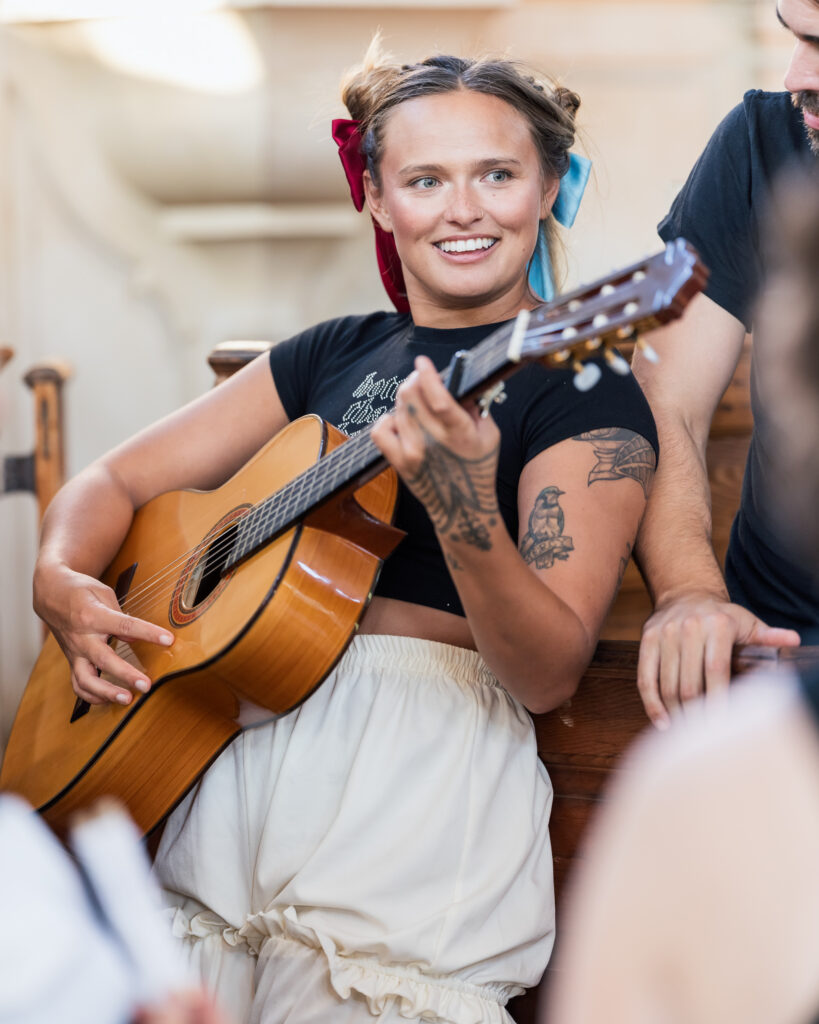
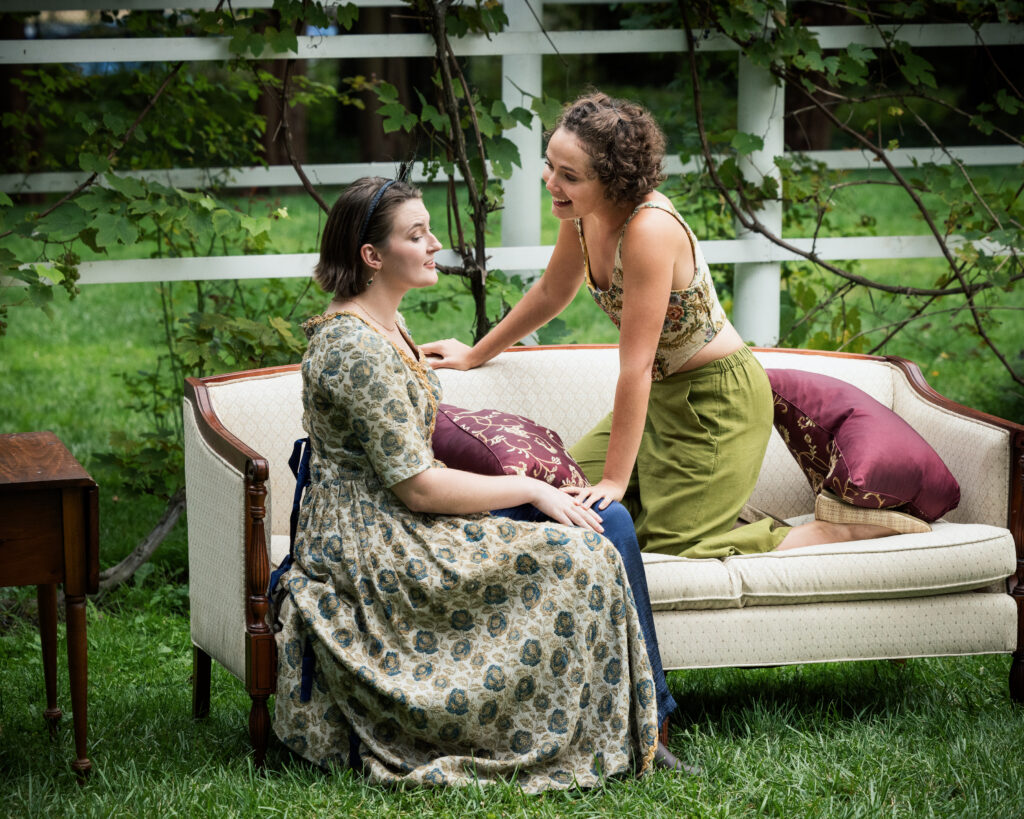
Edward Speck: My name is Edward Speck. I am a Newburyport resident and grew up in Amesbury, Massachusetts. I am currently the Artistic Director of Theater in the Open, based in Maudslay State Park, a DCR property. I came to Theater in the Open for the first time when I was twelve years old, and I haven’t been able to quit it yet.
Well, it’s property that belongs to the people of Massachusetts under the Department of Conservation and Recreation. The history of Theater in the Open is entirely entwined with the history of Maudslay State Park, a derelict country estate that became a state park seven years into Theater in the Open’s history, at a time when Governor Dukakis was looking to connect public spaces and public resources with artists in the Commonwealth. The state found itself owning not only 480 beautiful acres of land along the Merrimack River, but also all the employee housing that came with it—including many outbuildings that were used for dairy operations, gardening sheds, etc. As one of the ways they tried to solve the problem of how to maintain and utilize these properties, they initiated a project called Arts in the Park. We were one of the first curators within Arts in the Park, and we’ve been going strong now since 1987. Theater in the Open has survived and thrived because of its relationship with a property that belongs to the people of Massachusetts.
Pure chance. I went to college thinking I’d never come back to Amesbury. I planned to be an English professor, because so many of my idols and mentors were English teachers—like Paul Wann, who was one of my first theater teachers here at Theater in the Open and was integral to its founding. He also taught English at the Governor’s Academy, and I wanted badly to follow in his footsteps. I was working on a master’s in English when my predecessor at the theater resigned. At the time, I’d been working in our Summer Arts Workshop—the educational wing—for thirteen years. I was a good candidate because of my long tenure with the education team
Suddenly I was tasked with running the entire organization. My passion for English class translated really well into interpreting and performing theater. I never meant to make a career of acting, though I never stopped doing it. Living on the edge of a state park, telling old stories and reinventing them for a free theater company in my backyard—that was a joy when I was twenty-six and trying to figure out my life. As the theater has professionalized over the past sixteen years, it’s been better able to take care of me, and we’ve been better able to take care of the house. So, I really fell into the role, but it’s been a wonderful landing.
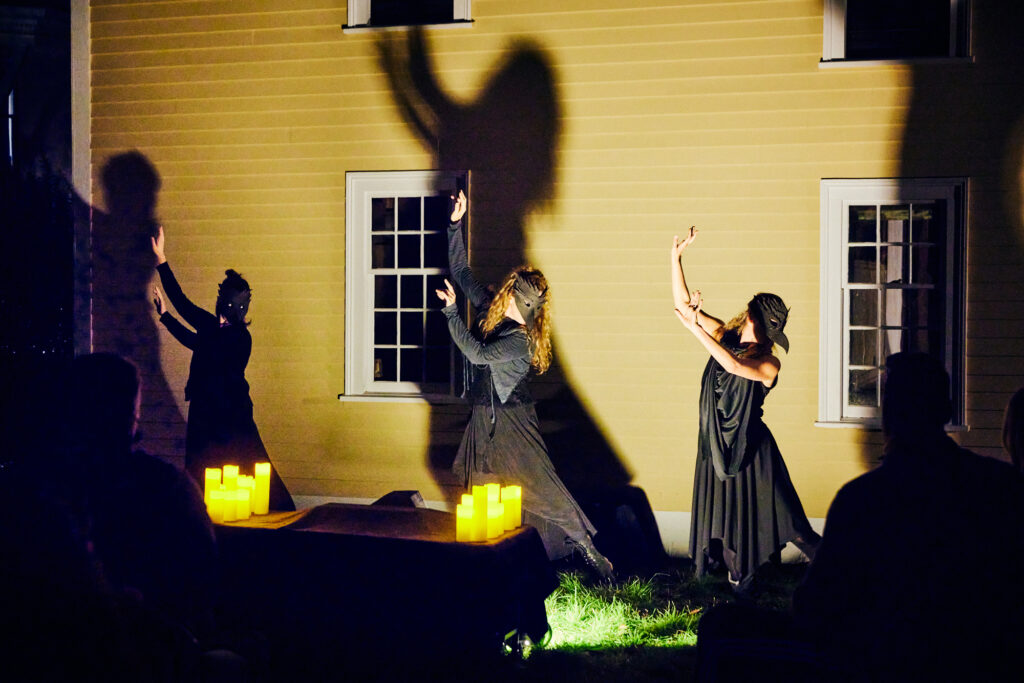
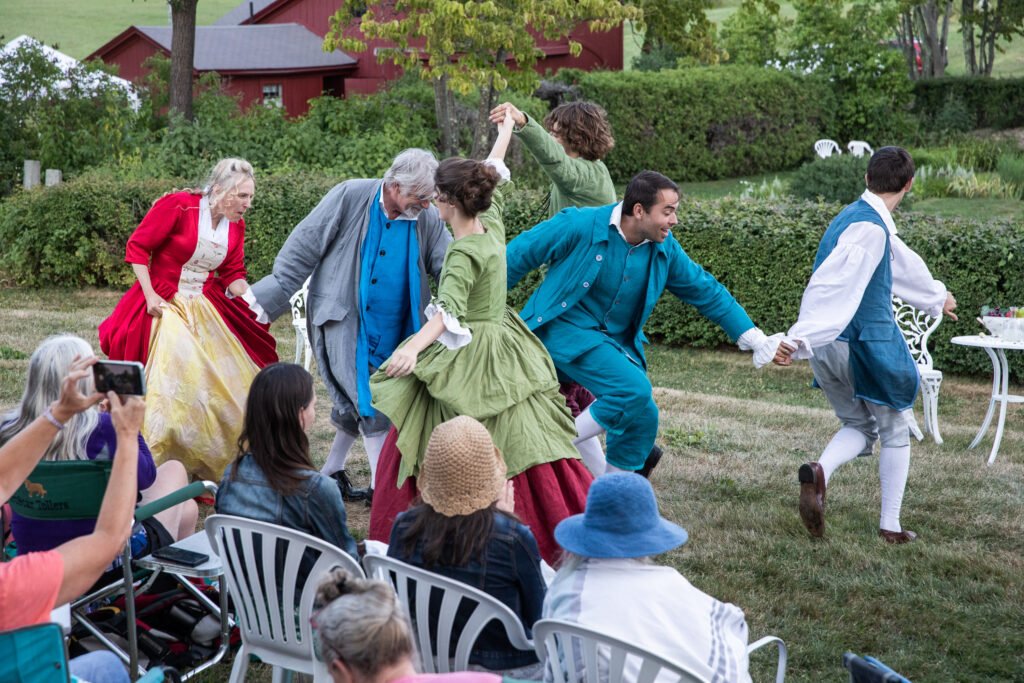
This summer, we’re touring Shakespeare’s As You Like It, using original Elizabethan production techniques—cue scripts and ballad sheets from sixteenth- and seventeenth-century theater-making. Maudslay is our home, but it has also been so wonderful over the past several years to tour to HNE properties, from Poe at Gedney House in 2018, to The Crucible at Rocky Hill Meeting House in 2022 to Shakespeare at the Eustis Estate and Langdon House this summer.
When we talk about cultural assets—some are human assets, some are physical assets—and when you put those together, you can have the kind of success that we’ve had. Because of this one small, one-family house, we’ve been able to provide housing for artists for the past thirty-eight years. Housing is such a difficult part of the equation of affordability. The story of Newburyport over the past four or five decades has been one of enormous transformation. An influx of artists during the 1970s and 1980s was a huge part of that recovery, because of the affordability of housing at the time in Newburyport and how many houses were in desperate need of preservation. This is one of many examples of housing stock that needed a lot of love, and relatively low-income artists looking for ways to leverage their passions and ingenuity to act as preservationists in exchange for cultural assets.
My family and I live in the upstairs of the Gatekeeper’s House and run the business out of the first floor. That allows me to be a working artist and dedicate myself to this company—to employing artists, to producing professional theater and affordable arts education—in exchange for maintaining this wonderful cultural asset through preservation.
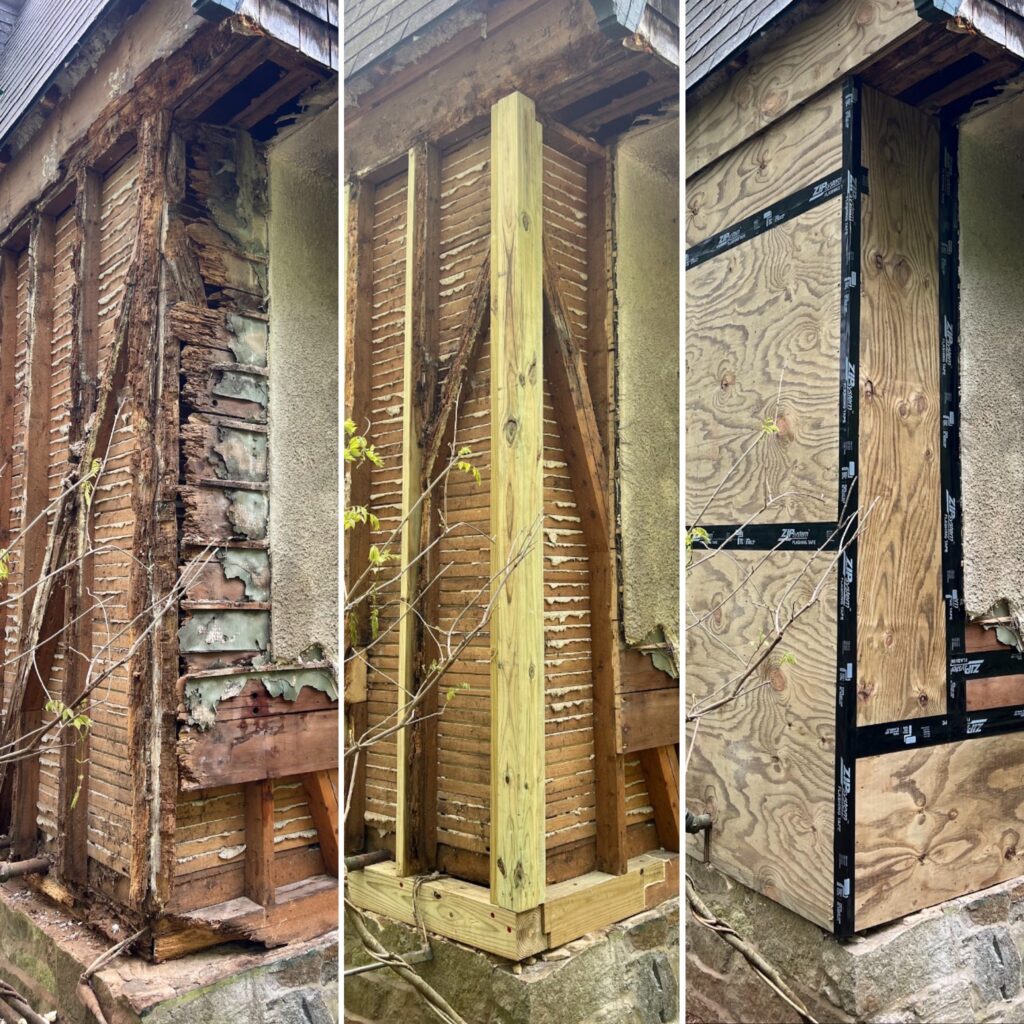
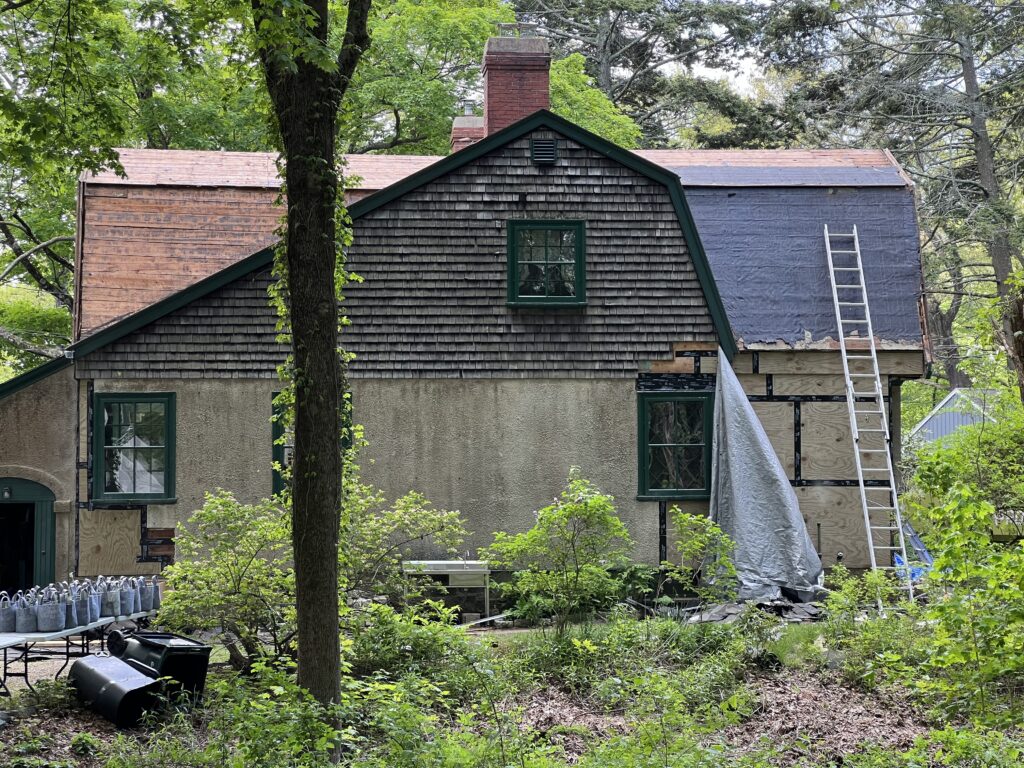
Absolutely. When it was built in 1903, the Moseleys really spared no expense in their employees’ housing. They hired the same firm that built their mansion—the firm of William Rantoul in Boston—to design and build these homes in the Arts and Crafts style, just before modern plumbing and electrical. Unfortunately, when there were no longer Moseley employees residing in it—all the problems that come with a wooden structure, all the maintenance that needs to be done, started to be neglected. Over several decades, that meant wooden gutters faulting and water running down through the walls, and of course lead paint was used everywhere.
While we had been using the space for decades, we were never in a position to mount a full-scale restoration because we never had more than a one- or two-year contract on it. We couldn’t possibly invest $100,000 in a house we might only be in for another year. What’s wonderful about the DCR’s Historic Curatorship Program is that it creates a mechanism for long-term agreements between individuals or companies and the people of Massachusetts for preservation. We’re in the eighth year of a thirty-year agreement, which has enabled us to mount a full-scale restoration of the property. With help from MassDevelopment and Mass Cultural Council matching grants, we’ve already completed a full rewiring and modernization of the plumbing system, bringing the house up to code. We’re currently replacing anything damaged on the building envelope. We’re repairing and replacing stucco and replacing all the cedar shingles and giving it a new roof. This is what the MCC means when they talk about the #powerofculture. Artistic ingenuity connected to public assets for communal good.
After being here for nearly forty years, we’re finally able to do for the house what the house has done for us. It ensured we had a base of operations and shaped the company we became. Students for generations—including myself at age twelve—have called One Spring Lane a second home. It’s been a refuge since 1987. Now we’re finally returning the favor by investing $160,000 into a full-scale restoration that will put it into maintenance mode by year’s end.
So much. We’re taking Shakespearean cue scripts to bars and restaurants this fall, allowing audiences to choose a play on the spot, and we’ll improvise a performance using just our parts on scrolls. We also have our annual Halloween fundraiser at Maudslay, followed by a “City Hall Circus” celebration in Amesbury, and finally our Nutcracker Panto at the Firehouse Center for the Arts—before a well-deserved winter nap.
Just Theater in the Open’s deep gratitude for our lasting partnership with Historic New England. It’s allowed us to reach people passionate about preservation and the arts across Essex County and beyond. We’re proud to partner with an organization so forward-looking and invested in the cultural life of New England.
Theater in the Open’s 2025 season includes performances of As You Like It at Langdon House in Portsmouth, New Hampshire, on August 16, and at the Eustis Estate in Milton, Massachusetts, on August 17. Tickets are pay-what-you-will, but you must reserve a spot to attend.
This post is part of our Around New England series, which explores how New Englanders are building more sustainable, inclusive, and accessible communities.
Sign up to our newsletter for our latest news and events