
Eleanor Raymond (1887–1989) was an architect whose work in Modern design included early explorations of environmentally responsive architecture. While Modern architecture in New England is most often associated with European émigrés Walter Gropius and Marcel Breuer, Raymond, a Massachusetts native, was the first to bridge the gap between the region’s traditional architectural vernacular and the bold experimentation of the Bauhaus. Over the past few years, Historic New England, home to the Eleanor Raymond Photographic Collection, has explored her fifty-year career on this blog and in Historic New England magazine. For Women’s History Month, we’re sharing a roundup of articles about Raymond and her forward-looking work, which exemplify this year’s theme: Leading the Change: Women Shaping a Sustainable Future.
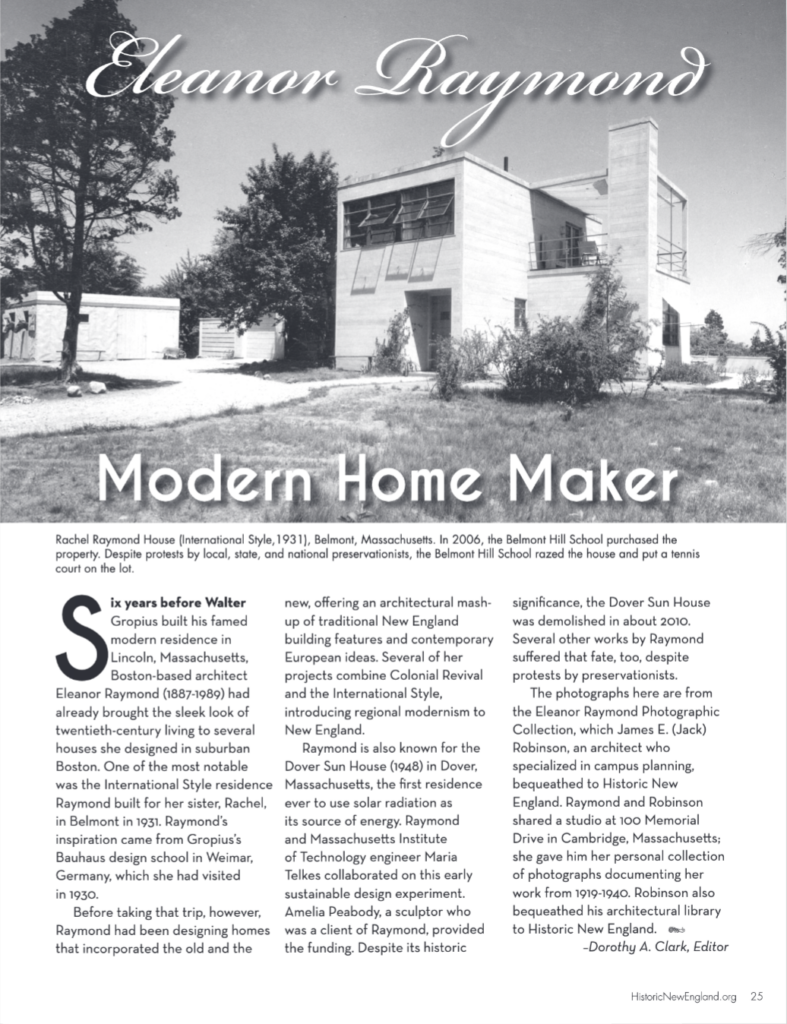
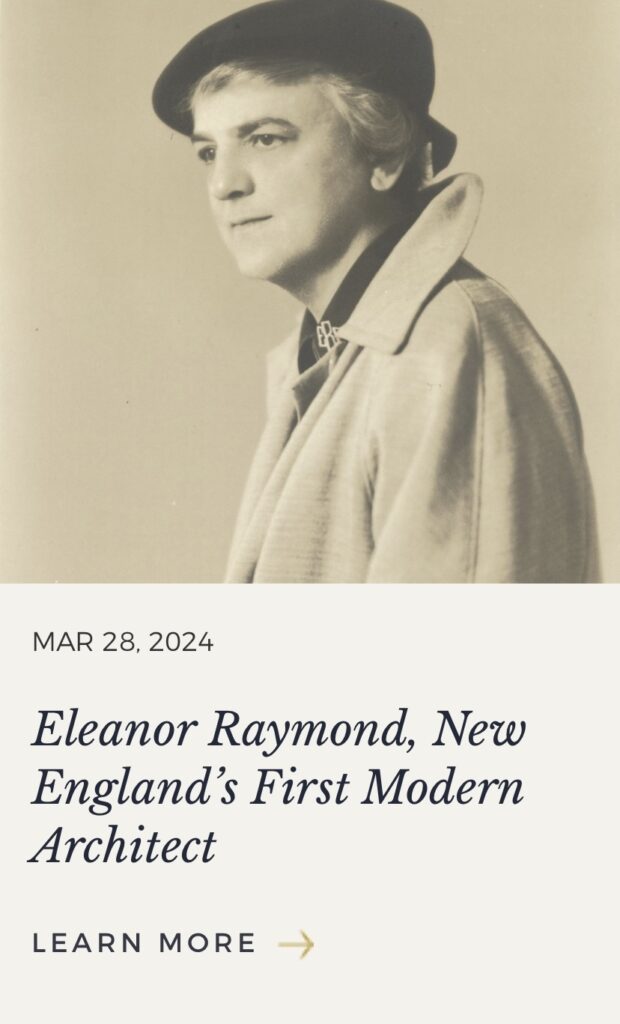
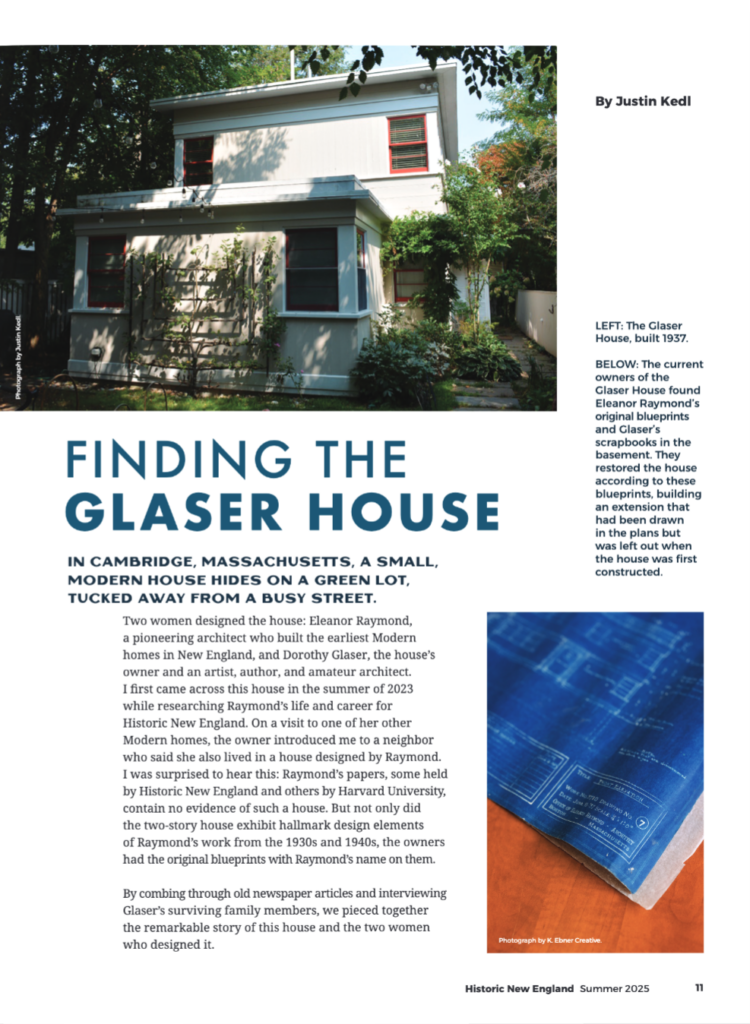
Read more about Eleanor Raymond and her work by clicking on the articles above.
Raymond’s career in architecture began after her studies in botany at Wellesley College led her toward landscape architecture and, eventually, architecture itself. At a time when institutions like Harvard and MIT excluded women from professional architectural programs, the Cambridge School of Architectural and Landscape Design for Women offered her a rare opportunity. Graduating in 1919, Raymond launched a career that combined technical skill with a keen sensitivity to the New England context, blending Colonial Revival elements with the principles of Modern design. A transformative trip to Europe in 1930, where she visited the Bauhaus campus in Dessau and met Ise Gropius, profoundly influenced her design approach.
By 1931, Raymond had built the first Modern home in New England for her sister, Rachel, in Belmont, Massachusetts. She retained regional elements such as wood siding painted to harmonize with the surrounding landscape while incorporating flat roofs, expansive windows, and minimalist forms inspired by what she saw in Europe. Subsequent projects, including the Glaser House in Cambridge, demonstrated her continued commitment to merging new materials and technologies with the traditions of the region. Like other Modern architects, Raymond took what we might now describe as a holistic approach to her commissions: She considered house interiors, exteriors, and surrounding landscapes as inseparable elements of a successful design.
Raymond’s career was marked not only by design innovation but also by perseverance, experimentation, and the cultivation of professional communities among women. She frequently collaborated with women clients and architects, building networks outside the male-dominated architectural profession of her era. Her projects illustrate how Modern architecture could develop in dialogue with New England’s materials, landscapes, and building traditions, showing that the region’s early Modern houses were shaped not only by European ideas but also by architects working locally.
To see more of Raymond’s work or research her professional life, explore the Eleanor Raymond Photographic Collection, which documents thirty-four houses she designed between 1919 and 1940.
Sign up to our newsletter for our latest news and events