
This post is the third in a series on the “reduce, reuse, recycle” waste hierarchy. The series examines contemporary waste management practices in the US, how we dealt with waste in the past, and what we can do today to make an impact on waste reduction now and in the future.
Those of us who work in the sustainability field are often asked some variation of the question, “What can I do to fix the problem?” The problem people ask about might be climate change, social issues, or as is the case in this blog series, what to do about waste. Even if the problem seems gigantic, people want to take some sort of action – if they can’t solve the issue altogether, they want to at least not make things worse. Plus, taking actions that are in line with our values is empowering and can enable us to take bigger steps in the future if needed.
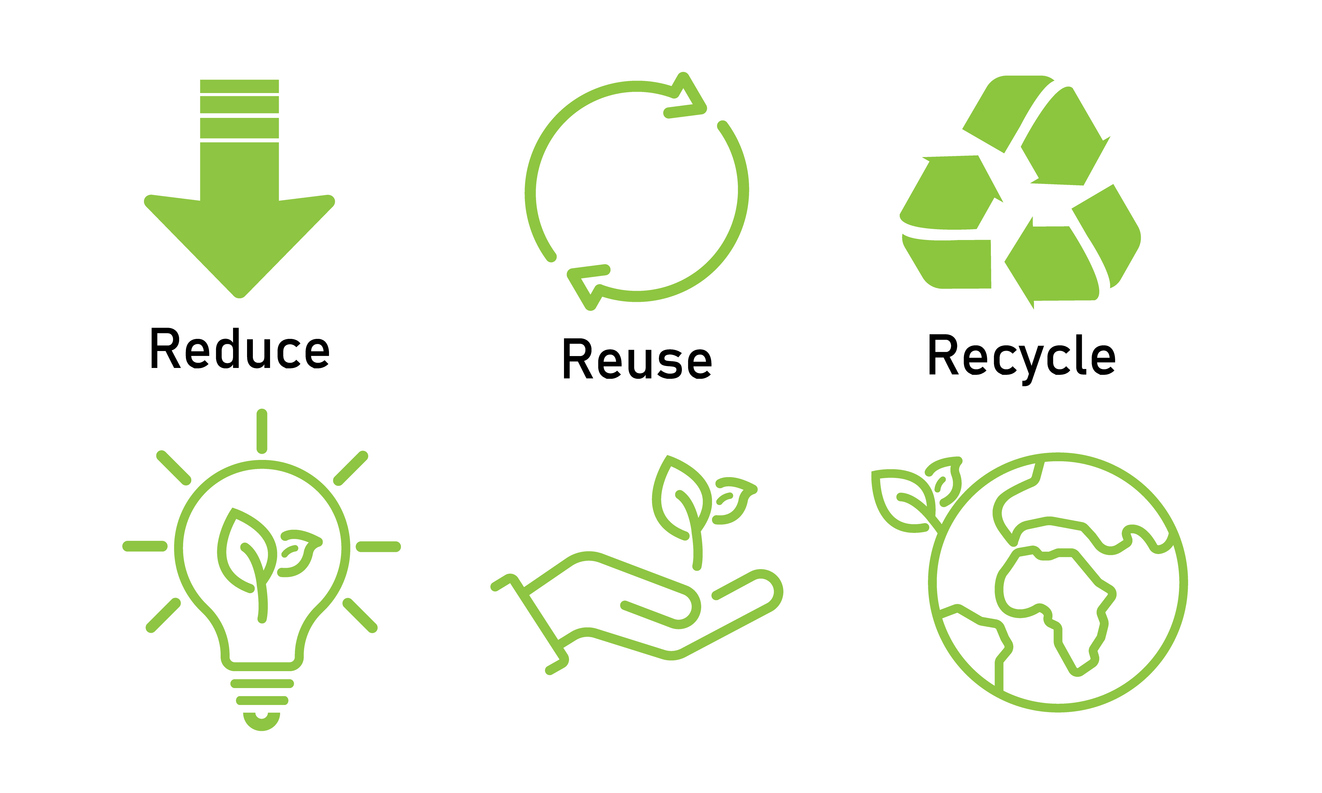
Reducing the amount of waste we generate as individuals can be challenging, but we have an old friend to help us: the waste hierarchy of Reduce. Reuse. Recycle. Below are a few small steps you can take to help send less waste to our landfills. Not everyone will be able to take advantage of all these suggestions—some options may not be physically, financially, or geographically accessible—but most readers will be able to find at least one thing that works for them.
Buy less. The first step to reducing waste comes at the beginning of the waste production cycle – deciding not to acquire something in the first place. This can mean doing our best to avoid impulse buying, or it might mean borrowing an item we plan to only use once instead of buying a new one. If you are looking to replace something that isn’t working, such as a washing machine or other appliance, find out if there is a way to repair it instead of replacing it. For smaller appliances and other items that may not seem as readily repairable, see if there is a Repair Café near you. Repair Cafés bring together people with items that need fixing and those who have the skills to fix it, often at minimal cost.
Reducing packaging. If you are lucky enough to have a store in your community that has a bulk section, you can avoid packaging altogether when buying household staples like flour, pasta, nuts, grains, and spices. Some stores even have the option to buy cleaning supplies from bulk bins. But what if you don’t have a bulk option near you? You can buy items that have less packaging or come in packages that are more readily recyclable, such as paperboard or aluminum.
Reach out. Let companies know you would like to buy products that have less packaging. As consumers, we can influence company policies by making thoughtful decisions about how we spend our money. If you stop buying a product that has excessive packing, let the manufacturer know why you made that choice. You can also contact your elected officials and express your support for introducing packaging reduction legislation like Maine’s Extended Producer Responsibility Program for Packaging in your state.
Replace single-use items with reusable ones. Many of us have already added the new habits of using a reusable grocery bag instead of a disposable one, a travel mug instead of a disposable coffee cup, and a refillable water bottle instead of bottled water. Other easy swaps include using cloth napkins instead of paper ones, reusable cloth towels instead of paper towels, and refillable pens instead of disposable ones.
Find new uses for old items. Glass containers are great for food storage, whether it is leftovers from dinner or items you’ve bought at the bulk store. Cut up old bath towels into smaller pieces to use as cleaning rags or to replace paper towels. Use worn-out clothes to repair other clothing items or turn them into something totally new, such as cloth napkins or cleaning rags.
Buy used. Vintage shops, Goodwill, and Buy Nothing groups provide opportunities for seeking out used clothing, small appliances, furniture, and other items that still have a lot of use left in them. You can prevent something from going into the landfill and likely also save a bit of money. If you have an item you no longer need or want, these can be great places to find it a new home.
If we can’t reduce or reuse, there is of course the last of the three Rs: recycling. If your community has a recycling program, make use of it. It is important to make sure you know what is or isn’t recyclable in your community. For instance, many municipal recycling programs only take #1 and #2 plastics, as they are the most easily recyclable. Some items, like plastic bags, require special handling and may not be accepted at all.
These steps won’t entirely eliminate the waste we send to landfills, and it can sometimes feel like anything we do as individuals is just one less drop in the giant trash can of waste we produce in the world. There is some truth in that – one person doing something may not make much of a difference, but it is pretty rare that we are genuinely acting alone. Many people are concerned about waste and they are taking action, big and small, every day. It is collectively that we can make a difference.
Written by Joie Grandbois, Sustainability Coordinator
Part I in this series examines the history of recycling. Part II explores the history of waste.
Sign up to our newsletter for our latest news and events