
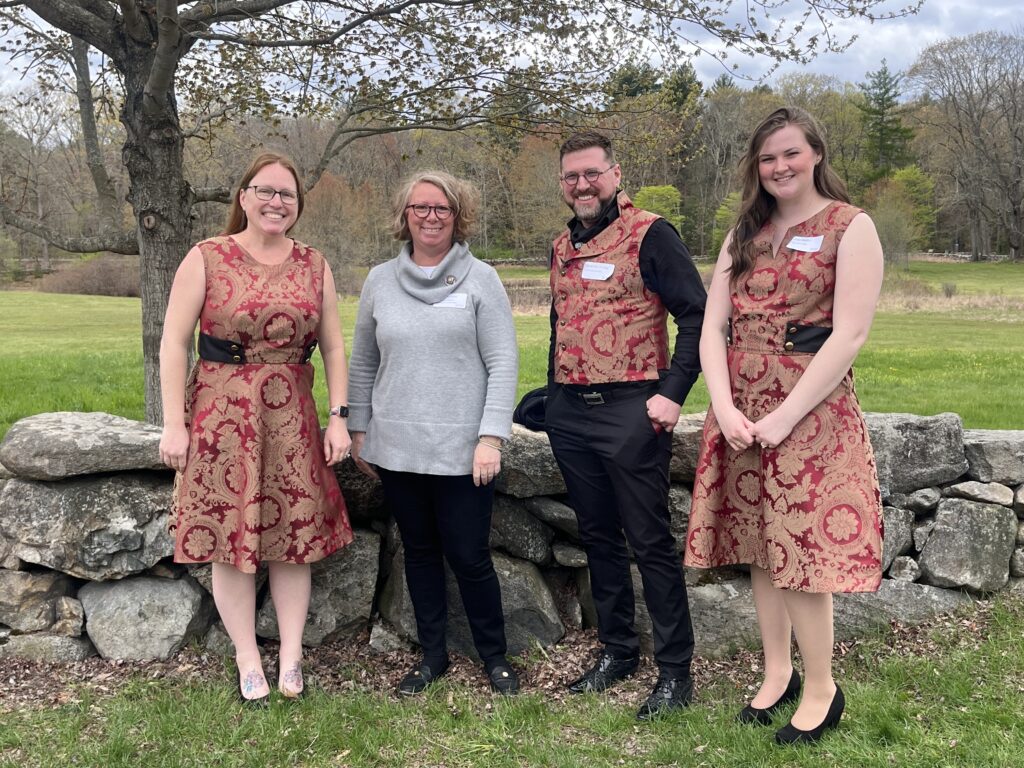
I have worked in museums of history, art and nature for over thirty years. Historic preservation, social history, and historic architecture have been common threads throughout my career. My role as a site manager at Historic New England enables me to connect those interests while also providing opportunities to craft meaningful experiences for visitors and our communities.
Interacting with visitors is one of the most rewarding aspects of my work. Anyone who is a museum educator, like me, will tell you that sharing experiences through a tour can be incredibly energizing. Visitors come to us with their enthusiasm and interests. They have questions and make observations. Those qualities may my work fun—I get to create thoughtful tours and experiences, I help support learning and expand interests, and I even learn a little myself. When the house museums are open, no two days are the same because no two visitors are the same. There’s always something new and I love that about my work as a site manager.
My favorite object changes all the time, but my current favorite object is small ca. 1850 sewing bird found in the Rundlet-May House. This little item is a metal clamp in the shape of a bird that can be attached to the edge of a tabletop. It has a pincushion on the back and the beak opens to hold the edge of a quilt or fabric for sewing. It’s a tiny little item but it embodies stories of the people who once lived and worked in Rundlet-May House.
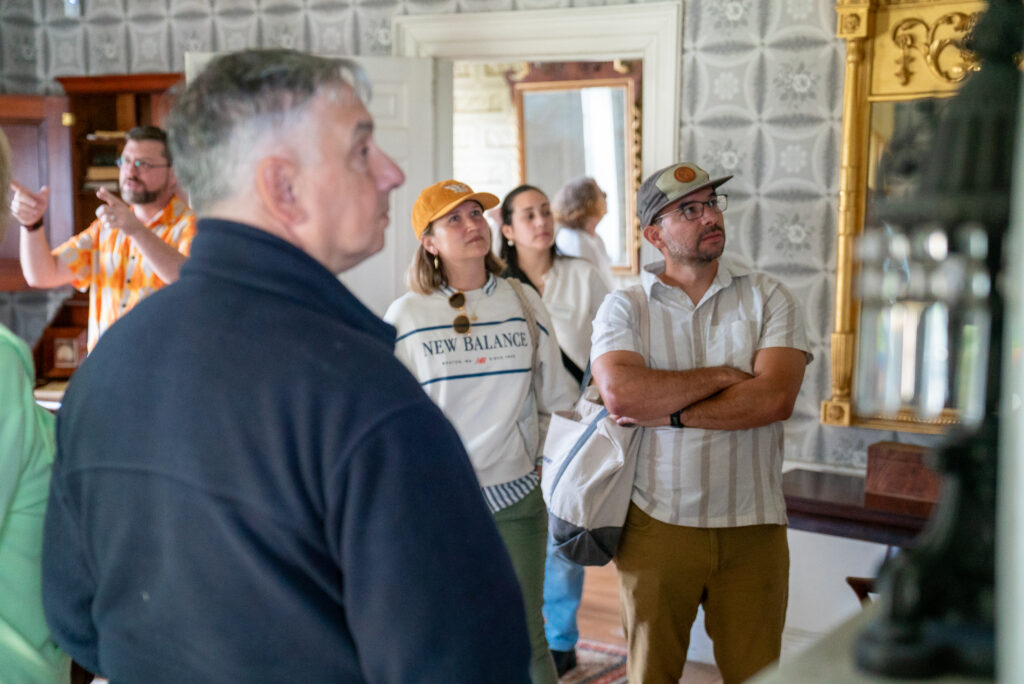
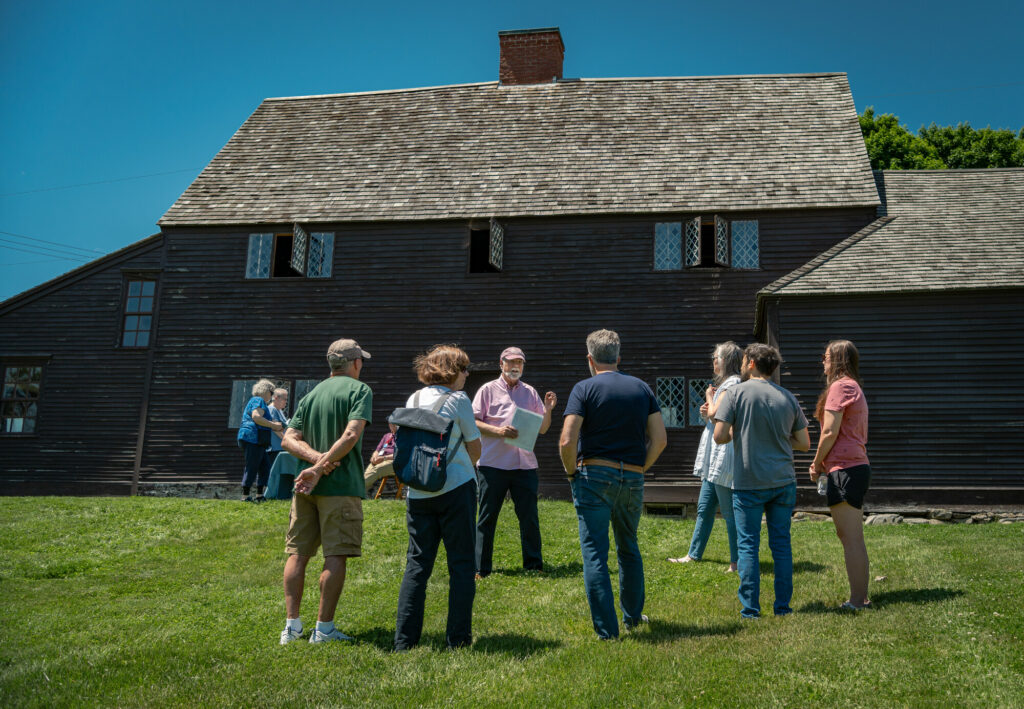
As a life-long museum goer, I know how museums can enrich the lives of visitors. When I’m crafting experiences for Historic New England members and visitors at our historic sites, I strive to build opportunities that are experiential, inclusive, creative, relevant, and inspire curiosity. Those opportunities can take many forms, from tours to theater, but what I love most are experiences that combine history, performing arts, and interactive elements because they provide so many entry points through which visitors can find meaning and connections.
This year, in recognition of the 250th anniversary of the American Revolution, new programs will be offered in Portsmouth and Exeter. At Langdon House, we are offering Revolutionary Portsmouth, a walking tour focusing on the people and places of Portsmouth during the war and a garden concert featuring music from the era. In Exeter, Gilman Garrison House will be the starting point for a walking tour taking the perspective of Peter Gilman, a Tory who was an active community member during the Revolution. Join us at Barrett House later this summer for a Regency Tea Party and Dance featuring period games, tours of the Federal-style showhouse, dance demonstrations, a cream tea, and more!
Finally, keep an eye on the calendar for a new series of performance art salons at Langdon House! These interactive events will include music, theater, and storytelling told by costumed artists—all set in the reception hall of Langdon House and hosted by a resident of the house. Choose from Victorian Frightful in October, Revolutionary Yuletide in December, or an Antebellum Valentine in February.
The Piscataqua region has so much to offer, it’s hard to choose just one favorite spot. On the New Hampshire seacoast, I especially like walking in Odiorne Point State Park or along the Rye Beach Seawall. Both offer accessible walking paths and give sweeping vistas of the Atlantic coastline. For visitors with more time, a day trip to the Isles of Shoals never disappoints. Folks visiting Gilman Garrison House may also enjoy stopping at the American Independence Museum and those traveling to Barrett House should consider lunching at Pickity Place just down the street in Mason, New Hampshire.
To learn more about these and other events at Melissa’s sites, visit HistoricNewEngland.org/Events.
Sign up to our newsletter for our latest news and events