
In part one of this two-part series, I talked about the question I am most often asked as a sustainability professional: “Does anything I do actually make a difference?” The answer to that was yes, what you do does indeed make a difference. Today’s post answers the question, If my actions make a difference, what actions should I take?
If everyone in the world woke up one day and decided to get rid of their car, take public transportation, choose to repair instead of replace, reduce food waste to zero, and adopt a plant-based diet, we’d dramatically reduce emissions overnight. A lot of people want to be able to take these sorts of actions, and some can, but for many what is missing are the systems we need to support those actions.
When people are asked to name the most impactful action they can take to benefit the climate, 59 percent say recycling, even though recycling only reduces a person’s emissions by about 210 kg annually. For reference, the average American’s carbon footprint is 14.3 tons, which means recycling reduces your emissions by .021 percent. Why do so many people mention recycling? Likely because many municipalities not only provide residents with a bin for your recyclables, but they also pick it up along with the regular garbage on trash day. In other words, for most of us, there is a system in place to support taking that action.
Living car free, however, can reduce your carbon footprint by 1 to 5 tons—a 7 percent to 39 percent reduction in personal emissions. That’s much more significant than recycling, so why don’t more people do it? First, only 45 percent of Americans have access to any sort of public transportation. The places that do have it tend to be urban areas, leaving folks in more rural areas without any access at all. We also live in a very car-centric culture where we don’t take public transportation schedules into account when scheduling our workdays or appointments, and many systems don’t run at a frequency that would facilitate people getting to where they need to be when they need to be there. Basically, there are not systems in place that support making this change for most people.
So, when I am asked about the most effective thing someone can do to make a difference when it comes to climate change, the answer I give has two parts:
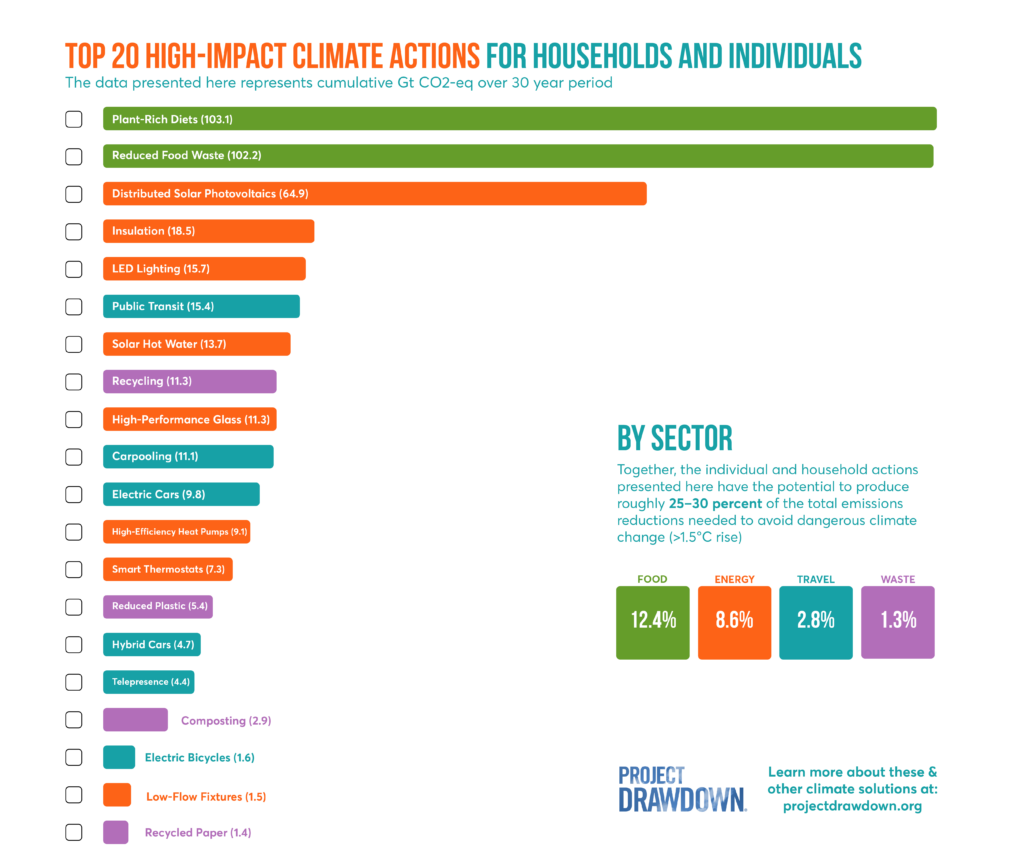
Part one is to take whatever action you can that is available to you. To help with that, here is a chart from Project Drawdown showing the global impact of twenty high-impact climate actions for households and individuals. Not all these actions will be available to everyone, but you can choose the ones that are available to you.
Part two is to take steps to help drive deeper, more meaningful change:
Change always involves the individual and community level. If you have options available to reduce your impact, you absolutely should take them, but we also need to be working towards the systemic change needed to make more of those options available to more people. There is a saying I heard somewhere during my own sustainability journey that I think sums this up well, and that is, “Do your best, and advocate for the rest.”
Written by Joie Grandbois, Director of Sustainability
Sign up to our newsletter for our latest news and events