
In the large collection of architectural drawings housed in Historic New England’s Library and Archives, there are several works that stem from design competitions for local buildings. To study them is to recall important moments in the region’s architectural history.
Design competitions, with rewards ranging from an ego trip to a cash prize and a commission, have been around as long as the second oldest profession itself. One hears that there was a con test among architects to design the Parthenon. A competition might be open, international, and huge—the contest for the design of the Paris Opera House in 1861, won by Charles Garnier, drew 171 entries. The Chicago Tribune Tower competition in 1922, won by Hood and Howells (although Walter Gropius’s entry gained the most praise from Modernist critics), fetched 260 aspirants. Or, the entries might be local and limited—Brunelleschi in 1416 needed to out-engineer only ten Florentine rivals, although one, Ghiberti, was formidable, to direct the building of the dome of the Duomo in Florence. H. H. Richardson in 1872 had only to best five other invited competitors to gain the prize at Trinity Church, Copley Square, Boston.
Winners are not always guaranteed to find their creations erected, however. Funding might not materialize. The design might be altered, combined with parts of other entries to create a pastiche, or largely ignored, as was Daniel Libeskind’s for the World Trade Center in 2002. To level the playing field, there may be restrictions on the kind of presentations that are acceptable (with the winner often ignoring them as well as the program outlining the overall concept for the project).
Usually, the designers’ names are altered or hidden until selection is made. The best artist, rather than the best planner, frequently takes the prize. And often, the result sends the losers to expressions of bitterness, or the general public to grumbling. The lobbying in Washington, DC, among the contestants for the design of the Smithsonian Institution in 1846, a competition won by a young James Renwick Jr. set off what one historian called “a tempest among architects.”
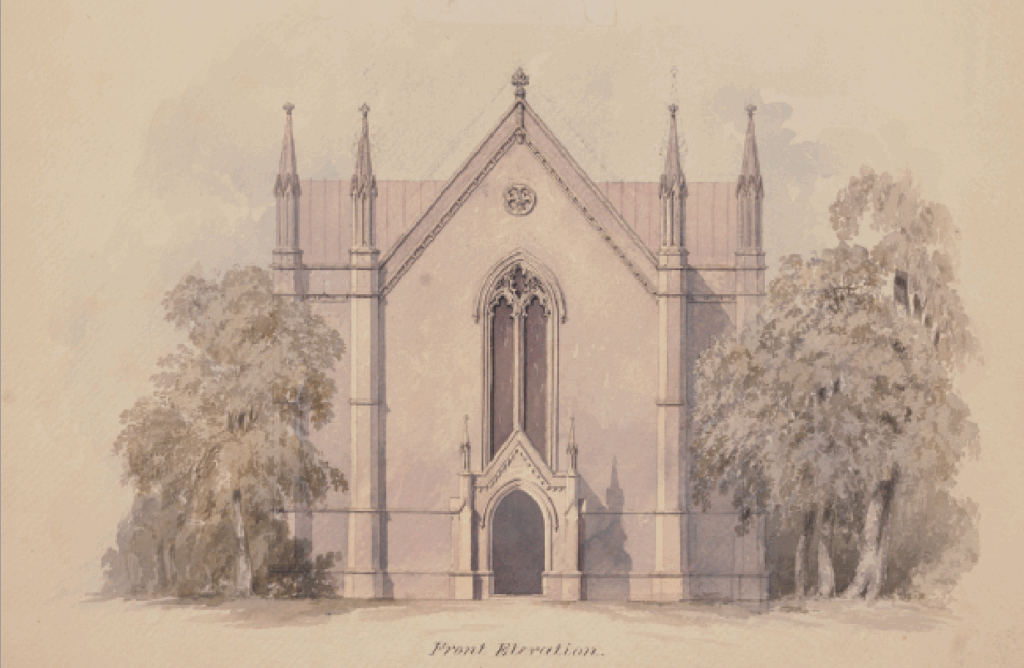
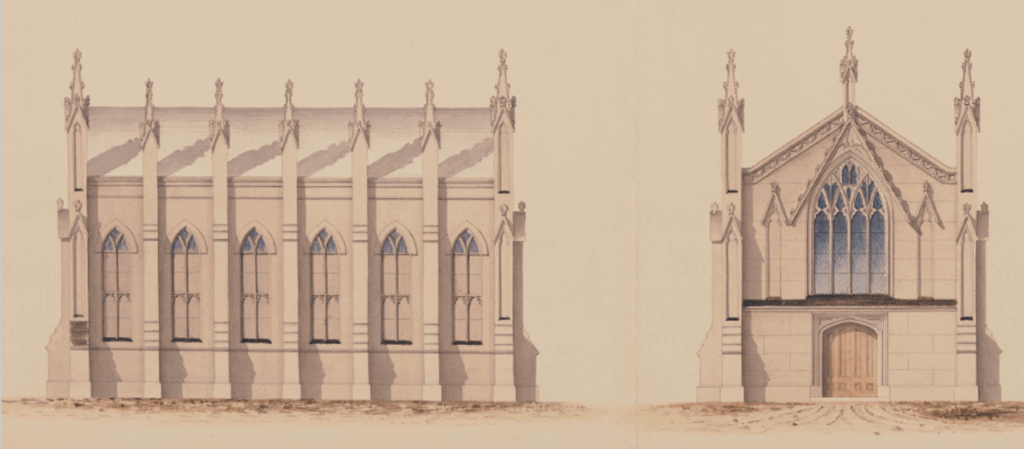
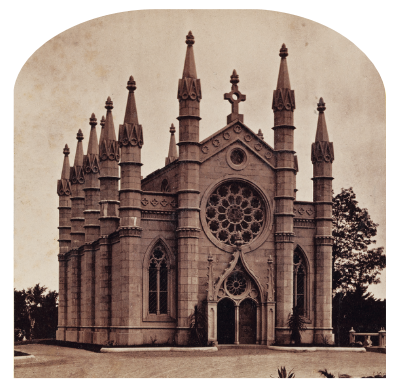
In 1844, the trustees of Mount Auburn Cemetery in Cambridge, Massachusetts, held a competition for the design of its nonsectarian burial chapel. Participants were given a directive that strongly suggested a neo-Gothic solution, for it stated that it would “constitute the Nave or part of the Nave of a future Church which will become with its future transept a Latin or Greek cross.” All the entries surviving at Historic New England are neo-Gothic in style. G. J. F. Bryant, Richard Bond, an unknown entrant, and Ammi B. Young, with a strip of paper pasted over their names, entered similar one-room solutions, but Young also demonstrated how his might be incorporated into the cross-shaped church foreseen by the directive. All were ignored. Dr. Jacob Bigelow, an amateur architect and the designer of the cemetery’s Egyptian-style gateway, probably wrote the directive. His design for the naively Gothic chapel won the competition, and the building has graced the “garden of graves” since 1845. The larger church never materialized.
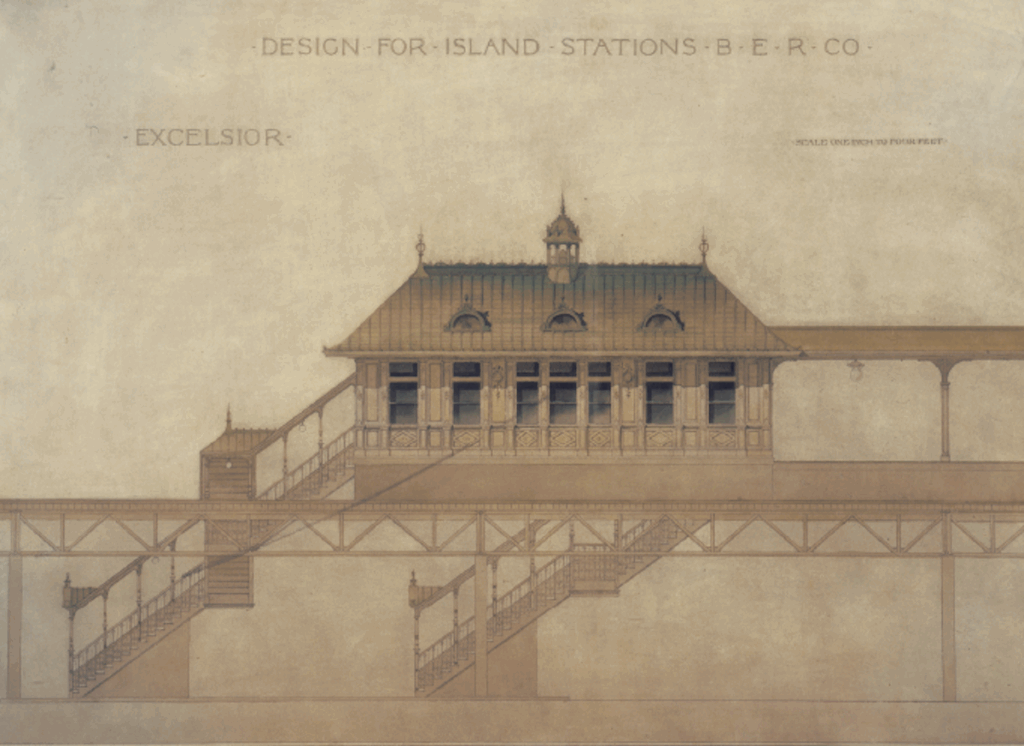
In 1897, the Boston Elevated Railway Company “retained all of the prominent firms of architects in the city” in a competition for the best study of a “typical island station” for the new Main Line El stretching from Sullivan Square to Roxbury. The proposed budget called for $10,000 for each station, to be constructed of copper with wooden floors and platforms. Evidently the early French Renaissance style was expected, because the directive mentioned “pilasters and ornamentation may prevent large, monotonous surfaces of metal and may give better light and shade effects.” At the March 1898 judgment, Alexander Wadsworth Longfellow Jr., calling himself “Excelsior” on his drawings, a graduate of MIT and the Ecole des Beaux-Arts in Paris, received the $1,000 prize for his extraordinarily beautiful set of drawings. He bested ten other competitors, all of whom remained anonymous. The resulting stations were, alas, destroyed in the 1980s, when the Orange Line was relocated underground.
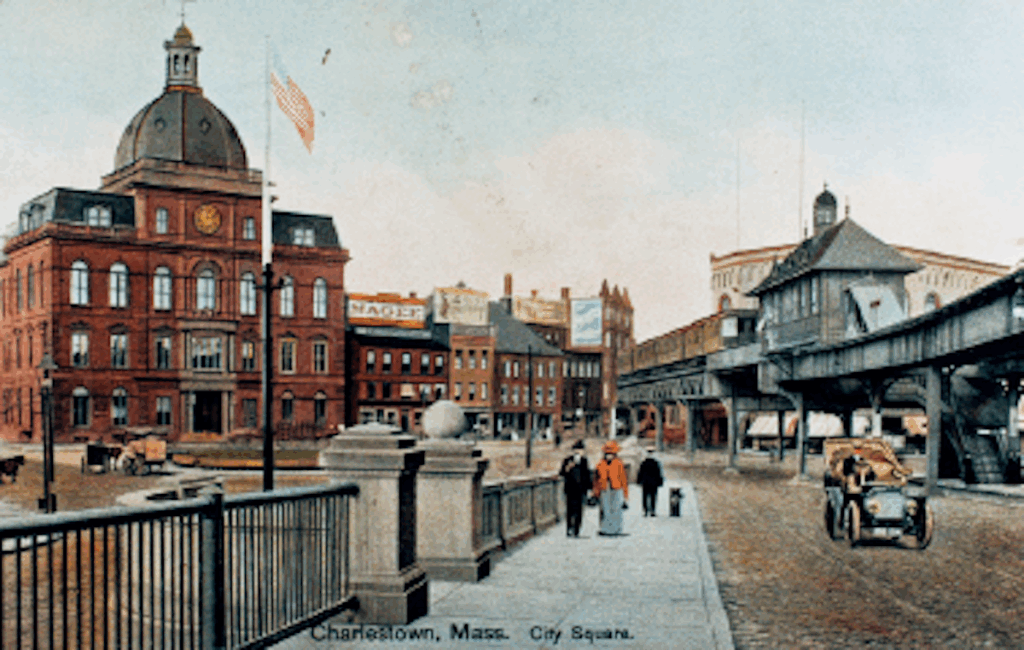
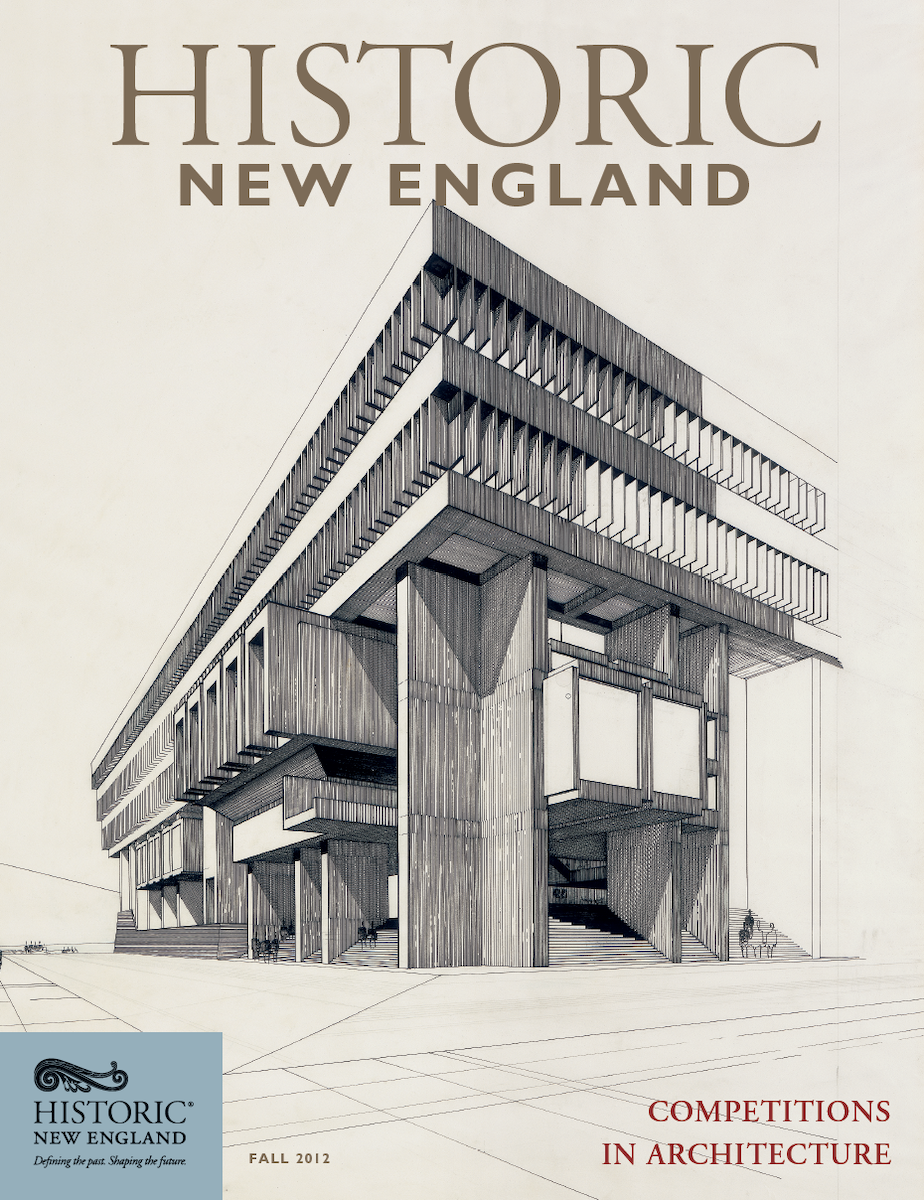
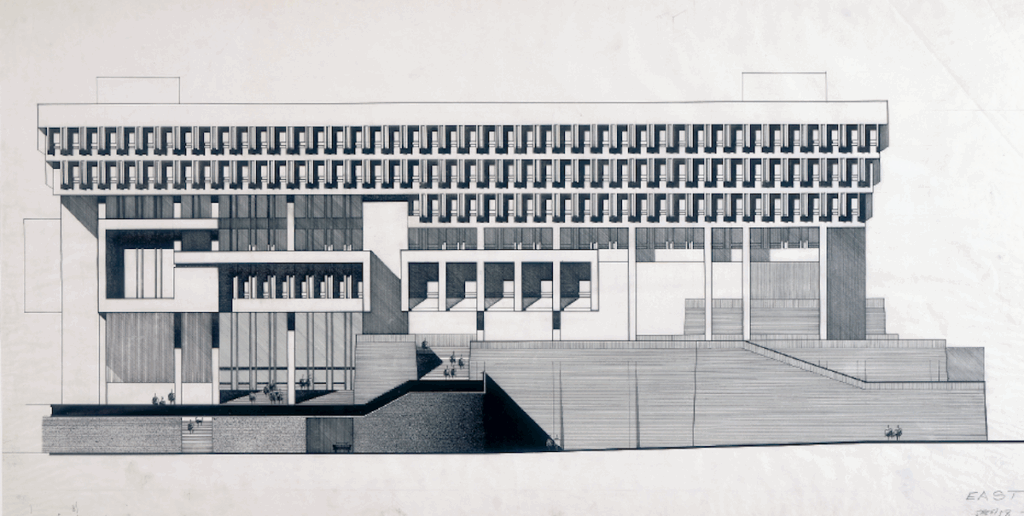
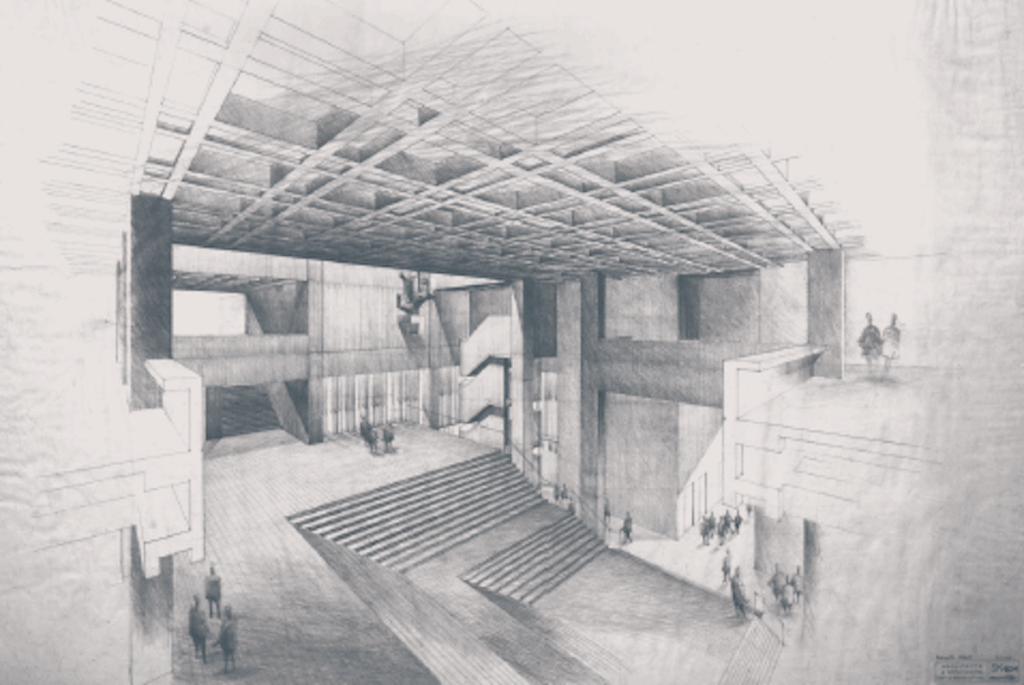
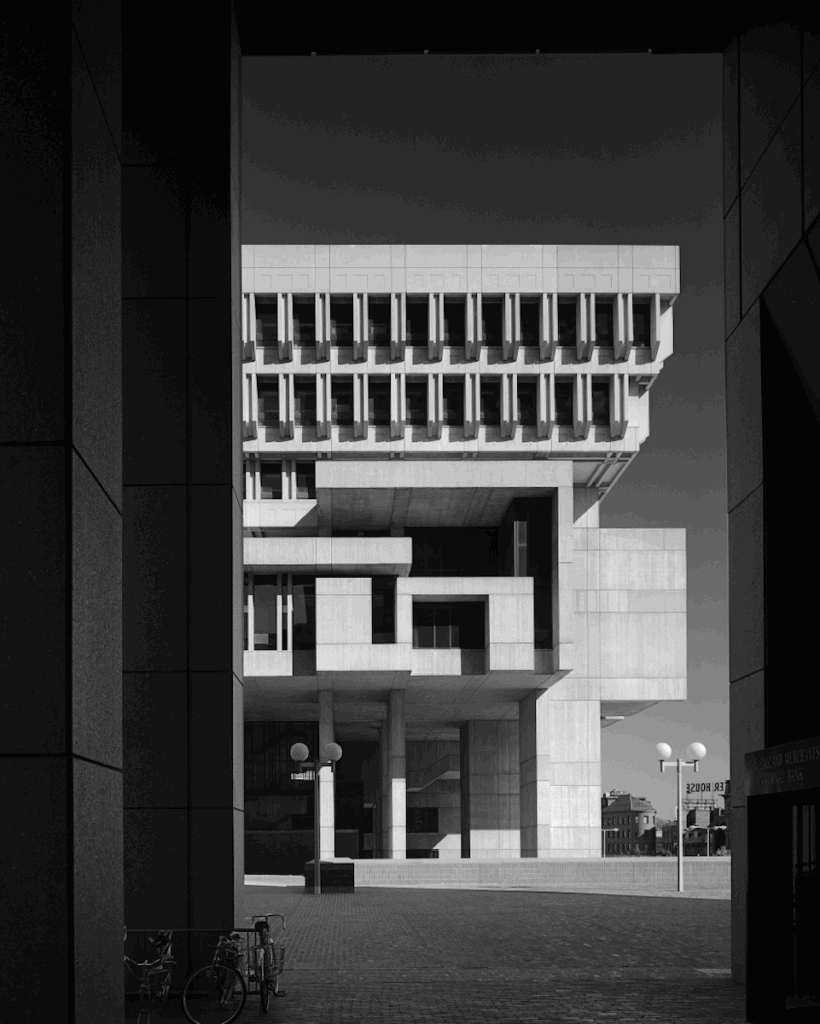
Open public competitions do more than produce a winning design. They discover new talent and generate a feeling of anticipation among architects and the public. Boston after the Second World War was in a somnolent phase. In the 1950s and 1960s, two mayors, John Hynes and John Collins, inaugurated a program of urban renewal, which was capped in 1961 by a national competition for the design of a new City Hall as part of restructuring the city center. Two hundred and fifty-six entries were judged by a committee of local businessmen and architects, who chose eight finalists, each of whom received $5,000 and instructions to develop their schemes. Out of that grinder, in the spring of 1962, emerged the winning entry by a pair of relatively young and largely unknown designers named Michael McKinnell and Gerhard Kallmann. Their reinforced concrete building, a canonical example of the aggressive New Brutalism unveiled in large, dynamic drawings that seem to race away from the viewer or zoom off the surface of the paper, caught the world’s attention. Boston’s 1960s effort at renewal could have acquired no better publicity than it got from this competition.
Written by James F. O’Gorman, architectural historian, author, and Professor Emeritus at Wellesley College, Wellesley, Massachusetts.
This article originally appeared in the Fall 2012 issue of Historic New England magazine. Check the blog monthly for new posts in our Collection Stories series.
Sign up to our newsletter for our latest news and events