
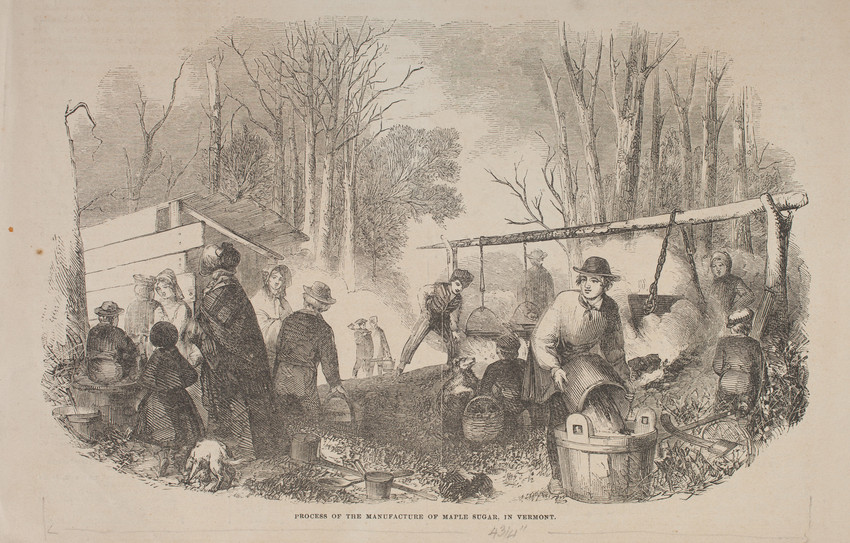
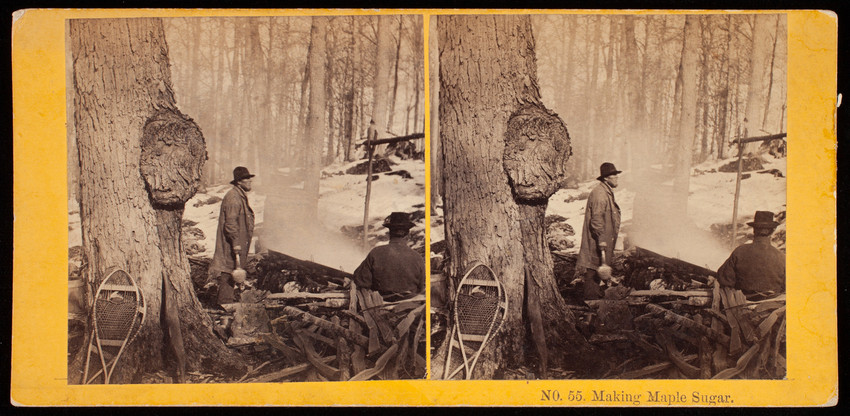
Colonists learned the practice of sugaring from Native Americans centuries ago. Historically, maple trees are “tapped” by drilling a small, shallow hole into the tree and inserting a “spile” into the hole. The sap drips from the spile and collects in a bucket held below. Sap flows best when the days grow longer and warmer, but the nights are still cold. Depending on weather conditions, the season generally begins in mid-March. It is estimated that it takes more than forty gallons of sap to make one pound of maple syrup. After the sap is gathered and filtered for debris, it is boiled until the water evaporates and the syrup remains.
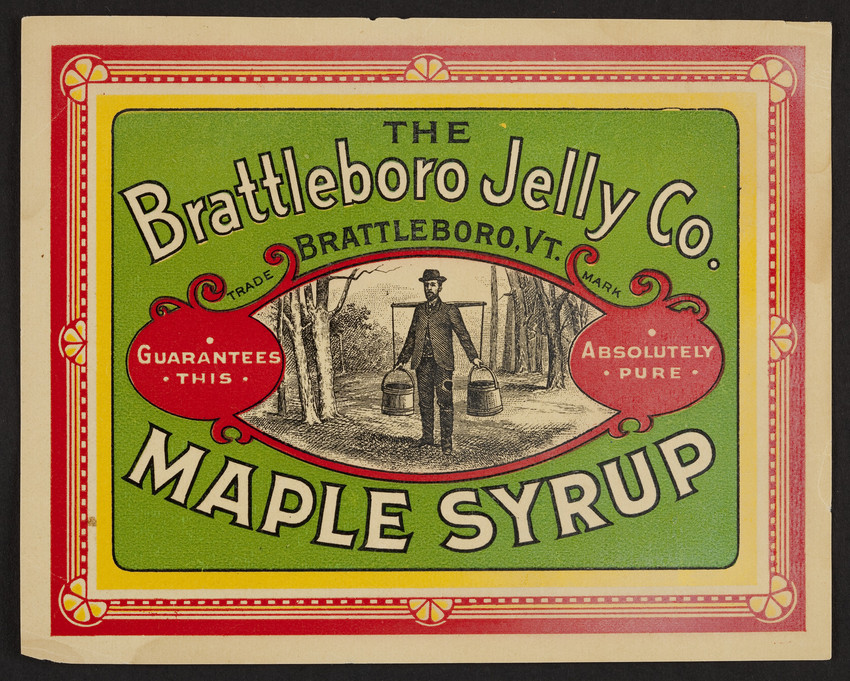
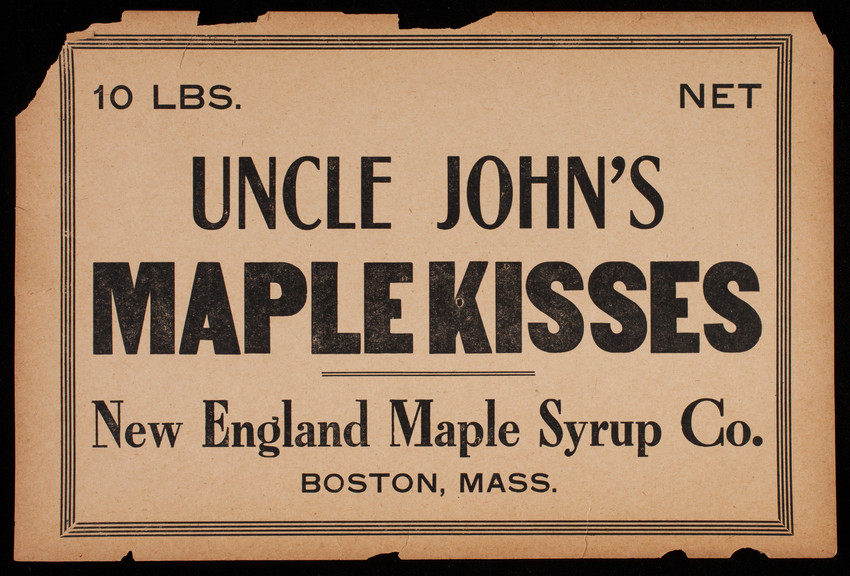
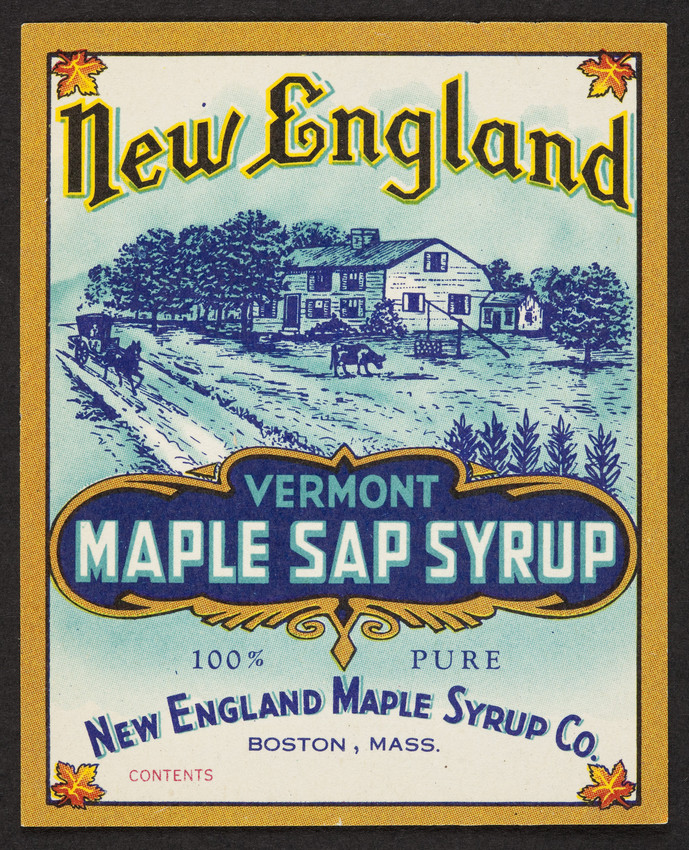
Historic New England’s Library and Archives contains vast collections of photographs, ephemera, prints, manuscripts, and architectural drawings providing important documentation of New England’s cultural and architectural history. Search our collections online or make a reference appointment by contacting us at Archives@HistoricNewEngland.org.
Sign up to our newsletter for our latest news and events