
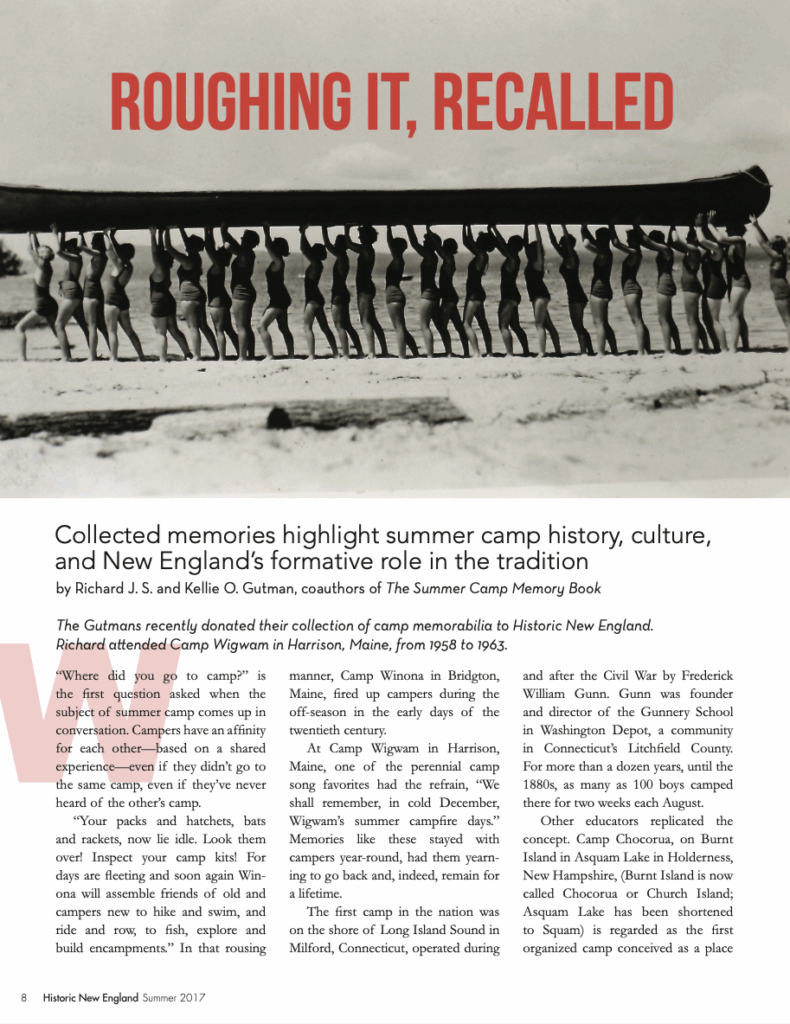
“Where did you go to camp?” is the first question asked when the subject of summer camp comes up in conversation. Campers have an affinity for each other—based on a shared experience—even if they didn’t go to the same camp, even if they’ve never heard of the other’s camp.
“Your packs and hatchets, bats and rackets, now lie idle. Look them over! Inspect your camp kits! For days are fleeting and soon again Winona will assemble friends of old and campers new to hike and swim, and ride and row, to fish, explore and build encampments.” In that rousing manner, Camp Winona in Bridgton, Maine, fired up campers during the off-season in the early days of the twentieth century.
At Camp Wigwam in Harrison, Maine, one of the perennial camp song favorites had the refrain: “We shall remember, in cold December, Wigwam’s summer campfire days.” Memories like these stayed with campers year-round, had them yearning to go back, and, indeed, remained for a lifetime.
The first camp in the nation was on the shore of Long Island Sound in Milford, Connecticut, operated during and after the Civil War by Frederick William Gunn. Gunn was founder and director of the Gunnery School in Washington Depot, a community in Connecticut’s Litchfield County. For more than a dozen years, until the 1880s, as many as 100 boys camped there for two weeks each August.
Other educators replicated the concept. Camp Chocorua, on Burnt Island in Asquam Lake in Holderness, New Hampshire (Burnt Island is now called Chocorua or Church Island; Asquam Lake has been shortened to Squam), is regarded as the first organized camp conceived as a place for boys to learn swimming, rowing, fishing, and practical group living.
“The Boys’ Paradise” was an article that captured Camp Chocorua’s fifth summer experience in St. Nicholas Magazine for June 1886: “Last season, twenty-five manly little fellows tumbled in and out of the lake, like water brownies, perfectly fearless, paddling canoes which had been made by themselves, swimming equally well in clothes or without, and growing active and healthy in the strong, pure mountain air.”
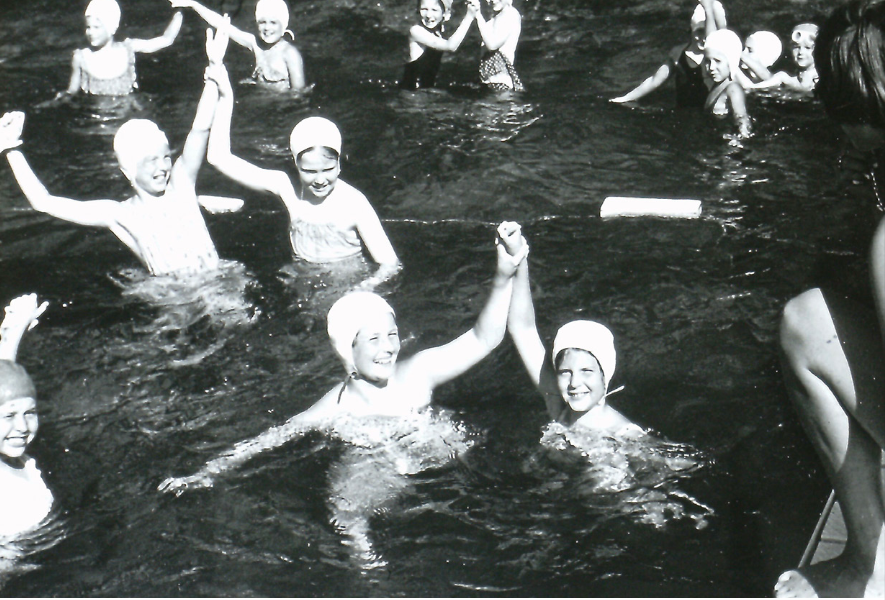
Sinkers, minnow, bass, pickerel, and salmon: Campers were known by species of sea life according to their level of fearlessness and skill in the water. A camper at Kennebec (located in North Belgrade, Maine) in 1952 wrote home: “Dear Mom and Dad, I caught a bass and a white perch. I am a 4 and a ½ part bass in swimming. Love and xx.”
Summer camps were promoted as an opportunity for children to leave the city; live close to nature; explore, learn, and grow; and have a summer of freedom, a change of routine, and endless adventure.
Camps proliferated, and by 1924 there were 262 private boys’ camps, 321 for girls, 137 coed choices, and more than 700 organization-sponsored and social service camps in the United States. At that time, 90 percent of all camps were in New England, where certain lakes—such as Newfound, Winnipesaukee, and Squam, all in New Hampshire—were most desirable. Maine was another center of the camping industry, with its beautiful woodlands, lakes, mountains, and wilderness areas. In 1934, there were more than eighty camps established around Sebago Lake and Long Lake in Maine. Cape Cod became well known for its saltwater camps.
Intercamp competitions doubled up with social events, giving kids the chance to get out and see friends at other camps. It wasn’t always a big hit: “Dear Mom & Dad, On Wednesday night I went to Indian Acres for a baseball game (16 & under) and a dance. I didn’t play and the dance was lousy. There were no girls my size.”
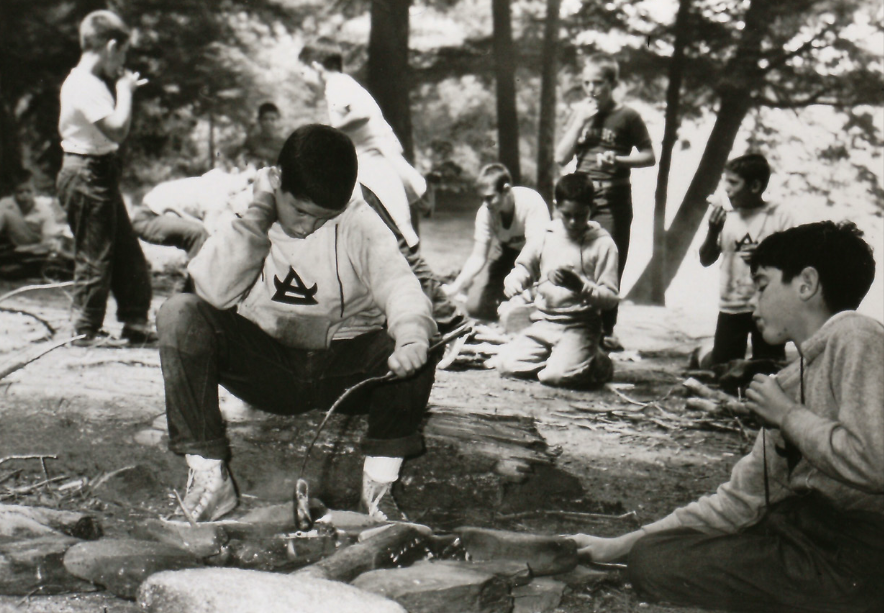
Traditional activities at camp have always existed alongside more atypical pastimes for children. While swimming, baseball, or tennis could be found in the city, a day at camp offered those activities and much more. Kids could test their skills at riflery, archery, fencing, or horseback riding. The less athletic could shine at drama, nature studies, arts and crafts, or photography for one of the camp publications. Evening programs were as simple as a campfire, some songs, ghost stories, and marshmallows—or a musical program or snipe hunt.
From The Totem newsletter of Camp Mah-Kee-Nac in Lenox, Massachusetts: “The whole Junior Camp went up to Campcraft to have a campfire on the night of August 7, 1980. Once we came in we sat on logs and watched as Paul set the fire. At first it wouldn’t spread, then he got a Kleenex box and boy did it spread! Well, we sang the Mohican song and other funny songs. Soon it came to the last song. Three kids helped put out the fire with their canteens.”
A camper’s day—from reveille to taps—was jam-packed with activities, the only break coming at rest hour: an hour after lunch during which inactivity was the rule. Decades later, what attendees often remember best about their camp experiences are the everlasting friendships cemented by carefree days with their pals and counselors, jumping in the lake, playing sports, opening letters and packages from home, singing, joking, and living with other kids. . . and growing up.
Written by Richard J. S. and Kellie O. Gutman, coauthors of The Summer Camp Memory Book.
This article originally appeared in the Summer 2017 issue of Historic New England magazine. Check the blog monthly for new posts in our Collection Stories series.
Sign up to our newsletter for our latest news and events