
What can we learn about a family’s history from cherished books passed down through the generations? This update from our Study Center, prepared in cooperation with David Chesnut’s descendants, reveals some surprising answers.
In 1903, David Chesnut Jr. was several years into his position at the Eustis Estate in Milton, Massachusetts, working as a coachman alongside his brother Samuel, a groom. Their parents, David Sr. and Elizabeth, had come north from enslavement in the Carolinas and settled in Massachusetts. The young couple soon made their home in Milton, where David Sr. found employment as a “hostler,” or horse handler, at the Eustis Estate. When the elder David passed away suddenly in 1898, his sons continued working for the Eustis family. The younger David oversaw the estate’s transition from carriages to automobiles, becoming the family’s first chauffeur.
At home, David Jr. took on the role of principal provider for his remaining family. He eventually moved to Dedham, Massachusetts, and spent the remainder of his career as a chauffeur for the Endicott family at their large estate. He was able to purchase land nearby and invested in the local Black community not only as a landlord but as a community leader, veteran, air raid warden, lamplighter, military band director, and patriarch of the Chesnut family. An accomplished trumpeter, his lifelong passion for music blossomed in successive generations as he raised musical sons who became performers deeply engaged in Boston’s “golden” era of jazz, performing and teaching alongside legendary musicians such as Duke Ellington and Quincy Jones.
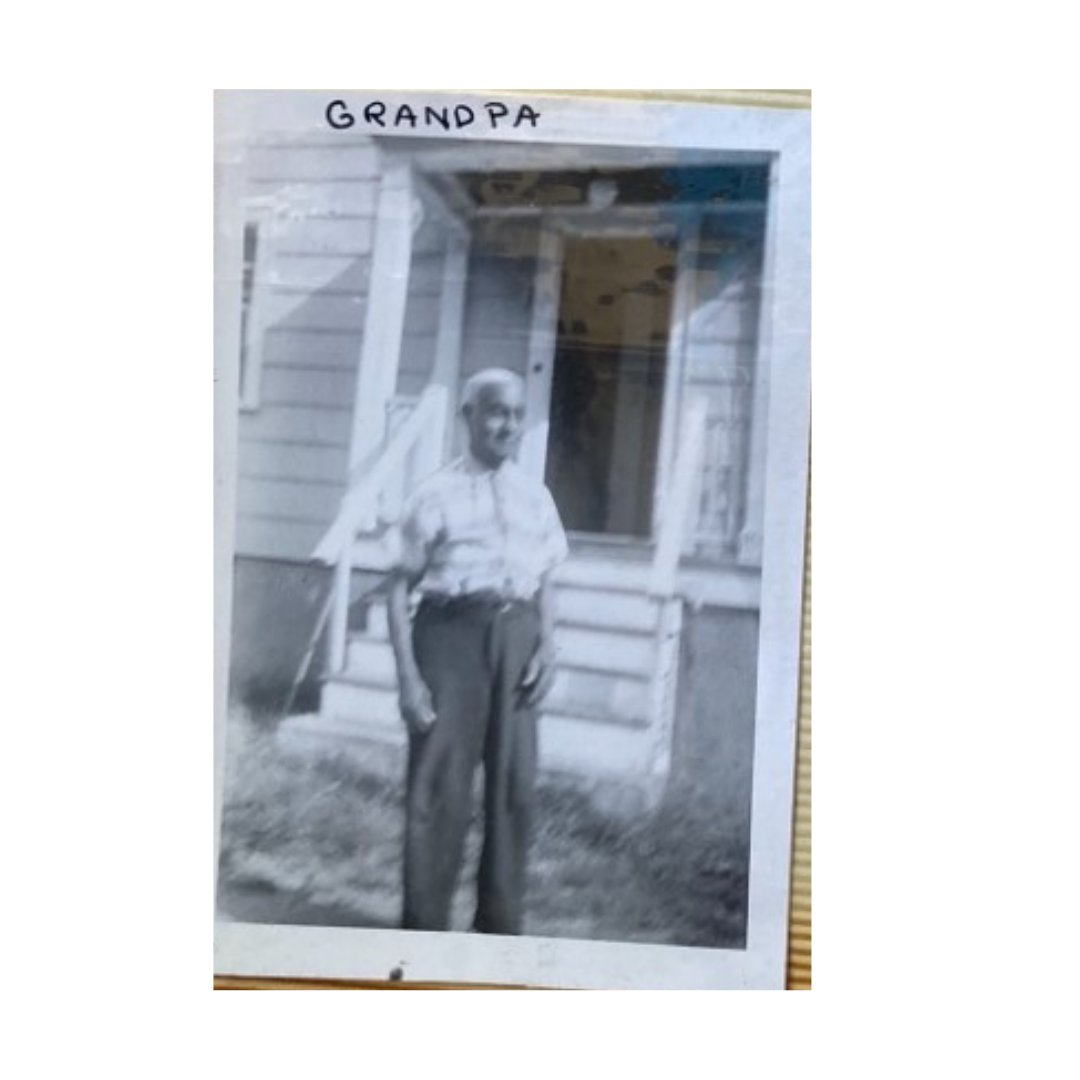
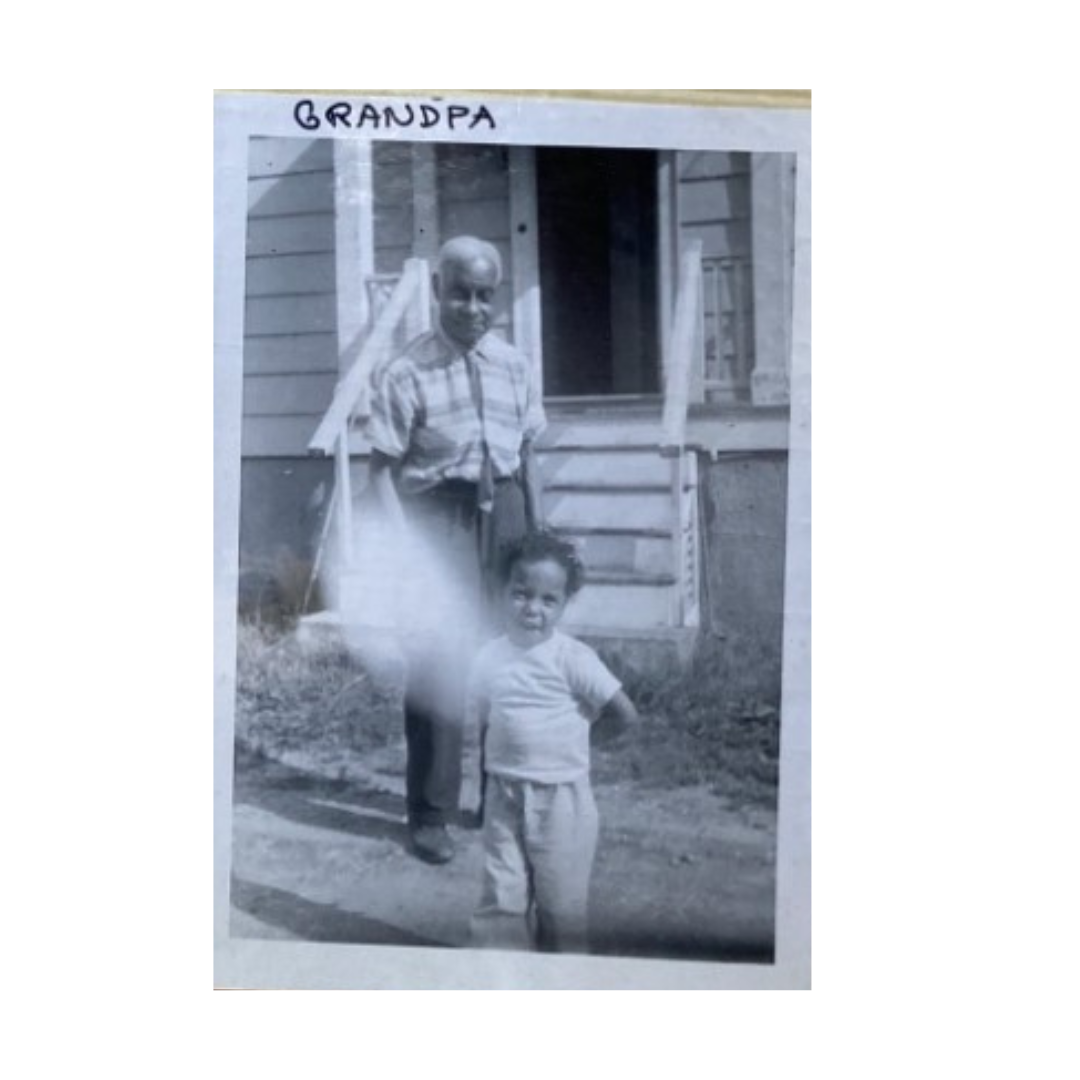
When David’s granddaughter Maria Chesnut Corman collaborated with Historic New England in 2023 on the exhibition, Music and Motion: The Chesnut Family Legacy, she generously shared a variety of treasured family objects and artifacts, including several books from David’s home in Dedham where she and her family had lived with him for several years in the 1960s. She noted that three books had particular significance to David and were always shelved together in the family’s living room. Those three books were the family Bible, Mary Boykin Chesnut’s Diary from Dixie, and Booker T. Washington’s most famous work, Up from Slavery: An Autobiography, which was inscribed in the front as a gift to David Jr. from W. E. C. Eustis’s sister Emily Jeffries. The importance of the Bible in the family’s religious life was clear; the other two books had interesting connections to the family’s history.
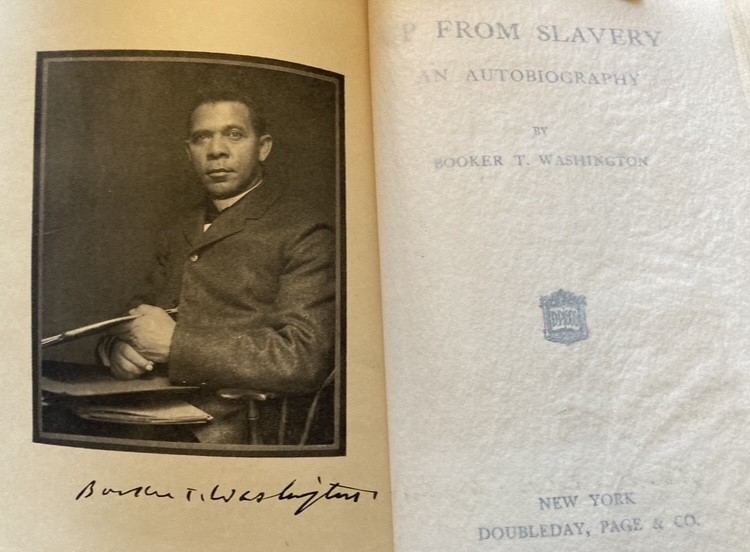
Booker T. Washington was at the center of American consciousness in 1903 when the young David Jr. was working in Milton. In 1901, Washington had published Up from Slavery, the groundbreaking autobiography in which he detailed his experience of being enslaved as a child, navigating race relations in the aftermath of the Civil War and Reconstruction, and eventually establishing the Tuskegee Institute. In July 1903, Washington came to Boston to speak at the African Methodist Episcopal (AME) Zion Church on Columbus Avenue. The reception was mixed, however, as one of his most vocal critics was in attendance: Harvard-educated William Monroe Trotter had founded one of Boston’s only Black newspapers, The Boston Guardian, the same year Up from Slavery was published. The Guardian positioned itself at the forefront of Black radical progressivism; its motto was, “For Every Right, With All Thy Might.” Both Trotter and his close friend W. E. B. Dubois had deep ideological differences with Washington. The Guardian regularly criticized Washington’s views on segregation, his silence on lynching, and the way he positioned his message with white audiences.
During Washington’s remarks at AME Zion Church, Trotter and his associates (called “Trotterites”) were reported to have interrupted the speaker with boos and hissing, leading to chaos in which more than 2,000 attendees were dispersed by police in what became known as “the Boston Riot.” Trotter and an associate were arrested and later convicted of disturbing the peace, although on August 1, a Guardian headline shouted, “BOOKER WASHINGTON SPEAKS UNDER A CORDON OF POLICE – Tuskegeean Spends Two Hours Trying to Make Himself Heard – His Hirelings Protect Him from the Consequences of Facing His Own Previous Statements – Attempt to Deny Free Speech Foiled.” By contrast, the Boston Sunday Journal reported on August 2 that the disturbance was “in no way expressive of the feeling entertained toward Mr. Washington among the colored people of Boston and the vicinity. The disturbance was deliberately planned. It was participated in by only a few of those present.”
Although David Chesnut Jr. could have been in the audience at AME Zion Church that day, his family remembers him as a quiet man who wasn’t known to attend large gatherings and pointedly steered clear of controversy. Either way, Booker T. Washington’s early life in Virginia and the path he followed likely would have been of interest to David as it was to many Black Americans at the time. Although Washington’s ideologies clashed with those of Trotter and DuBois, his ideas about productivity and economic independence resonated with Black Americans such as David, who looked to build lives and careers at the turn of the twentieth century. It is particularly interesting (and mysterious) that David was given an inscribed copy of Up from Slavery by Emily Jeffries, W. E. C. Eustis’ widowed sister who lived on a property adjoining the Eustis Estate. It’s possible the Chesnut family assisted with the horse and carriage needs of the Jeffries house, which was in close proximity to them on what was effectively a family compound. Might this have been a commemorative gift, either an acknowledgment that David had an interest in Washington’s work or an effort to introduce him to it? Whatever Emily’s reasons, David kept the book for the rest of his life and took particular care of it. The choices David made reflect some of Washington’s philosophies. His family described him as hardworking and practical, and as having had a successful and fulfilling life. The fact that David kept Washington’s book alongside two other books of such significance quietly suggests that Washington may have had some influence on him.
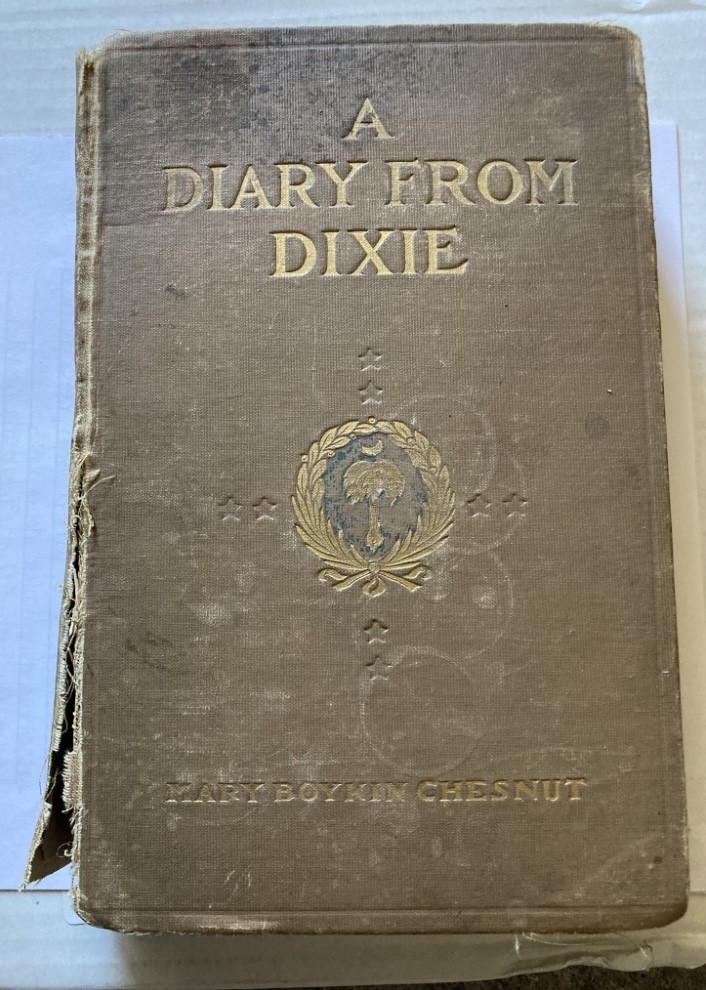
A Diary from Dixie is an account of the years between 1861 and 1865 written by Mary Boykin Chesnut, the high-society wife of James Chesnut Jr. Chesnut was a lawyer, senator, and general in the Confederate army who served as an aide to President Jefferson Davis. The Chesnuts were also large-scale enslavers who inherited a sizable plantation called “Mulberry” in Camden, South Carolina. They owned as many as 1,000 enslaved persons who were emancipated at the end of the war. A Diary from Dixie provides detailed descriptions of Charleston’s elite slaveholding class as the Confederacy fell and historians see it as an important part of the historical record. In addition, Mary’s observations about people and life on a large Southern plantation may be the only existing references to specific figures at Mulberry, as enslavement records from this period are notoriously hard to trace and were often not preserved. Mary’s book was published in 1905, almost forty years after her death, and enjoyed wide popularity, which may explain how it found its way to David Chesnut’s bookshelf. He may have been particularly interested in the work because of several apparent connections to his own history, the first of which is that his own father was born in Camden, South Carolina, in 1853. Mulberry was built around 1820 and the Black community there would have been enslaved by the prominent Chesnut family at the time of David Sr.’s birth. In addition, David Chesnut Sr. spelled his last name without a “T” in the middle, the same way as James and Mary Chesnut, which suggests a connection to the family. Finally, David Chesnut Sr.’s father is listed on several records as “James Chesnut.” It’s difficult to say whether this James Chesnut was an enslaved person named after their enslaver (which was a common practice), or if it refers to the fact that white slaveowners often committed sexual assault in their abuse of power, fathering children with women whom they had enslaved. Either way, the use of this name strongly suggests a deep connection to James and Mary Boykin Chesnut and provides an important clue to the Massachusetts Chesnut family’s history.
The fact that this book was clearly important to David Chesnut Jr. is perhaps the strongest piece of evidence that his family came north from Mulberry. Family stories and other oral histories of that time have disappeared over the generations, but by keeping these books together, David amplified their significance. His act of conscious stewardship provided a thread for his granddaughter and later historians to follow, working back through the pages of his books, down the Eastern seaboard, and across almost two hundred years to understand the family’s story and preserve it for future generations. David’s contribution to this complex and layered narrative illustrates how much the work of preservation belongs to each of us, and what power we have if we choose to engage with it as he did—thoughtfully, consistently, and personally.
Written by Eleanor Martinez Proctor, Study Center Research Fellow
Sign up to our newsletter for our latest news and events