
Historic New England is excited to mark the 250th anniversary of the American Revolution, connecting our sites and collections to the events of the era. As part of our New England 250 initiative, we are pleased to announce the launch of NE250.org, which will serve as your go-to location for everything Historic New England is planning for the anniversary.
We’ll share the stories of New Englanders’ domestic life—whether young or old, those who supported independence or remained loyal to the Crown, enslaved or free—through exhibitions, special events, virtual tours, new research, and revamped site experiences. Here is a glimpse of what you’ll learn at our sites and beyond!
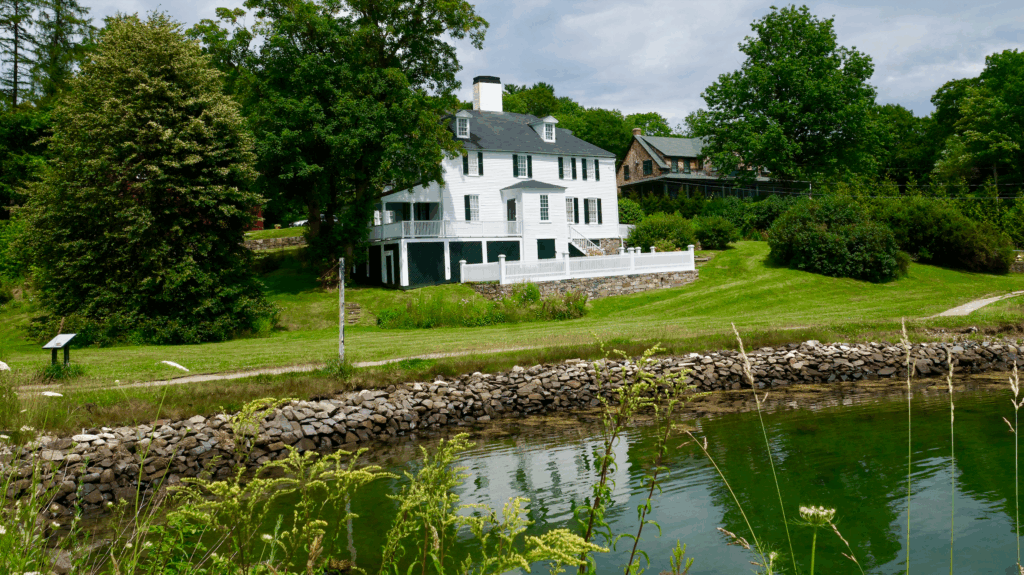
Framed by dense woods and set in rolling hills overlooking a pristine section of the Kennebec River, the 1762 home built by Jonathan Bowman is a rare survivor of domestic eighteenth-century elegance in a rural setting. Although it is difficult to imagine today, the Kennebec River was busy with shipping traffic through the eighteenth century. During the American Revolution, Bowman and his best friend Charles Cushing rallied against the Tories of Pownalborough, where a violent civil war based on longstanding conflicts of politics, religion, and personal animosities played out. And, through the work of Recovering New England’s Voices, we have further insight into the dramatic story of Cicero, a man enslaved by Jonathan Bowman. Cicero, who ran away to join George Washington’s troops, participated in several key battles before being returned to enslavement in Bowman’s household.
At Sayward-Wheeler House, overlooking the York River, free and enslaved people lived in close proximity as the dramatic events of the American Revolution unfolded around them. Enslaved household members Prince and Cato sought freedom, while the wealthy property owner, Jonathan Sayward, found himself at the center of turmoil. New research gives insight into why Sayward was against the colonies rebelling and how it impacted his relationship with the town. Our revamped tour experience will also dive deeper into the stories of Cato and Prince, both of whom joined the Continental Army, and what their lives were like after the war.
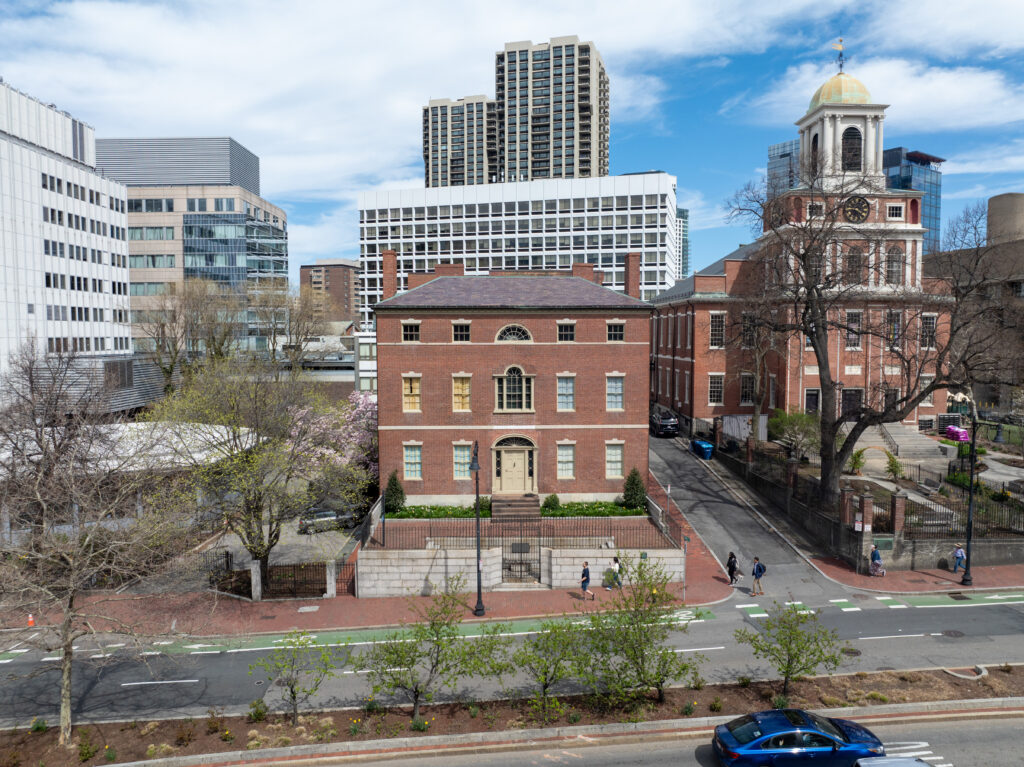
Otis House is the last surviving mansion in Bowdoin Square in Boston’s West End neighborhood, with deep family ties to the American Revolution. Harrison Gray Otis and his wife Sally Foster Otis witnessed revolutionary-era Boston firsthand as children. Otis’s aunt, Mercy Otis Warren, and uncle, James Otis, were key figures during the American Revolution. Otis House tells the story of domestic life in post-Revolution Boston and features important objects connected to the conflict, including a desk and bookcase confiscated by the British during their occupation of Boston, as well as a couch made in honor of the Marquis de Lafayette’s triumphant tour of the United States in 1824.
Pierce House is one of the last surviving examples of seventeenth-century architecture in the city of Boston. During the American Revolution, Col. Samuel Pierce participated in the fortification of Dorchester Heights. His remarkable personal papers and diaries allow us to explore everyday life during the war. Pierce was “a regular guy”—a middle-class farmer, not a politician or general or wealthy merchant. His journal entries offer visitors an eyewitness account of how events such as the Boston Tea Party and the Battles of Lexington and Concord were perceived by those living nearby and how the unrest and eventual war interrupted and shaped daily life.
This country estate overlooking Quincy Bay transports you to the eve of the American Revolution and tells the story of a woman’s work to preserve her family’s history more than one hundred years later. Col. Josiah Quincy built the house, where from a third-floor perch he reported the movement of British ships to General George Washington in 1776. Josiah Quincy, Jr. (who supported American independence) defended the British soldiers involved in the Boston Massacre along with John Adams while his brother Samuel Quincy (who supported the Crown) was the prosecutor. The Quincy family played key roles in the social, political, and intellectual life of Massachusetts for generations, producing three mayors of Boston and a president of Harvard.
The 230-acre site includes a 1690 manor house that served as the country seat of wealthy Newburyport merchants. Among them was Nathaniel Tracy, who outfitted a fleet of privateer vessels during the American Revolution. Upon his death in 1796, Tracy’s widow sold the farm to Offin Boardman, who had achieved fame during the Revolution for his daring exploits aboard privateer vessels, which landed him in prison in England twice.
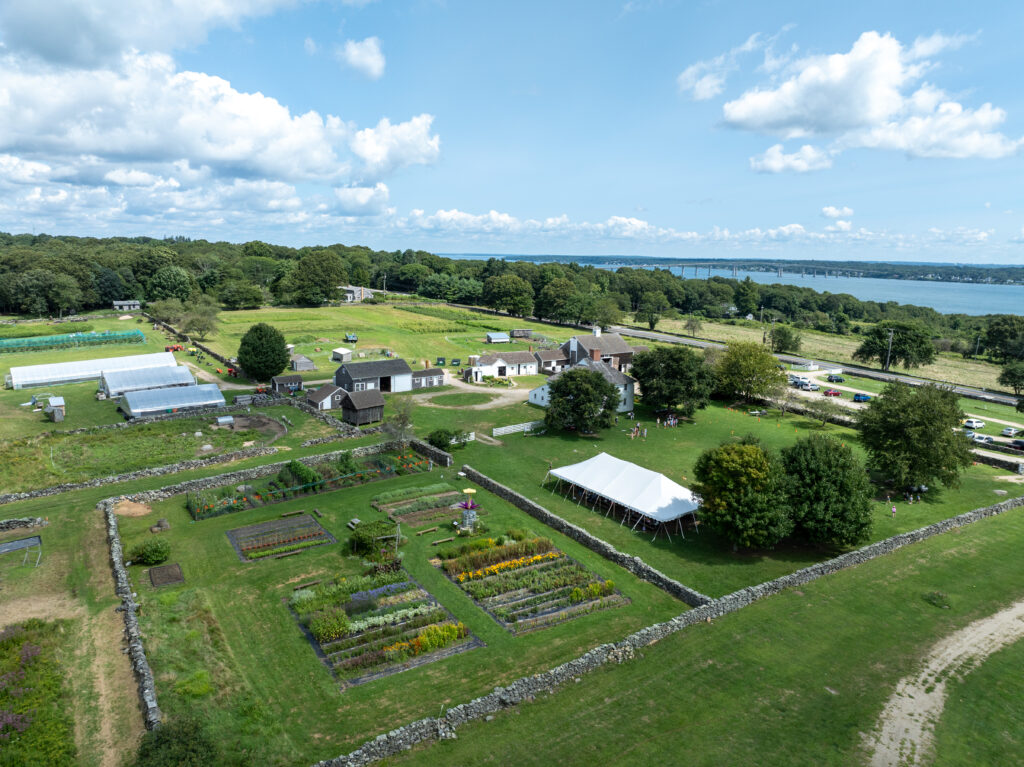
Located by the bay on the ancestral homeland of the Narragansett People, Casey Farm once produced food for local and coastal markets and was one of many plantations tied to slavery. During the American Revolution, the Casey family supported independence by supplying goods for the Continentals, a son for militia service, ships as privateers, and their farmhouse as an outpost. One August day in 1777, the farm was the target of a British raid, and a bullet hole from the attack remains in the farmhouse door.
Join us at the Eustis Estate for the opening of Myth and Memory: Stories of the American Revolution in May 2026. The exhibition will bring together material from Historic New England’s object and archival collections and explore the rich and multifaceted history of the American Revolution as it played out in New England. These objects animate the stories of individuals whose lives were linked by the shared experience of war. The exhibition will also engage with the mythologies surrounding these objects, calling attention to how we remember the Revolution and reckon with its legacy.
Written by Melinda Huff, Director of Museum Operations
Sign up to our newsletter for our latest news and events