
I grew up in a reuse and repair household. As a child, many of my clothes were hand-me-downs from my older cousins or bought secondhand from thrift stores. Jars were saved for storing everything from food to sorting screws and nails. I don’t recall my parents buying a new piece of furniture until I was in high school, when they purchased a new couch after the one we’d moved four times finally gave out. What few things we did buy new were mended and repaired over and over again until they were no longer usable. If we ever had anything extra, we shared it.
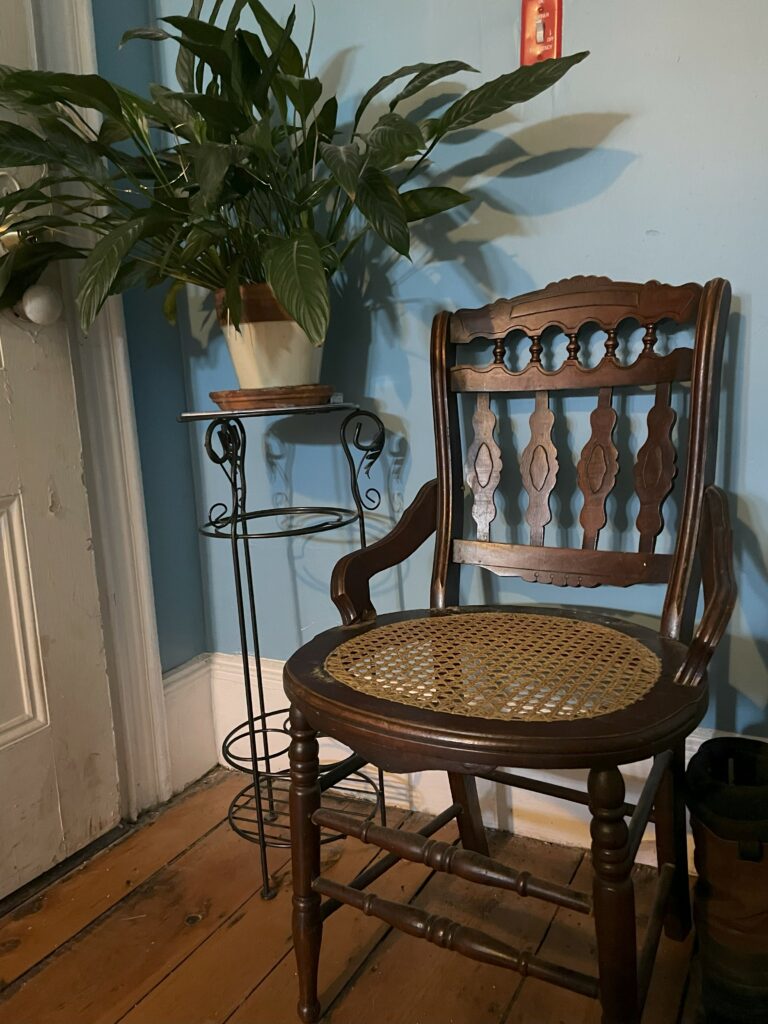
Looking back, I know that my parents did this partly out of financial necessity, but it was also culturally instilled them. Both my mom and dad grew up in working-class households with parents who had lived through the Great Depression and World War II. For my grandparents, frugality was something to be proud of and waste was akin to a mortal sin. In fact, the chair I’m sitting in right now is one of a set my Grampy rescued from going to the local dump over fifty years ago. The seats had holes in them, but the frame were solid, so he picked them up and had the seats re-caned.
It is probably no surprise that these values were passed on to me along with the skills needed to do basic mending and repairs. If something breaks and I don’t know how to fix it, I will seek out that information. Which is why I recently I found myself searching YouTube for videos on how to repair my favorite bag.
In 2023, I bought myself a new bag to celebrate the beginning of my new role at Historic New England. It isn’t fancy. It’s not a well-known brand name. But, it’s a fairly roomy, well-constructed, crossbody bag, made of dark green leather with brass hardware and just the right number of pockets.
Since purchasing it, it has become my go-to bag. My bag and I have had many adventures together over the past two and half years. It has been at my side whenever I travel—it is large enough to carry my computer and other work accoutrements and still fit under a train seat. It’s been slung over my shoulder on short hikes that didn’t require a backpack. It’s also served as an impromptu grocery bag when I find myself at the store having forgotten my reusable ones.
The bag had only one flaw, and that is that sometimes its fabric liner would snag in the zipper pull. Most of the time a quick tug sets things right, but several weeks ago, having returned from a long and well-hydrated walk, I tried to unzip the bag to get my keys when the pull snagged again, this time in such a way that no gentle tug would do. There I was outside my locked apartment door, with a desperate need to get inside and no tools handy. Out of frustration I grabbed the zipper and yanked… and that’s when disaster happened.
The pull dislodged from the liner, but it also partially separated from the zipper itself, leaving only one side still connected to the pull and rendering the zipper unusable.
I have mended many pieces of clothing, replaced buttons, patched old jeans, and yes, even replaced a few zippers. But there seemed to be no easy fix for this. The zipper was sewn in a way that would require undoing more stitching than I was comfortable with to replace it, and no amount of prying would open the pull enough to reinsert the zipper.
I told myself I’d find some way to repair it at some point and hung the bag off the back of a chair. It hung there for about two weeks before I finally did an internet search about how to repair a zipper pull that has slipped off track. I very quickly found a YouTube video with instructions on how to make the repair.
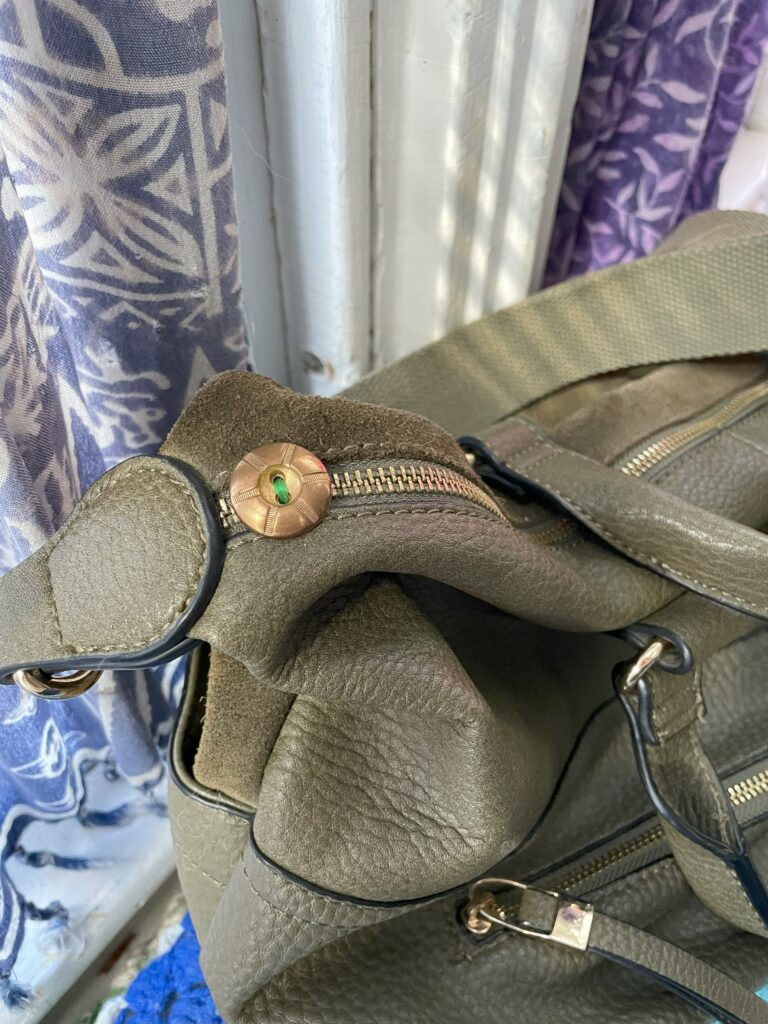
The solution was actually quite simple. A small snip at the base of the zipper allowed me to slip it back onto the track, followed by some basic stitching to close things up again. It took me about ten minutes to complete. I took the additional step of dipping into my button stash and finding a pretty brass button to cover the stitching and provide a basic zipper stop to prevent the pull from damaging my repair.
As I was sitting there admiring my work and feeling rather pleased with myself, I thought of all the times I watched my mother patch a hole in my jeans, or my father replace screws in a wobbly bookshelf. I thought of the chair I was sitting in, that I also sat in for who knows how many holiday and Sunday dinners at Gramp’s house. I’m incredibly grateful to have grown up in a family that lived a sustainable life before we ever called it that. It is because of them that I have objects in my life that have many stories attached to them, some about people I never met, or whom I knew but are no longer here. We can thank them for setting me down the path that led me to study sustainability and eventually to the role I’m in now at Historic New England.
If you want to learn to do more mending and repairs at home here are a few resources that to help you get started:
And if you have any of these skills, find ways to share them by helping in your community or offering to teach others.
Written by Joie Grandbois, Director of Sustainability
Sign up to our newsletter for our latest news and events