
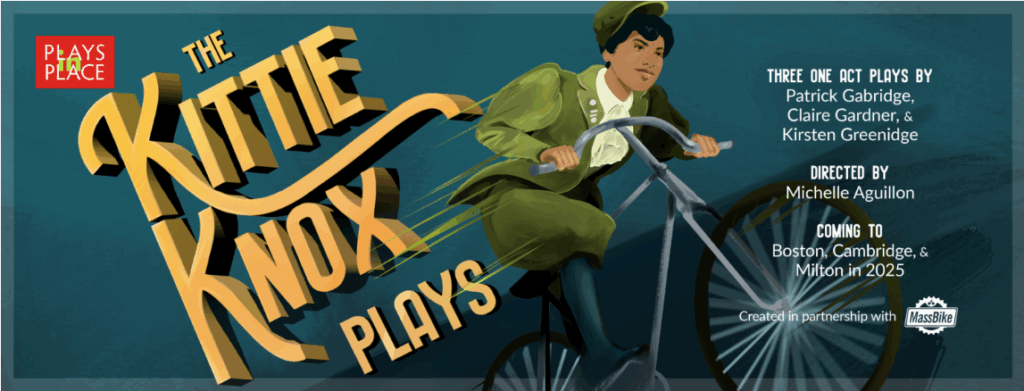
Patrick: Writer/historian Larry Finison brought Kittie to my attention. He’s relentless in his efforts to let the world know about Kittie and that period, and his book Boston’s Cycling Craze, 1880-1900 and other writings are great at telling the story. Usually, Plays in Place doesn’t take on unfunded projects—we’re brought on by a museum or historic site, and they raise the money and we produce site-specific plays. But, in this case, the story and the character of Kittie were just too compelling to pass up, so I said, “Let’s do it.”
Patrick: I wanted diverse voices telling this story. It’s helpful to think of the plays as a collection: They work very closely together and share the same characters and same actors. Thematically, we’re looking at characters struggling to assert their rights and humanity in a world that is increasingly restricting them based on their race or sex. We’re looking at moments of struggle, but also of Black Joy and Bike Joy. Friendship is an important part of these plays.
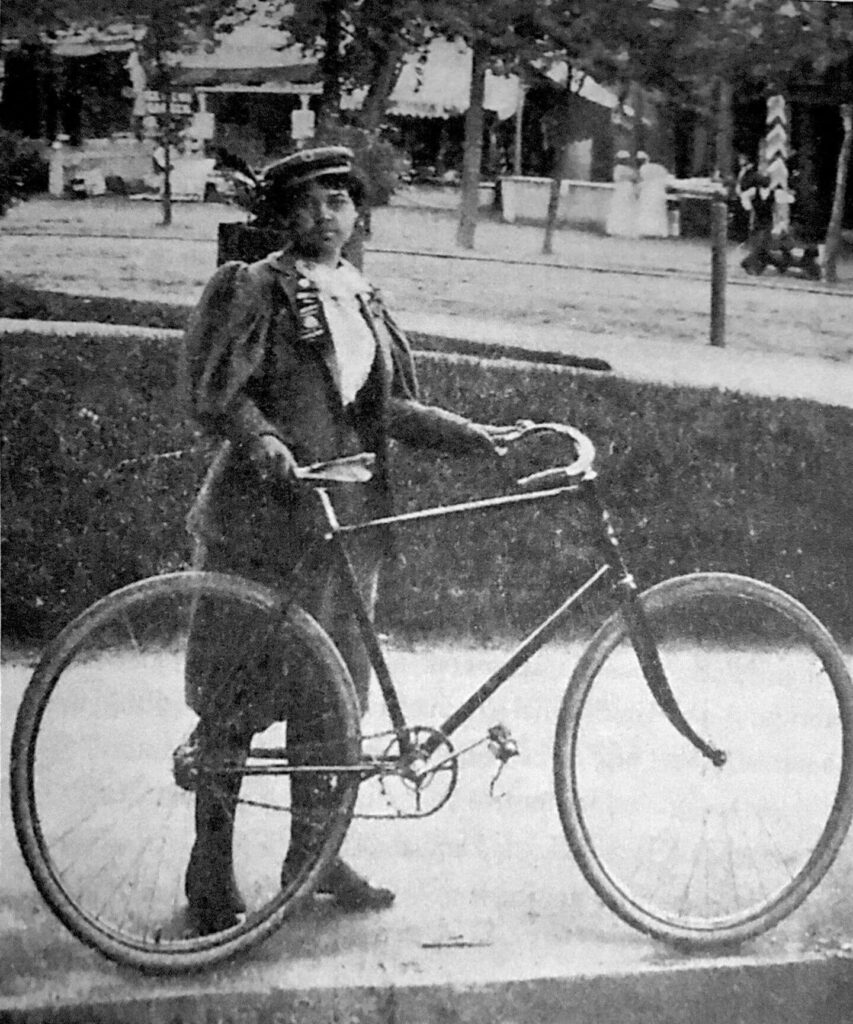
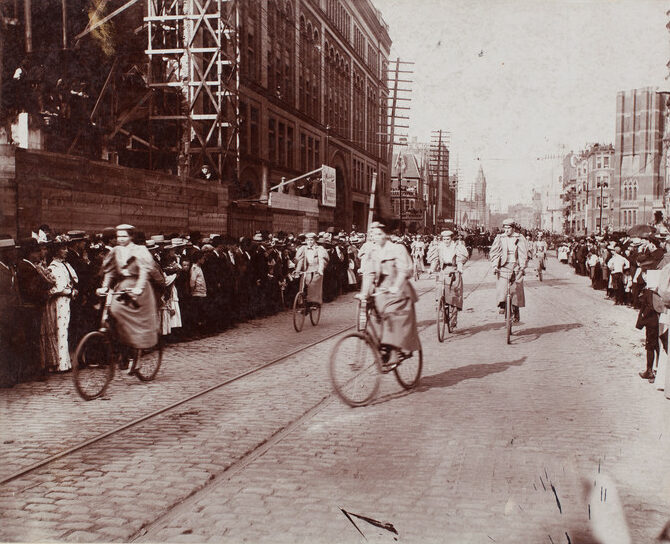
Patrick: My play’s main focus is the League of American Wheelmen’s (LAW) National Meet in Asbury Park, New Jersey, in the summer of 1895. The LAW had recently imposed a color bar to their membership, prohibiting Black members from joining; however, Kittie was already a member. She was the only person of color to show up at the meet, in the intentionally segregated community of Asbury Park, and she insisted on riding.
I’m blown away by her bravery and her refusal to take “no” for an answer. It’s worth noting that she did receive support from the Massachusetts delegation, who pushed for her to ride. One important aspect of this play, and the plays overall, is the reminder that racial segregation is not a default state. Cycling burst onto the public scene in the 1890s with a fervor that’s hard to comprehend: it was sport, it was social, it was accessible. It also wasn’t universally racially segregated. Cycling clubs in the south pushed the national organization to segregate. Segregation is not a natural state of being, it is imposed.
Claire: My play is The Ball, the last in the trilogy. At its core, this play balances the joy of celebrating Kittie’s life and the tragedy of her early death. It is set at a time in Kittie’s life when storm clouds of grief have gathered, but, true to her character, she dances anyway. One of her closest friends and fellow Black female cyclists, Viola Hamilton, passed away unexpectedly from appendicitis between the second play and the third. Kittie and her friends are trying to pick up the pieces personally, while politically their wellbeing also is threatened by more and more segregationist legal wins.
In writing this play, I referenced newspaper clippings from balls Kittie actually attended. She is noted in the papers for her beauty and the exquisite tailoring of her dresses. Kittie knows she’s being watched by many people hoping for her downfall, and she decides that, if they’re watching, she might as well be dancing.
Historic New England’s Eustis Estate in Milton, Massachusetts, will host three performances of The Kittie Knox Plays on September 20, 2025. All will be performed outdoors—with bikes! Tickets are free, but you must register in advance to attend.
Sign up to our newsletter for our latest news and events