Suffragists in Boston 1919
Suffragists with a protest banner during President Wilson's visit to Boston, Mass., Feb. 1919. Learn More

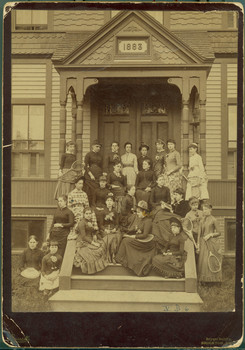
Suffragists with a protest banner during President Wilson's visit to Boston, Mass., Feb. 1919. Learn More
Suffragists with a protest banner during President Wilson's visit to Boston, Mass., Feb. 1919. Learn More
Sarah Orne Jewett (1849-1909) was thirty-eight when she and her sister Mary inherited their grandparents’ house. By this time, Jewett was a successful author, at the center of a group of New England artists. She spent at least half the year at the Boston home of, or traveling with, her life partner Annie Adams Fields. The Jewett-Fields relationship was one that allowed them both to pursue their careers while being fulfilling and mutually supportive. Learn More
Hazel Sinclair was the proprietor of Rock Rest, a summer guest house that welcomed African-American tourists in Kittery, Maine. Rock Rest provided a safe haven from the racial discrimination faced by African-American travelers on vacation. Visit our online exhibition on the topic. Learn More
Historic New England has more than 900 dresses in its collection, including Deborah Sampson's wedding dress. Sampson gained notoriety by dressing as a man and joining the Massachusetts militia in 1782. Learn More
Mellon Conservation Fellow Karen Bishop shares her process for creating a replica of a seventeenth-century carved drawer and box.
The project showcases one of the ways Karen Bishop gained hands-on experience while working with collection objects and staff. This multi-part blog shows how Karen makes the replica, from design and wood selection, to using traditional hand tools for joinery, and decorative carving. Learn More
Celia Thaxter's creative output as author, poet, and artist represents the sort of life gifted New England women could lead during the second half of the nineteenth century. Learn More
The Raymond House in Belmont, Mass., was built for her sister in 1931 and demolished in 2006. Discover this building and more in the collection. Learn More
Read Kalimah Redd Knight's article on Maria Baldwin, the first president of the League of Women for Community Service, Inc., and the first Black person appointed principal of an integrated school in New England when she was named head of the Agassiz Elementary School in Cambridge, Massachusetts, in 1889.
Learn More
Listen to Ise Gropius talk about the Bauhaus. The clips come from an interview recorded by the Canadian Broadcasting Corporation (Montreal) in 1977. Learn More
Sara Baro Colcher was born in Africa between 1835 and 1840 and was captured by slave dealer Don de Mer when she was a child. By 1860, Colcher was living in Boston, employed as a domestic worker. Learn More
Mary Harrod Northend took or commissioned thousands of photographs to illustrate her books and articles. She also ran a successful business selling images. Historic New England has more than 6,000 of her glass-plate negatives in its collection. Learn More
Nina Heald Webber's Cape Cod Canal collection includes photographs, ephemera, publications, maps, and memorabilia from 1827 to 2015. Learn More
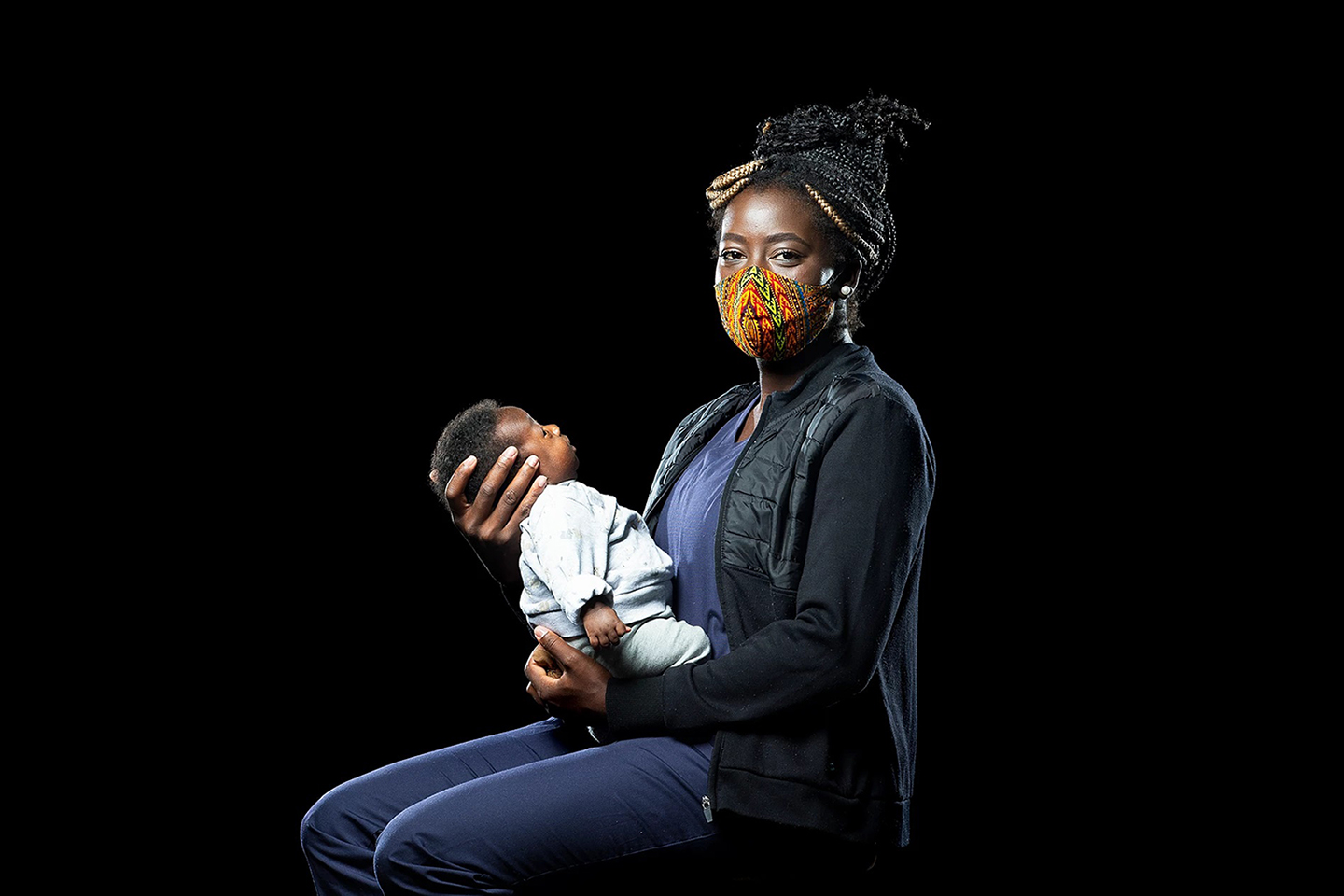
Powerful images from photojournalist Katherine Taylor documented New Englanders as they coped with and responded to the extraordinary social and political upheaval that impacted all of our daily lives. An article featuring her photographs was published in Historic New England magazine.

In 2023 there were a number of women or women-focused projects that received support through Historic New England’s awards program. Dana Geter received the Edward F. Gerber Urban Preservation Award to help fund a significant roof restoration at her historic home in Connecticut. Darlene Lacy received the Prize for Collecting Works on Paper. Lacey is the curator of the Candy Wrapper Museum and has more than 50,000 pieces in her collection. The Manchester Historic Association received a Community Preservation Grant to begin the process of listing the Samantha Plantin House, which was built by Manchester’s first Black female landowner, on the New Hampshire State Register of Historic Places.

Bridget Durgin, the cook for the Phillips family, spent a considerable amount of time in this kitchen. She, first-floor maid Delia Cawley, and nursemaid Catherine Shaunessy, were the three live-in servants who helped Anna Wheatland Phillips with the running of the house. Phillps House opens this June. Visit to learn more about the family and the role the servants played in their lives.
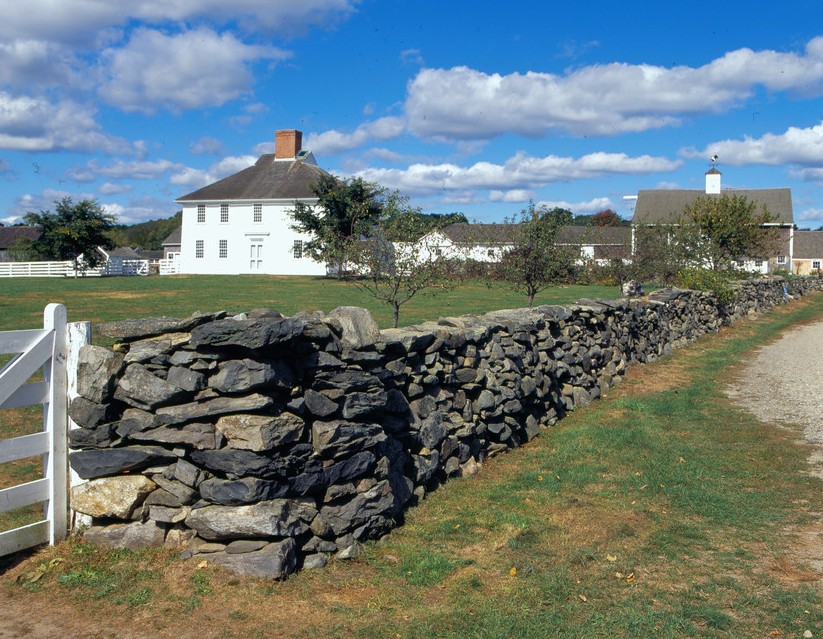
Since 1955, Historic New England has been operating Casey Farm as a working farm, preserving the land and teaching visitors about agriculture and preservation in Rhode Island. The farm is part of a vibrant community of school children, summer campers, volunteers, and Community Supported Agriculture (CSA) members. Listen to what staff members Jane Hennedy and Sheila Nixon have to say about Casey Farm – what they enjoy about the farm, how the current farming practices mesh with the old, and what Casey Farm means to them and our visitors.
Plus, learn how two women artist worked together to create ‘Three Sisters‘ RainKeep. The sculpture honors the Indigenous heritage of the land and the lessons of sustainability and harmony with nature that this heritage teaches. It tells the Eastern Woodlands creation story of the Three Sisters—corn, beans, and squash—which grow near where the sculpture is installed at Casey Farm.
Stop by when Casey Farm opens for tours and programs this spring or during the Farmers Market on Saturdays starting in May.
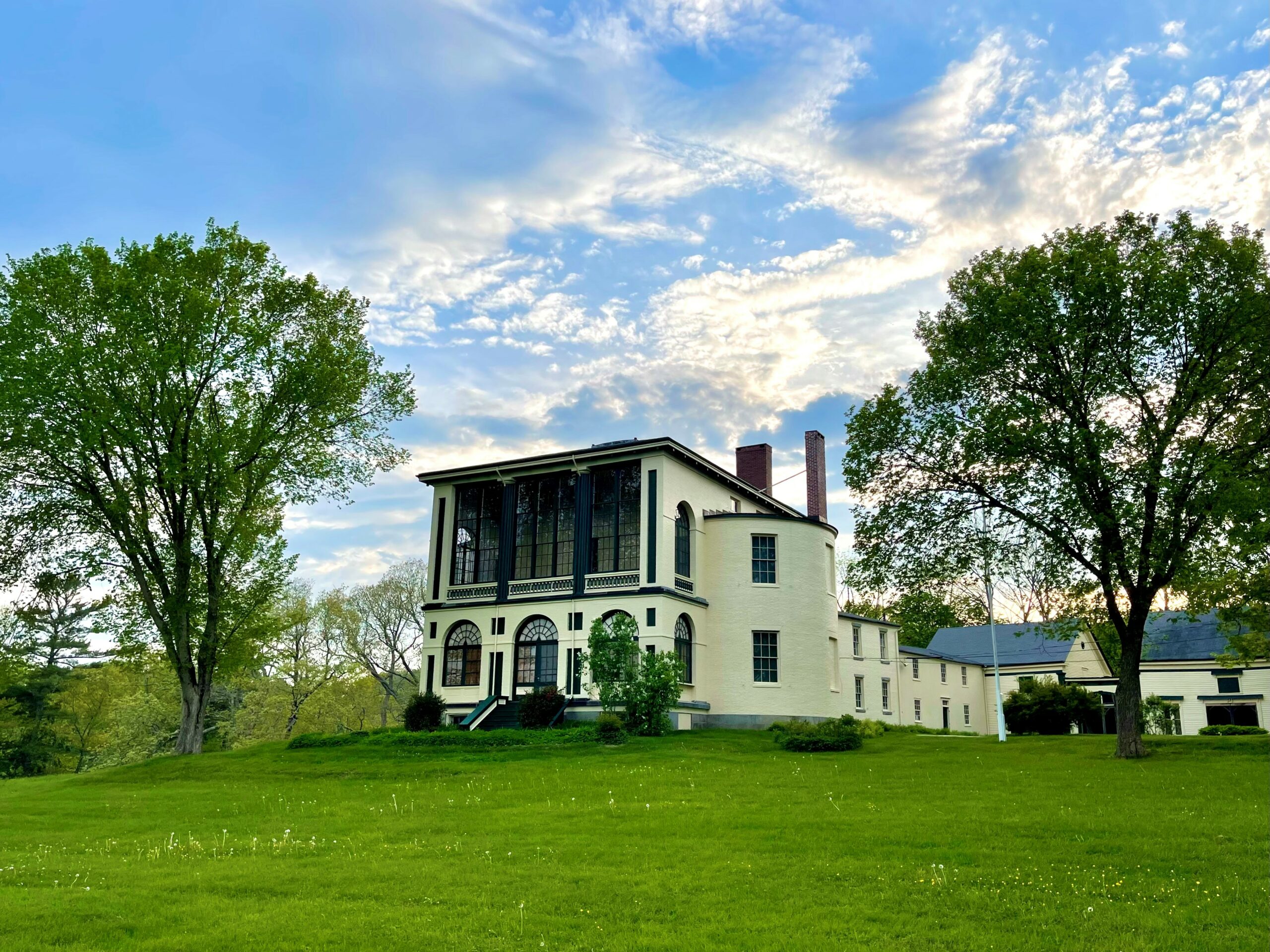
After a successful career, Jane Standen Tucker moved into Castle Tucker in Wiscasset, Maine, in 1965. She began to preserve and record her family’s history and the history of the house. Over the years, she worked with Historic New England and others to undertake repairs and restorations. In 1997 she gave the house and its contents, including a collection of family letters and documents, to Historic New England. Learn more about Jane and the other residents of Castle Tucker when the property opens in June.
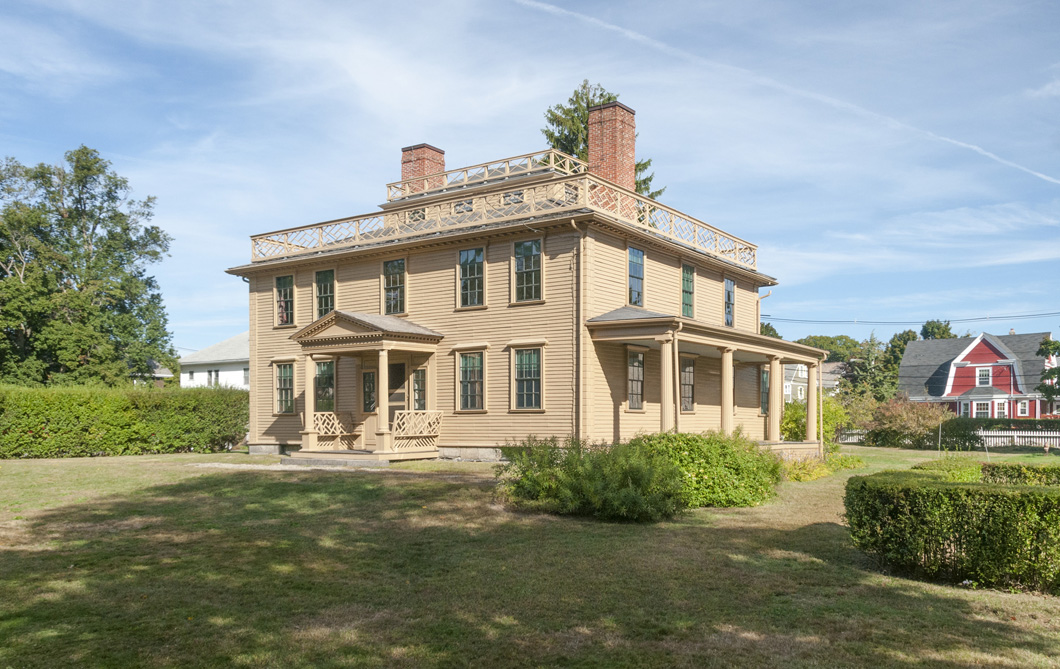
The Quincy family has deep ties to the history of the region. This house often bustled with visitors from the political, military, and artistic spheres. In 2014, using Eliza Susan Quincy’s 1879 “Memorandum Relative to Pictures, China, and Furniture etc., etc., etc.,” Historic New England introduced a new focus to the story told at Quincy House. Eliza Susan’s entries provided many detailed descriptions of furniture and often documented how and when items came to the house. Using her document as a road map and photographs taken in the 1880s, we refurnished Quincy House to recreate the interiors of the 1870 and 1880s. When the house reopens for tours, stop by and discover Eliza Susan Quincy’s work to document her family’s home.
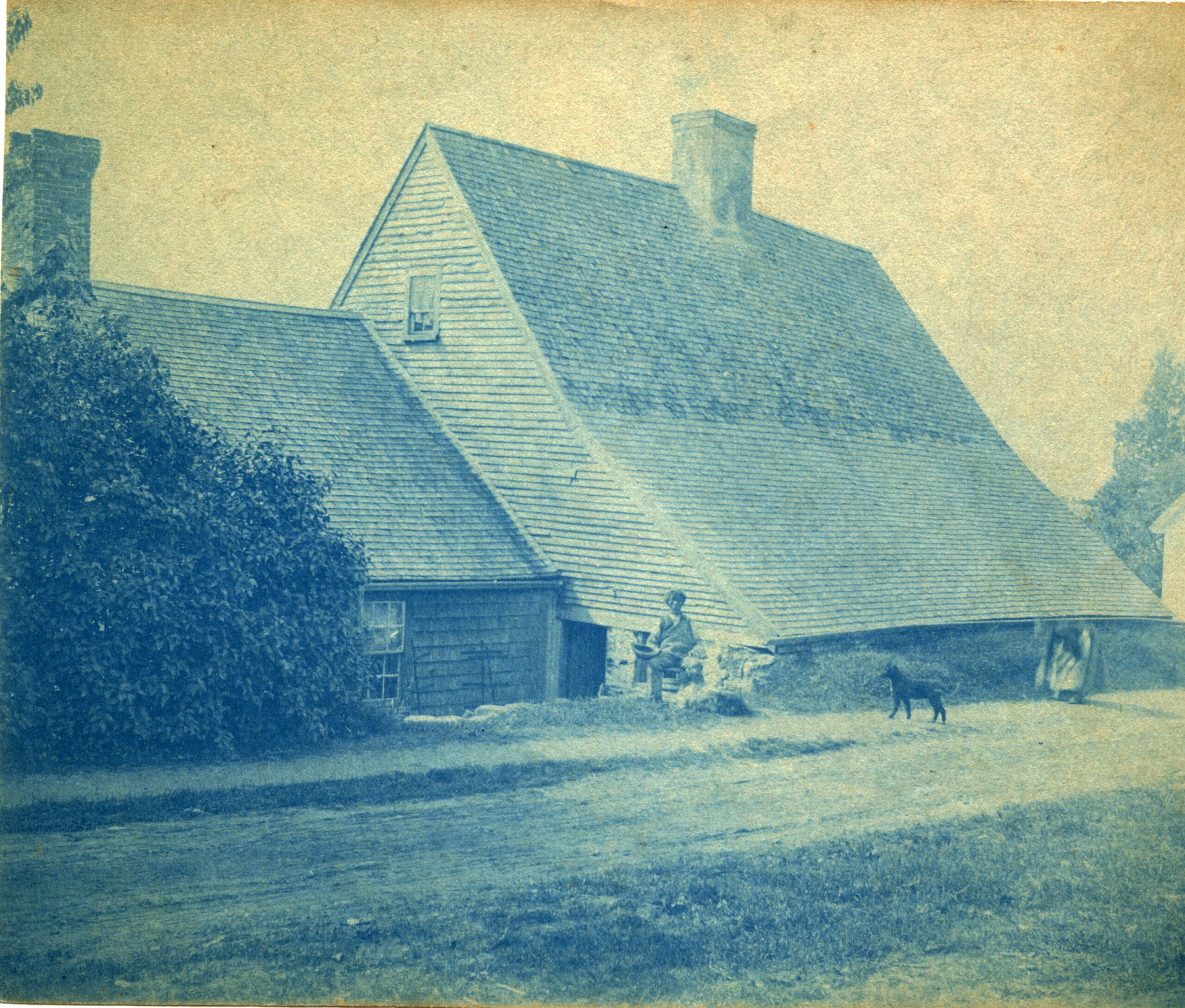
Photo c. 1895. Courtesy of the Portsmouth Athenaeum.
Learn about Isabelle Grimm Tilley and her life on the Jackson property in Portsmouth.
Meet Asenath Harvey Darling, a milliner and shopkeeper who owned Gilman Garrison House in Exeter between 1864 and 1874.

Women’s suffrage protest flag
Sign up to our newsletter for our latest news and events