undated
Geographic / Rhode Island / Providence; 85M-01-314-Z-I-602
GUSN-361950
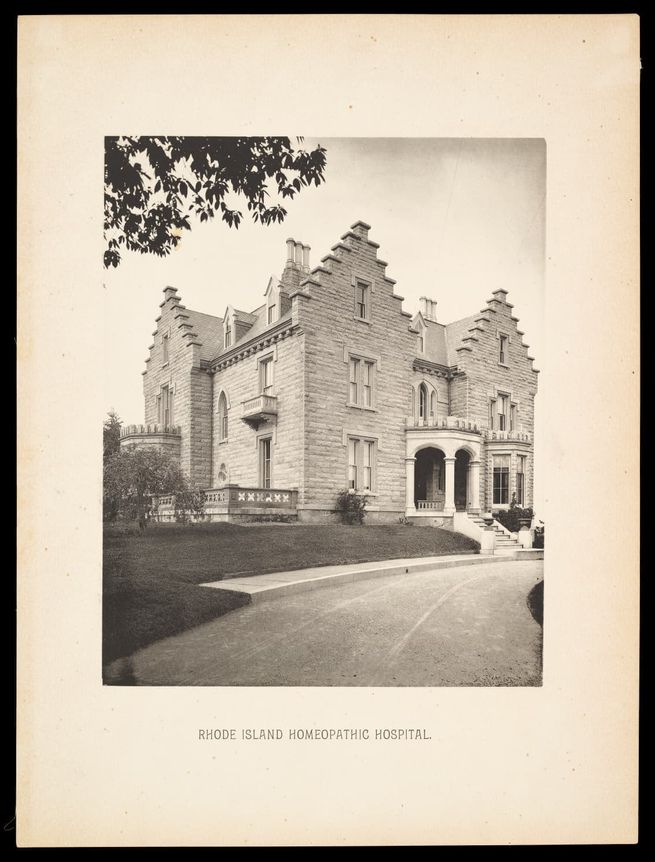
Photomechanical print of the exterior of the Rhode Island Homeopathic Hospital in Providence, Rhode Island. The print shows the building's castellated granite exterior and Gothic Revival style. The photographer and printer are unknown. The print is undated. The following is typed underneath the print: "RHODE ISLAND HOMEOPATHIC HOSPITAL."
Gothic Revival
houses
granite (rock)
dormers
windows
courtyards
gables (architectural elements)
pitched roofs
parapets
porches
columns (architectural elements)
exterior views
corbie gables
photomechanical prints
RHODE ISLAND HOMEOPATHIC HOSPITAL. (typed)
1 photomechanical print : black-and-white ; 13 5/8 x 10 3/16 inches
PC001
General photographic collection
2018
PC001.02.01.USRI.0360.0010.001
Gift
Gift of John Carpenter, 2018
Providence (Providence county, Rhode Island)
photomechanical prints
Smith, James Youngs, 1809-1876
Nichols, Isabelle Brown, 1839-1921
Nichols, Charles Augustus, 1826-1877
Hall, Clifton A., 1826-1913
Freeman, John Ripley, 1855-1932
Rhode Island Homeopathic Hospital
Photograph
Photo-Mechanical
Hospital
Item
Geographic / Rhode Island / Providence; 85M-01-314-Z-I-602
Originally known as the Smith-Nichols House, the building was commissioned by former Rhode Island Governor James Y. Smith (1809-1876) for his daughter and son-in-law, Isabelle B. (1839-1921) and Charles A. Nichols (1826-1877). It was built by architect Clifton A. Hall (1826-1913) from 1866-1867. In 1884, Mrs. Nichols sold the house and it became part of the Rhode Island Homeopathic Hospital. In the mid-1900s, the hospital moved to another location in Providence, and the building was sold to civil enginner John R. Freeman (1855-1932), who owned a private residence across the street. In 1905, the Brown School, a private school for boys, moved operations to the former hospital and changed its name to the Morris Heights School. The school ceased operations in 1916. Despite attempt to sell the house for single-family residential use, no buyer was found, and the building was demolished in 1927.
Historic New England is committed to implementing reparative language description for existing collections and creating respectful and inclusive language description for new collections. If you encounter language in Historic England's Collections Access Portal that is harmful or offensive, or you find materials that would benefit from a content warning, please contact info@historicnewengland.org.
Sign up to our newsletter for our latest news and events

 Loading...