
In 1982, the Massachusetts legislature declared May 23 Deborah Sampson Day, and a year later, Governor Michael Dukakis declared her the “Official Heroine of the Commonwealth.” The first woman veteran from Massachusetts, Sampson enlisted in the Continental Army in 1782, at a time when women were not allowed to serve as soldiers, by dressing as a man named Robert Shurtleff. After a doctor revealed her identity, she was honorably discharged from the military, then spent nearly two decades campaigning for back pay and a military pension, both of which she eventually received—firsts for a woman in the early years of the United States.
Sampson’s boundary-breaking military service and public campaign for veteran benefits cemented her as an icon, and her legacy has continued to be recognized in the ensuing centuries, especially in her home state of Massachusetts.
This May, we celebrate the history, mythology, and legacy of Deborah Sampson with an exploration of her life, military service, and post-war advocacy. Her story is highlighted as part of Myth and Memory: Stories of the American Revolution and with programming commemorating Deborah Sampson Day on May 23, both at the Eustis Estate in Milton, Massachusetts.
Sampson’s story is featured in the exhibition’s third gallery, whose theme, Liberty, is described as “both an ideal and a call to action.” Among quotes, letters (including one from Sampson’s friend Paul Revere to William Eustis, a distant relative of the Eustis Estate family), and other historical materials, Sampson’s wedding gown from her 1785 marriage to Benjamin Gannett takes center stage.
Sampson was born in Plympton, Massachusetts, in 1760. Following her father’s departure from the family, her mother sent Sampson to stay with a sequence of friends and family members until she eventually settled with the Thatcher family of Middleborough, Massachusetts, where she was an indentured servant to the family from ages ten to eighteen. Sampson was not sent to school; instead, she educated herself by borrowing resources from the Thatcher boys, displaying already an eye towards the disparity in opportunity accessible to her as a woman at the time, as well as an ability, perhaps a conviction, to circumvent barriers to some of these opportunities.
After turning eighteen, Sampson worked for several years as a teacher and a weaver until, in January of 1782, she enlisted in the Continental Army. During this first enlistment attempt, recorded in a recently rediscovered diary by fellow Middleborough resident Abner Weston, Sampson gave her name as Timothy Thayer but was quickly discovered and forced to return the payment she had received for enlisting. She successfully enlisted a few months later, this time as Robert Shurtleff, in another town.
Sampson served in the Army for eighteen months. According to a biography by Alfred Fabian Young, Sampson was shot in the thigh and sustained a head wound during a battle in Tarrytown, New York; to avoid her identity being discovered, she allowed only the head injury to be treated by a doctor, instead removing the bullet from her own leg. Her identity as a woman was eventually revealed by another doctor, who was treating her for a fever.
In the years following her military service, Sampson married Benjamin Gannett and had several children, with whom she lived on a farm in Sharon, Massachusetts. After her dismissal from the Army, however, Sampson was granted neither back pay nor the pension awarded to male other veterans. She successfully argued in favor of receiving back pay, which she was awarded in 1792, but her case for a military pension was denied.
To spread awareness and garner support for her cause, she embarked on a national lecture tour. Sampson’s enthusiastic argument attracted popular attention, and her endeavor was ultimately successful: Sampson was awarded a veteran’s pension in 1805, which she continued to receive until her death in 1827.

Women now make up more than 10 percent of all veterans in the United States, according to a 2022 estimate from the Census Bureau. Just as in Sampson’s time, however, support for women veterans has been slow to catch up with this ever-growing population. Sampson’s name has been invoked recently to acknowledge ongoing efforts to advocate and provide appropriate services for women veterans, just as Sampson did on her own behalf at the turn of the nineteenth century.
In 2020, the Veterans Health Care and Benefits Improvement Act was signed into law with a section dubbed the Deborah Sampson Act of 2020. The name is a recognition of Sampson’s advocacy role for herself as a woman veteran, with this recent legislation reflecting a similar spirit. The Deborah Sampson Act includes twenty-eight provisions focusing on increasing funding, updating facilities and programs, and improving reporting and outcomes for services provided to women veterans through the Department of Veterans Affairs (DVA). Annual updates since the passage of the Act have documented progress in several areas.
Since 2023, the Commonwealth of Massachusetts has also awarded an annual Deborah Sampson Award to “a Massachusetts female veteran who has demonstrated exceptional service, leadership, and dedication to supporting fellow women veterans,” tying both the award’s name and purpose to Deborah Sampson’s military service and later advocacy.
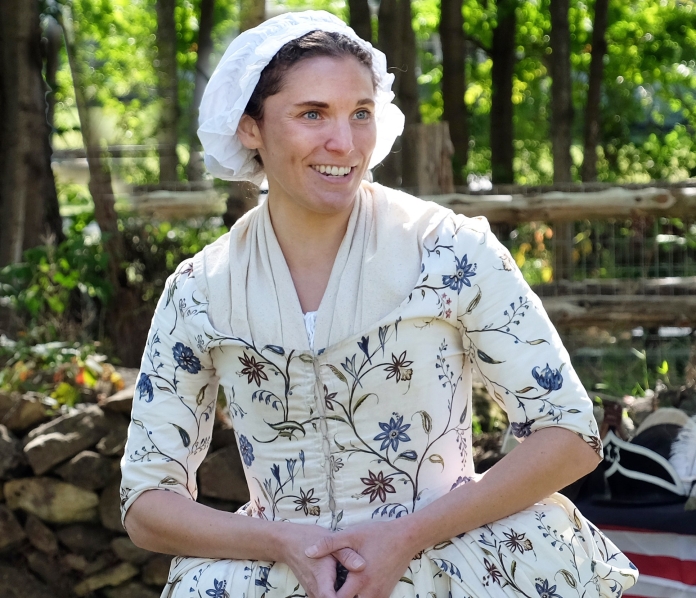
On May 23, the day Sampson was declared the commonwealth’s Official Heroine in 1983, Deborah Sampson Day will be held at the Eustis Estate. Programming throughout the day will include an outdoor immersive performance by and Q&A with Judith Kalaora of History at Play as Deborah Sampson (1:00 p.m. and 6:00 p.m.), a family-friendly picnic with historic lawn games from 12:30 p.m. to 2:30 p.m., and an after-hours look at the Myth and Memory exhibition with drinks and other refreshments from 5:00 p.m. to 8:00 p.m. Both the daytime and the evening events include admission to the Eustis Estate house museum and the Myth and Memory exhibition.
Written by Jake Ogata Bernstein, Eustis Estate Guide
Visit our website to learn more or purchase tickets to Deborah Sampson Day events.
Sign up to our newsletter for our latest news and events