
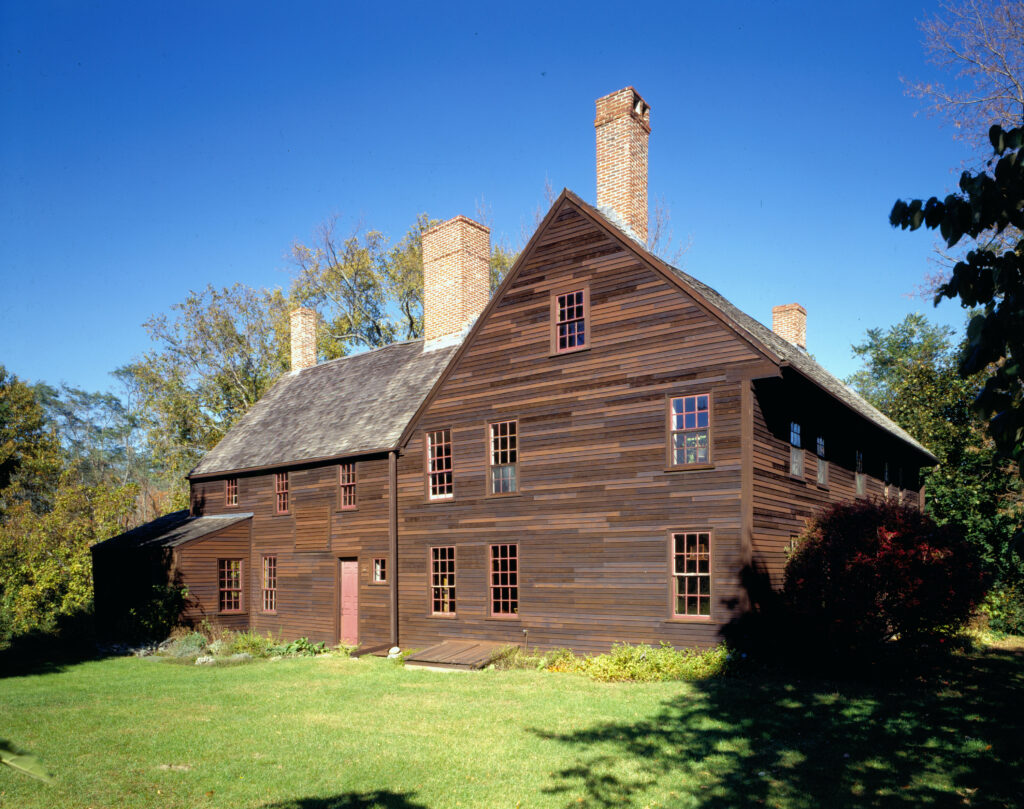
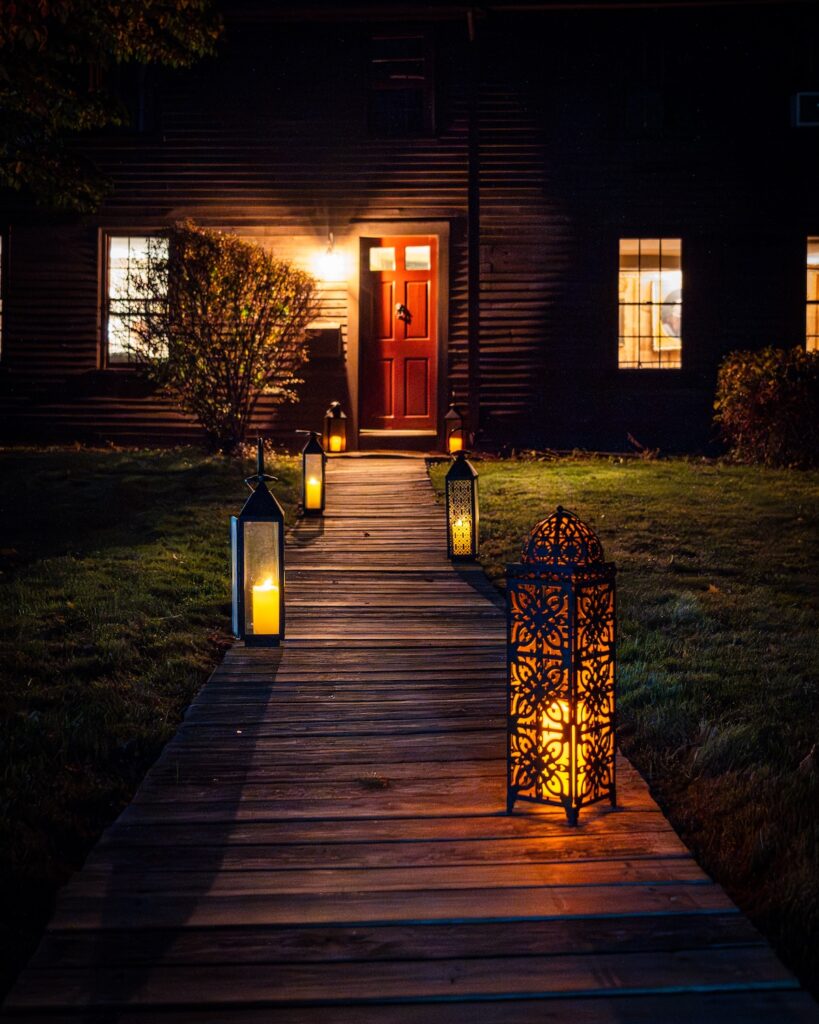
Newbury, Massachusetts, is home to four Historic New England properties, but only one tells the story of a single (and singular) family across three centuries. Built by Tristram Coffin Jr., 1678 and acquired by Historic New England in 1929, Coffin House highlights the evolution of six generations of the Coffin family, with a particular focus on their beginnings and endings.
Tristram was a local tradesman who likely worked as a tailor. In his younger years, he was likely indentured to Newbury tailor Henry Somerby. After Somerby’s passing in 1652, Tristram married Somerby’s widow, Judith Greenleaf Somerby. Though he never lived there, Somerby’s presence can be found in Coffin House: A portrait of one of his descendants hangs in the seventeenth-century kitchen, watching over the comings and goings of the home.
When twenty-one-year-old Tristram and twenty-eight-year-old Judith married, she had three surviving children from her first marriage. Over the next sixteen years, Judith had ten more children with Tristram, all but two of whom lived to adulthood. One son, Enoch Coffin, died at the age of eleven. Another son, seventeen-year-old John Coffin, served in King Phillip’s war alongside his half-brother, Daniel Somerby, and his father, Tristram. Both John and Daniel were killed during the fighting. These losses were not unusual for settler families; King Philip’s War was the deadliest war fought on American soil, with more deaths per capita than the American Revolution or Civil War. Roughly ten percent of the English population was killed. The region’s Indigenous population fared worse, with an estimated forty percent killed, executed, displaced, or sold into slavery.
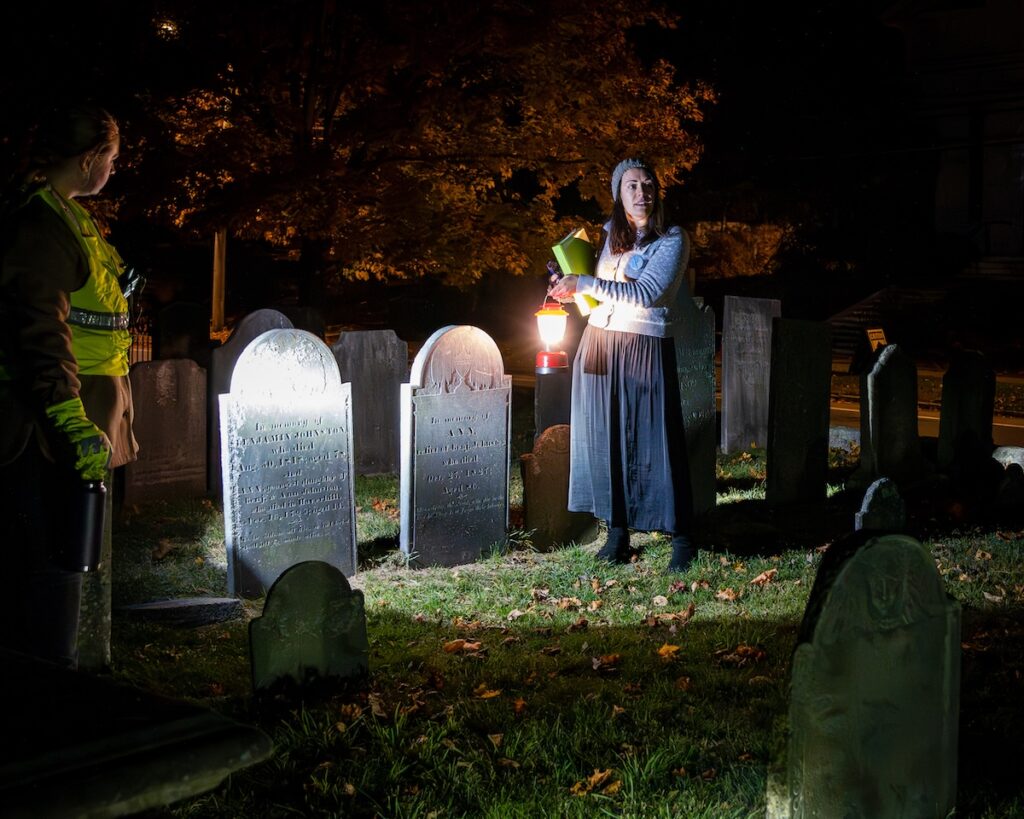
In the late seventeenth century, the infant mortality rate in Massachusetts ranged between ten and thirty percent. Luckily for the Coffins, Judith defied these odds. Her children would prove equally fortunate, with her surviving offspring each having between six and thirteen children of their own. The epitaph on Judith’s gravestone marks this legacy, noting she “lived to see one hundred and seventy-seven of her children, and children’s children to the third generation.”
Judith, Tristram, and several other Coffin descendants were laid to rest in the First Parish Burying Ground, across the street from their home. The cemetery was laid out in 1646 and has 3,083 known interments. One of those is Joseph Knight, husband of Deborah Coffin and son-in-law of Tristram and Judith. In 1692, Joseph testified against Susannah Martin, accusing her of witchcraft. Susannah, a seventy-year-old widow, was found guilty and subsequently hanged later that year. Middle-aged and elderly women made up the majority of those prosecuted for witchcraft in New England in the late seventeenth century. The story of Joseph Knight and Susannah Martin is just one of the many stories the burying ground holds.
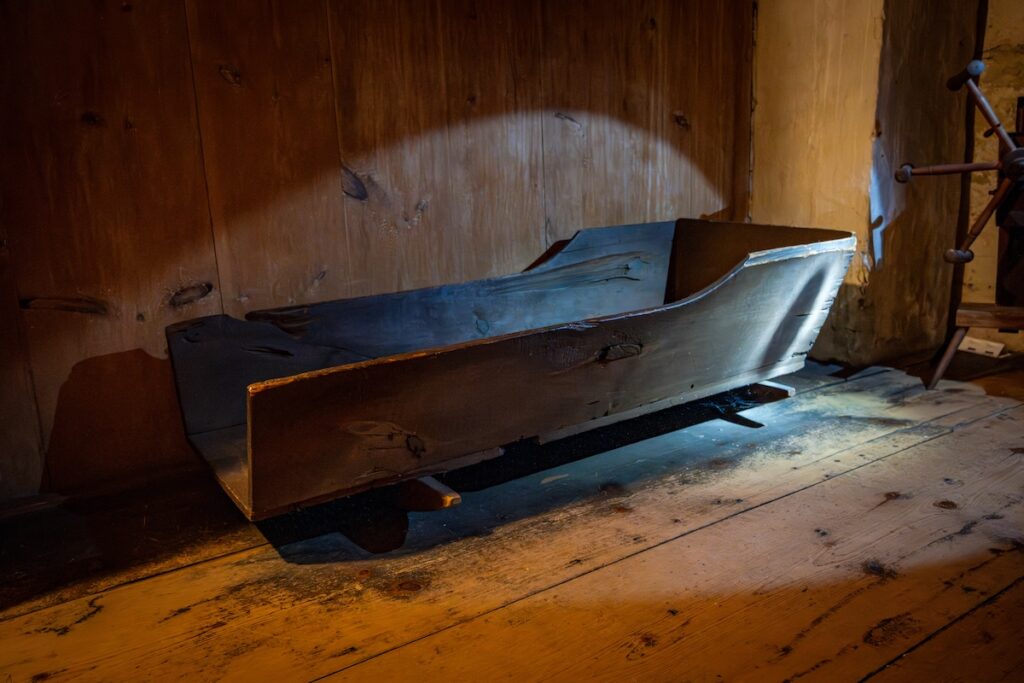
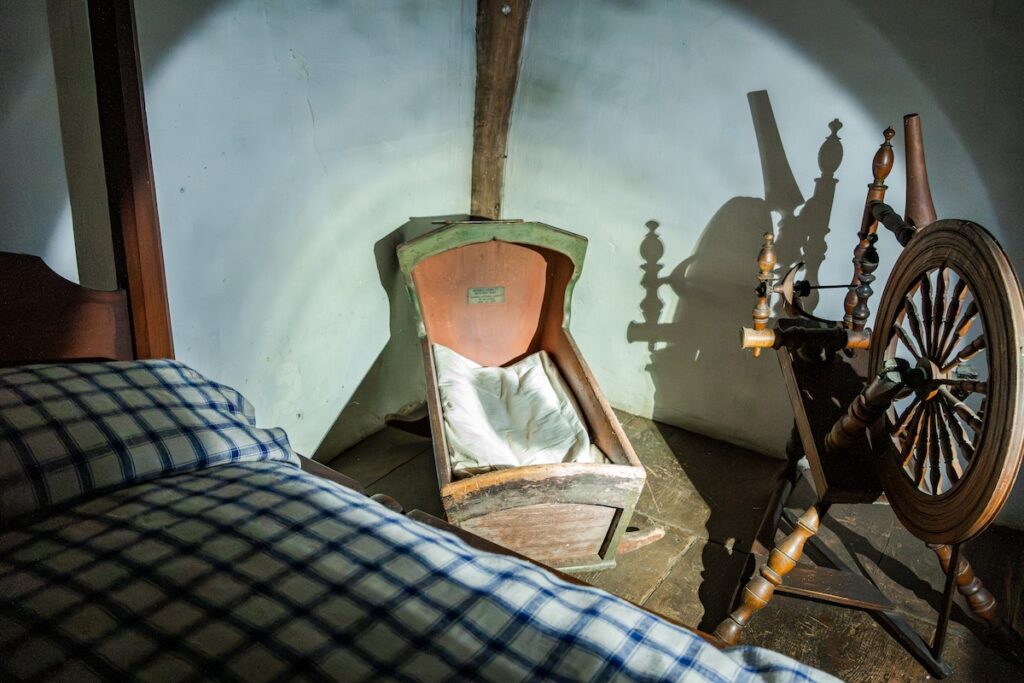
Mortality is a theme that lingers in the margins of Coffin House. Today, the house is full of Coffin heirlooms, some finding their way back into the home after Historic New England’s acquisition. One of the most intriguing collection items is a five-foot cradle intended for adults. Adult cradles were used to aid in the care of the elderly, providing a method for soothing. The adult-size cradle is an upstairs chamber, juxtaposed with an infant cradle in a neighboring room, creating the sense of a beginning and an end. The adult cradle is eerily reminiscent of a coffin, which visitors often comment on.
The surname “Coffin” is derived from the Latin word for basket. In a way, the Coffin House acts as a type of basket or container for the family and its legacy. The landscape of the early colonial years was one of hardships and suffering, and death was a constant presence. At times, the Coffin family defied these odds, weaving a multigenerational story that continues to draw interest from visitors today.
Written by Shanna Sartori, Membership Manager
Sign up to our newsletter for our latest news and events