
To start, would you tell us a little about yourself—what first sparked your interest in museum work, what was your path to Historic New England?
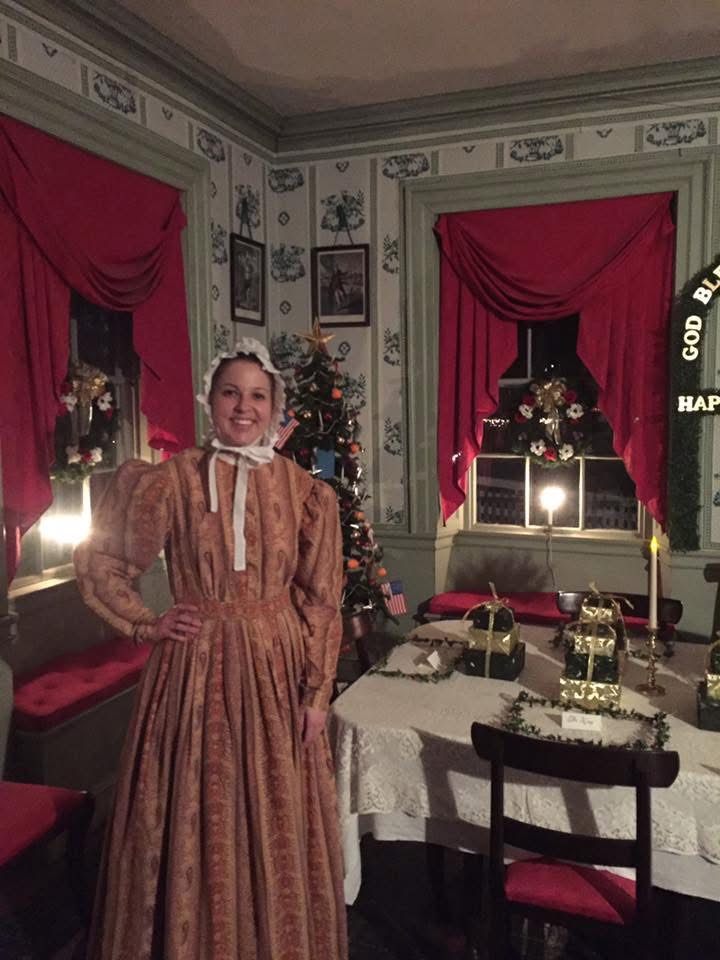
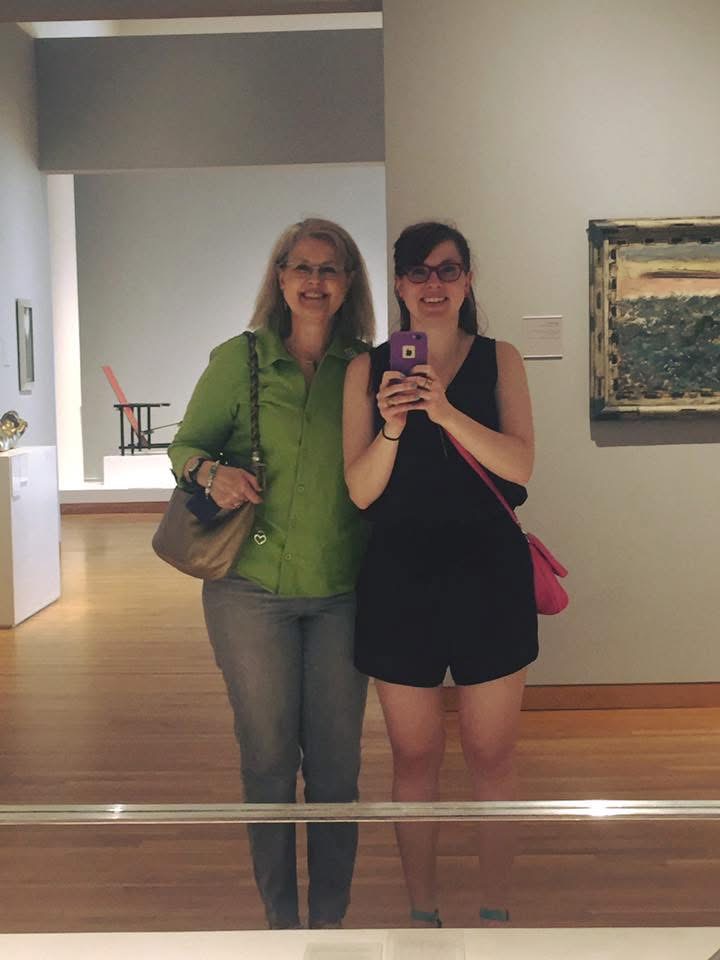
Museums and museum work are embedded in my DNA. My mom went back to art school when she was pregnant with me and then would take me with her to her art classes. The other students would watch me during an art critique! On family vacations, we visited museums, historic houses, and art galleries. My aunt is also an artist, and she continued to foster my appreciation for the arts. I pursued a bachelor’s degree in history and art history from a small private liberal arts college in Georgia, LaGrange College. Upon graduating, I immediately pursued a master’s degree in the history of decorative arts from the Smithsonian Associates in partnership with George Mason University in Washington, DC. My passion for objects and the never-ending, intricate stories within them were what enticed me to join the program. Fun fact: I went to graduate school with Nora Carleson, who is our Curator of Fashion and Decorative Arts!
Before joining Historic New England in January 2024, I held positions at the Smithsonian (DC), the Blair House (DC), Old Sturbridge Village (MA), the Museum of Early Trades & Crafts (NJ), and Museum of Worcester (MA). With the exception of the Smithsonian, my previous roles included a hybrid collections-curatorial approach at smaller institutions. I’ve led several collections stewardship projects including collections inventories, rehousing and collections moves, collections assessments and deaccession proposals, working within internal teams on crafting grant narratives and project plans, and implementation in policies and procedures. It’s been quite the journey to get to Historic New England, but I’ve never been happier!
You work within a small but mighty team that sits inside a larger Collections Services department. Could you walk us through the key roles—who’s involved and how everyone works together to care for and share Historic New England’s collections?
The collection management team is truly a small but mighty team! The group consists of myself, the Director of Collections Operations; Julia Foster, Registrar;Cienna Lyon-Lindholm, Assistant Registrar; Adam Osgood, Collections Technician/IPM Coordinator; Grace MacDonald, part-time Collections Assistant; and Meghan Dale, part-time Haverhill Preventive Care Assistant. We also have interns every semester and then part-time seasonal site-specific collections management roles as well. Our team is based at the Center for Preservation and Collections at The Historic New England Center in Haverhill, Massachusetts.
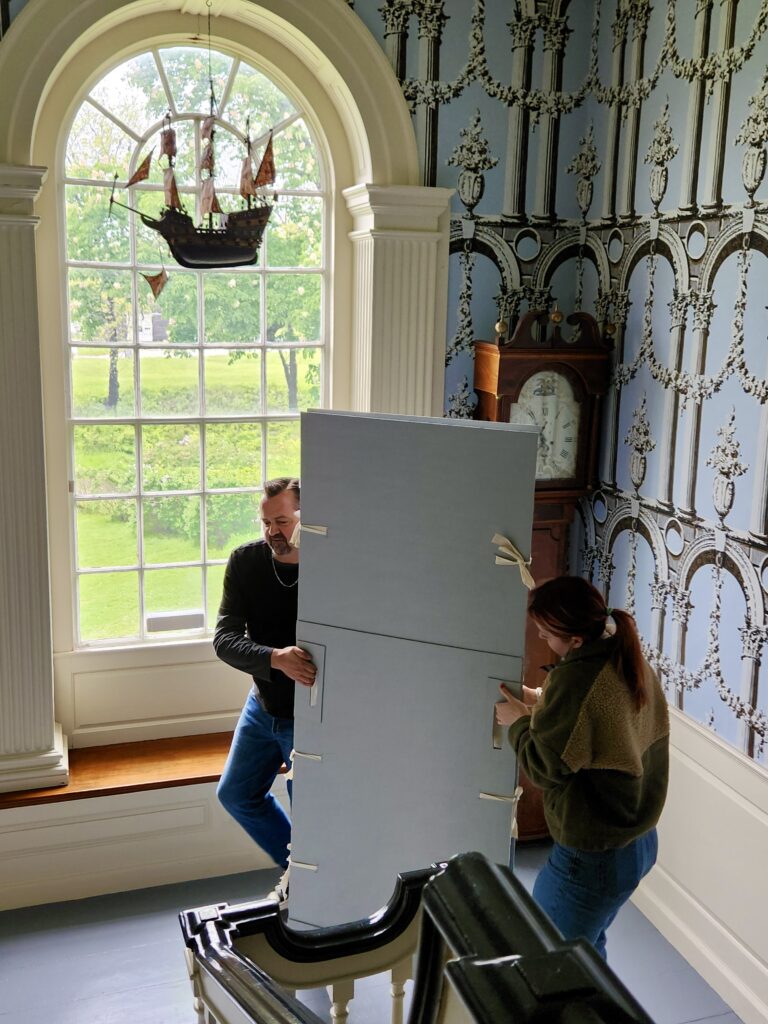
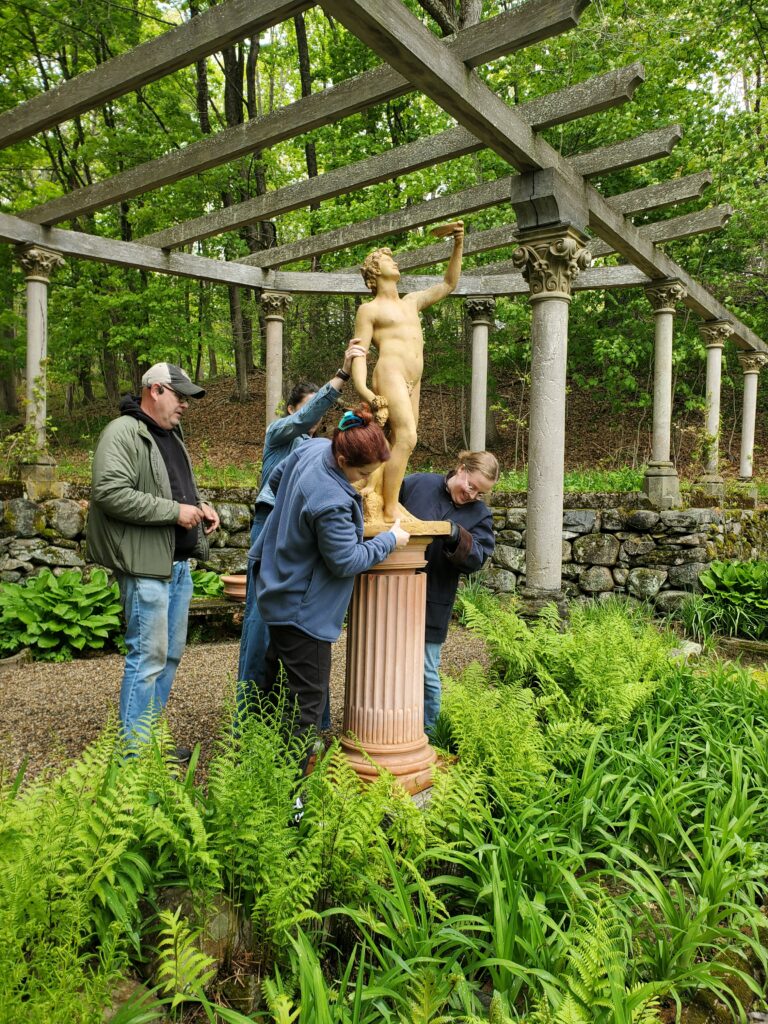
We handle a variety of collection-related tasks including storage and care of the study collection, loans (incoming and outgoing), processing acquisitions, installing and coordinating logistics for exhibitions, and coordinating the movement and installation of objects at sites. In addition, we lead trainings, manage the IPM (Integrated Pest Management) program, ensure our collections are cataloged and tracked properly in our collections management system, coordinate internal and external research requests and tour inquiries, and facilitate the deaccession process in partnership with the curators, conservation team, and other stakeholders. Essentially, we implement processes and procedures for proper collection management and care of the 125,000 objects displayed at our thirty-eight historic properties and stored at our Center for Preservation and Collections
We partner with various teams within the Collections Services department to ensure Historic New England is a proper steward of our collections. For example, we work with the conservation team to notify them which objects need treatment or repair, and we collaborate with the curatorial team to fulfill their interpretive goals for the houses and prepare for exhibitions.
What do you wish more visitors understood about what happens behind the scenes in museums?
I always tell people our team is the one that does all the minuscule things you never think about. We move objects from one house to another for exhibitions, conservation treatments, or research requests. We clean the basements, attics, and rooms of the houses with our colleagues on the Visitor Experience team. We are the “oil to the machine.” We ensure our objects are properly documented, preserved, housed/stored, and transported. With exhibitions, much of the time the curators are the ones who get the limelight, which is much deserved; however, we are the team who ensures the objects are safely transported, their condition recorded, and have updated locations in the database. We also assist with the fabrication, design, and placement of exhibition platforms and cases. I always like to say we make the curators’ dreams come true by ensuring the objects are in the best care possible!
Is there a particular object or collection item that has really stayed with you over time? What makes it memorable?
Wow, this is a hard question! Almost ten years ago, when I was the assistant curator at Old Sturbridge Village, I researched and wrote an article on the Samuel Wing collection. In the 1960s, Old Sturbridge Village was gifted with the contents of Wing’s workshop, unveiling a vast material record of preindustrial tools, patterns, furniture parts, and finished products. Samuel Wing and his tools, furniture parts, patterns, and products left a huge impact on me as a curator and collection manager. One of my former colleagues and I wrote an article comparing the source material of two rural cabinetmakers. I loved exploring the archives and collections at other museums and spending time at the courthouse in the probate records. Not only did I research Samuel Wing and write an article, I catalogued the collection and rehoused many of the objects in storage. While researching, I immersed myself in learning more about woodworking and historic furniture. My colleagues at Old Sturbridge Village assisted me in these efforts. Finally, my co-author and I ended up co-curating an exhibition on rural New England furniture in conjunction with our article. This was probably one of my favorite exhibitions—especially since I’m a huge fan of furniture and woodworking!
What’s one of the most complex logistical challenges you’ve had to navigate during your time at HNE?
The museum’s massive collection of objects spread across the region and our collection storage facility does present quite a complex logistical challenge. Initially, it can seem quite overwhelming with the vast number of objects spanning five New England states. Over the past two and a half years, I’ve almost mastered the skill of time management and prioritization, figuring out how to divide myself up among thirty-eight properties and one storage facility! I’m grateful to have the assistance and partnership of such a great team to navigate these challenges. I’m excited for fall 2026 when we will deinstall Otis House in Boston as we prepare to temporarily close to the public for a multi-year transformation of the interior! It will be quite a logistical challenge, but the best part of my job is problem solving and working through logistics to ensure object care, management, and documentation!
If you could change one thing about how museums operate today, what would it be, and why?
I wish we had more funding and time to foster the next generation of museum professionals. Historic New England provides several opportunities for emerging museum professionals through the Institute of Museum and Library Services (IMLS)-funded internship program. Museums are never short on projects, but we’re always short on time, money, and people, so my wish is that we had the resources to prepare emerging collections care workers for the next step in their career.
Is there a museum or exhibition that has had a personal impact on you or influenced your thinking?
In 2022, I visited the Forbes House Museum in Milton, Massachusetts. Their exhibition, Opium: The Business of Addiction, was a special exhibition exploring the story of the Forbes family’s involvement with the nineteenth-century opium trade, its links to the current opioid epidemic, and the lasting impact on US-Sino relations. The family’s fortune was built with profits from the China opium trade.
Not only was the exhibition profound and timely as it unveiled the dark past of the family’s fortune and shed light on the harm bestowed upon generations of Chinese people and families, the curators managed to assemble this exhibition with just a small staff. They secured funding for the exhibition via IMLS, the National Endowment for the Humanities, Mass Humanities, and other funding sources to explore these stories through various rooms in the house. Historic houses are known to be stagnant and difficult spaces to explore new narratives; however, the small, scrappy team at Forbes House Museum expertly shared the dark past that we sometimes forget to share within the historic house narrative. I left the exhibition with profound sadness but with a more thoughtful eye on how the opium trade impacted today’s epidemic.
What advice would you offer to someone considering a career in museum operations or collections management?
Take any and all opportunities you can possibly handle! In grad school, I had two internships, worked in a museum gift shop, and also had a part-time job in retail. I also volunteered occasionally at a historical society to catalogue objects in their collection management system! Also, keep in touch with your former supervisors and colleagues. Never stop networking! You never know whose help you’ll need one day.
And finally, you recently got married at one of our historic sites (your wedding is featured in the summer issue of Historic New England magazine)—congratulations! What made you decide to get married where you work?
Thank you! My husband and I envisioned our ceremony and reception at a historic home. I remember turning to him and saying “Wait! I work for Historic New England, why don’t we just get married at one of our historic homes?” We found the Lyman Estate and the venue was idyllic for our wedding day. Getting married where you work could be a unique challenge, but I was excited as I am intimately aware of the sites and their inner workings, so I knew what to expect. Also, I was excited to work with my colleagues and the events staff!
Sign up to our newsletter for our latest news and events