
Historic New England recognizes that climate action intersects with other pressing issues facing our communities today—including the need for open, accessible green space. Read on to learn how we are ensuring everyone is able to enjoy our historic landscapes.
At Historic New England, accessibility is crucial to our mission of inclusivity for all. We have approximately 1,320 acres of landscapes, with over 360 walkways, trails, and paths, all of which are free and open to the public. Our open landscapes provide a haven for those with limited access to green spaces in their communities. As a result, it became imperative to reassess the walkways and paths of our landscapes to make them more accessible.
Adapting historic landscapes and buildings to align with modern accessibility requirements can, of course, pose significant challenges. One such challenge comes from the shoe covers, or booties, worn by staff and visitors to historic house museums. Booties protect carpets and floor finishes from grit transferred in from outdoors. Booties are also difficult for many people to wear for a variety of reasons. We realized single-use shoe covers pose an accessibility issue and do not align with our climate action goals. This led us to ask: How can we make paths in our landscapes feel authentic to the period of interpretation while meeting accessibility needs, climate goals, and preventing the transfer of grit into the houses?
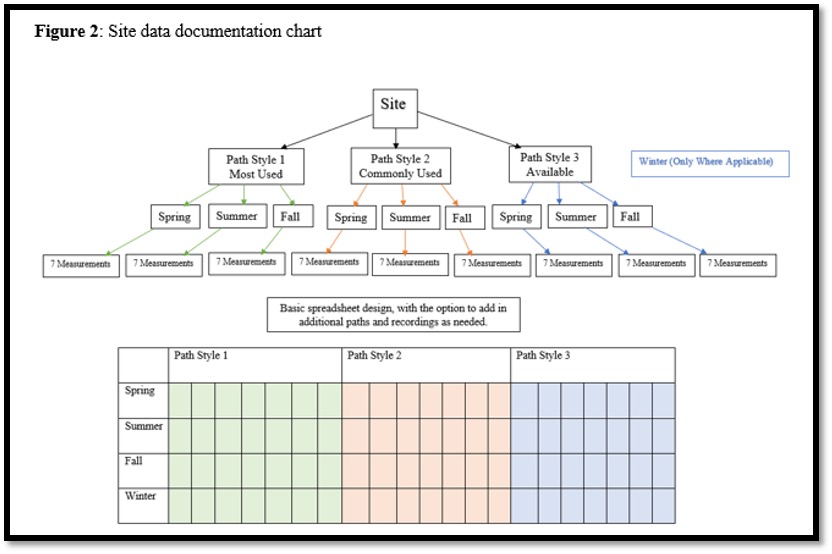
To find the answer, we developed and carried out a two-phase path material study, the first phase of which was supported by the National Center for Preservation Technology & Training. Phase I analyzed the firmness and stability of the existing paths at nine Historic New England sites. Because there is no agreed-upon protocol for a quantitative assessment of firmness and stability—the two requirements for an accessible path—we tested our paths against two sets of standards with different parameters for accessibility: Beneficial Designs standards and a proposed new standard under the Americans with Disabilities Act (ADA). Concrete and asphalt are the most accessible path materials and have no grit, but introducing them at properties where they were not used historically would create a jarring contrast to the viewshed. Compared to concrete, 96 percent of our paths failed to meet accessibility standards, but 99 percent met or exceeded the proposed ADA standards.
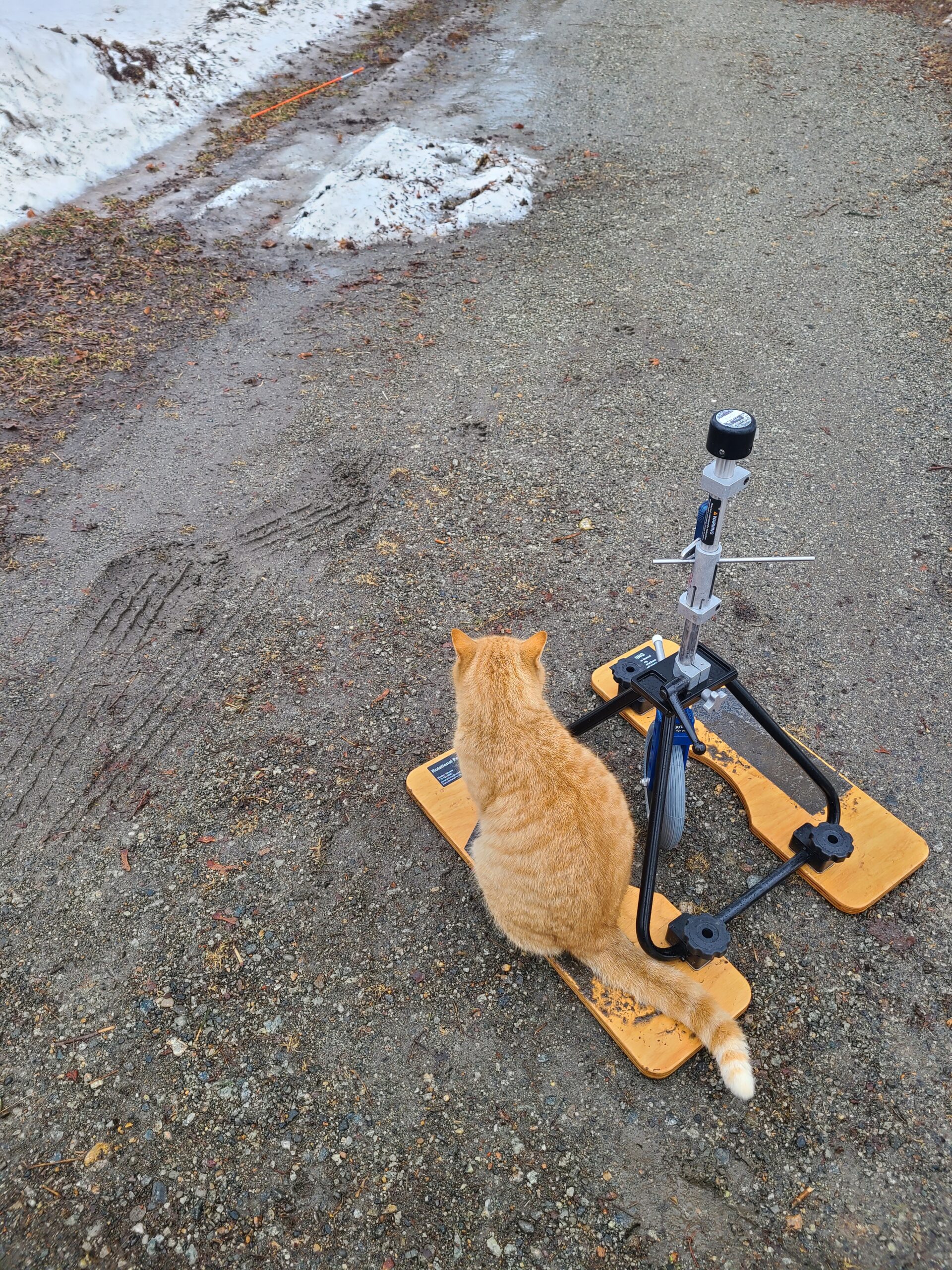
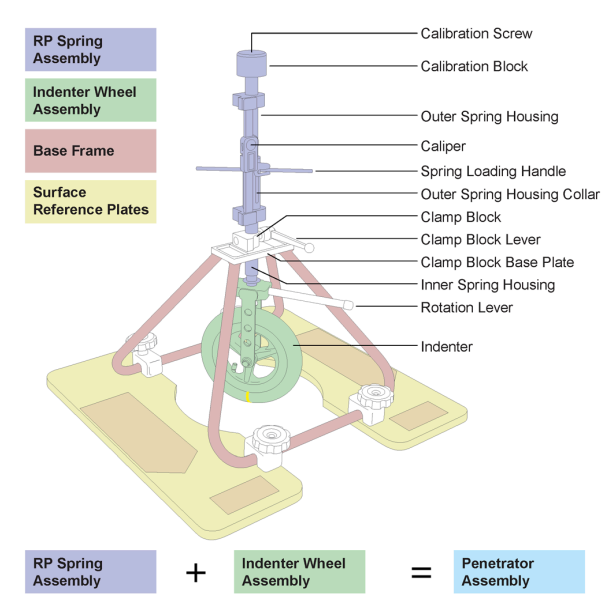
Mayo used a rotational penetrometer, a portable instrument that tests surface firmness and stability, in her path material analysis.
Two materials became the subject of debate during this process: stone dust and peastone. In Massachusetts, stone dust is widely accepted as an accessible material, but presented concerns about damage to our house museums. Peastone, although meeting our strict interpretive aesthetics, was often cited as uncomfortable and difficult to walk on by both visitors and staff. Both the proposed ADA standard and the concrete standard failed to consider user experience, leaving us with two extremes (either a 4% or 99% passing rate).
To meet the unique needs of our historic sites, we developed the Historic New England Standard. Our new standard is a median of both sets of parameters, under which 87 percent of the paths we tested passed. Our study showed that stone dust provides the optimum balance between accessibility and the aesthetics of a historic site. At Historic New England, we no longer consider peastone an accessible material. The Historic New England Standard more closely aligns with both the material commonly approved for use in Massachusetts and with the anecdotal data we gathered on use.
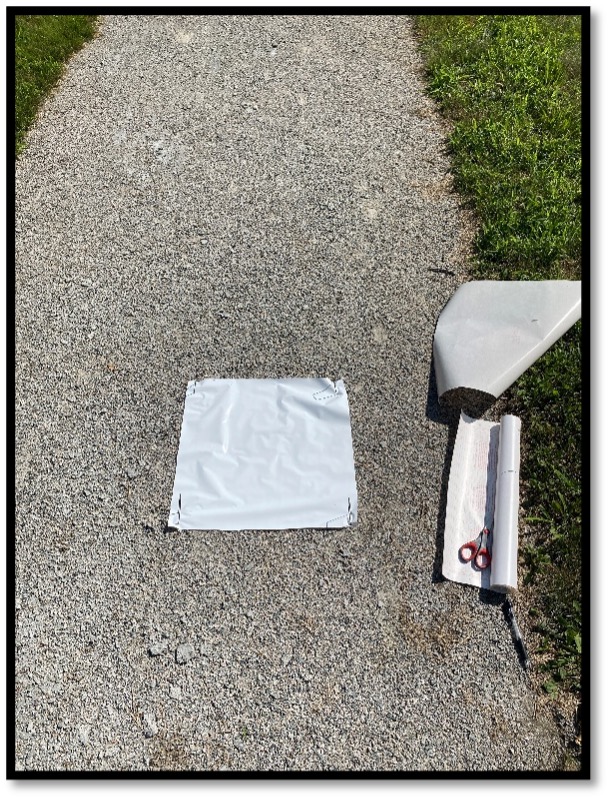
In Phase II of the study, we turned our focus to material transfer. We built a tester path using stone dust and applied six different topical treatments to sequential segments of the path. We chose topical treatments based on ease of application and purchase, so that any groundskeeper could maintain paths without specialized equipment or a license. We tested material transfer on each treated segment of the path and found that untreated stone dust was the ideal path material, with only an approximately 3 percent transfer rate. The quantitative test results aligned with our anecdotal evidence—when surveyed, visitors and staff alike thought untreated stone dust appeared the most authentic to the period of interpretation.
Concurrently, we tested a system of two different floor mats, one for internal and one for external use, at the Lyman Estate. We eliminated booties to see if a double shoe wipe protocol would decrease the amount of material tracked into the houses. Two mats reduced particulates in both wet and dry conditions, with dry conditions resulting in an almost fifty percent reduction of grit transfer.
What we learned is that making landscapes highly accessible in a historic context while protecting collections and meeting the aesthetic expectations of staff and visitors is entirely possible. Stone dust is easy to find and install, meets both anecdotal and legal standards, and fits the historic viewshed that house museums aim to protect. And by implementing a two-mat system, booties can be made optional, allowing for better mobility within the buildings and resulting in less trash in landfills. The results of our study on accessible materials for outdoor paths that meet strict interpretation parameters for house museums is applicable to many organizations across the United States, and we hope it will be adopted at similar sites.
Written by Marissa Mayo, Property Care Operations Manager
Marissa Mayo presented a paper on the Historic New England Standard at the Association for Preservation Technology Northeast Chapter (APTNE) 2024 Annual Meeting & Symposium. Keep an eye out for her forthcoming white paper on our new standard.
Sign up to our newsletter for our latest news and events